 Pin It
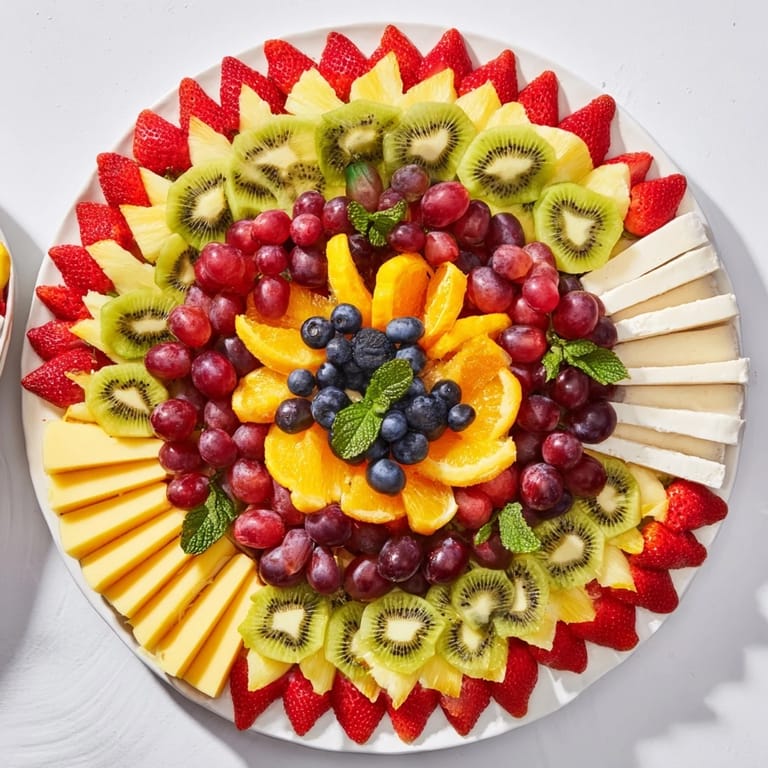
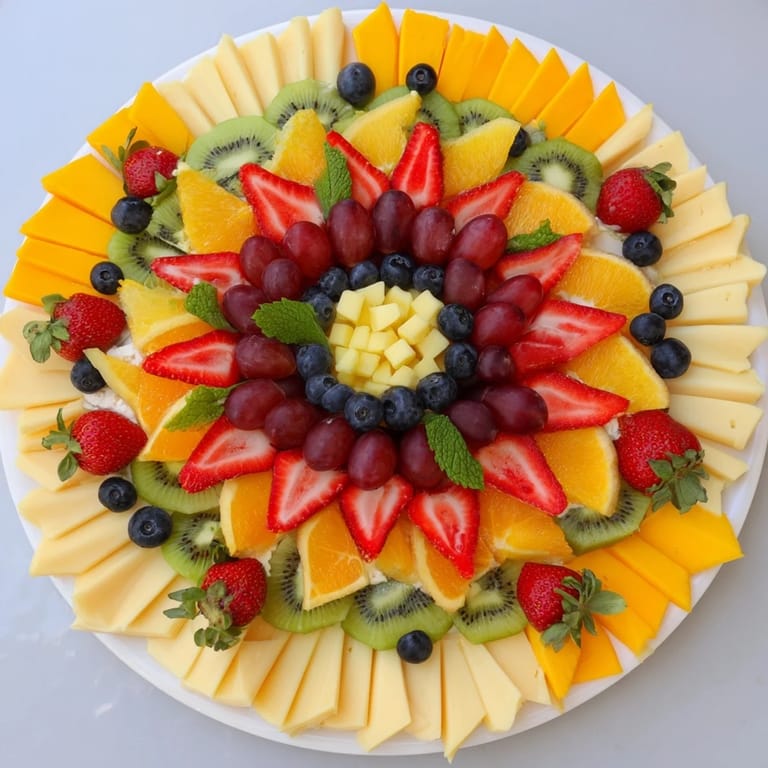
 There's something about arranging fruit and cheese in concentric circles that makes you feel like you're creating edible art. I discovered this kaleidoscope platter during a summer dinner party when I ran out of traditional appetizer ideas and decided to play with color and geometry instead. As I placed each wedge, watch the pattern emerge under the kitchen lights, guests started gathering around the board before I'd even finished. That moment—when everyone paused to admire something I'd built with my hands—convinced me this arrangement deserved a permanent place in my entertaining repertoire.
I remember bringing this to a potluck and setting it down in the center of the table. Within seconds, someone asked if I'd made it myself, which felt like the highest compliment. My friend Sarah, who usually reaches for the chips and dips, actually sat down with a small plate and tried combinations she'd never normally choose. That's when I realized this platter does something special—it invites people to be curious and deliberate about what they're eating.
Ingredients
- Seedless red grapes: These stay firm and provide jewel-like pops of color at the outer edge where they catch the light beautifully.
- Fresh strawberries: Halve them to show the bright inner flesh and ensure each piece looks intentional in the pattern.
- Kiwi: The lime-green color is irreplaceable for contrast, and the seeds add visual texture even when you're just looking.
- Pineapple: Cut into small wedges so they stay the same general size as other pieces, preventing the platter from looking unbalanced.
- Blueberries: Think of these as your secret filler—they slip into gaps and tighten up the whole design.
- Orange: Fresh segments bring brightness and a touch of sophisticated flavor that cheese loves.
- Aged cheddar: The orange hue mirrors the fruit and adds depth; the slight sharpness keeps everything from tasting too sweet.
- Manchego: Its pale color creates contrast and its nuttiness pairs beautifully with every fruit here.
- Brie: Creamy and mild, it acts as a gentle bridge between the bright acidity of fruit and stronger cheeses.
- Goat cheese: The tanginess wakes up your palate and its rounds add visual variety to all the wedge shapes.
- Fresh mint: A small handful scattered at the end lifts the entire platter with aroma and one final unexpected green.
Tired of Takeout? 🥡
Get 10 meals you can make faster than delivery arrives. Seriously.
One email. No spam. Unsubscribe anytime.
Instructions
- Wash and prepare your fruits:
- Rinse everything gently and pat dry with a clean kitchen towel. Moisture is your enemy here because wet fruit won't hold its shape or show its true color on the board. Cut each fruit into uniform wedges or segments so the pattern stays tight and intentional.
- Slice your cheeses into matching shapes:
- Use a sharp knife and work deliberately—aim for triangular wedges roughly the same size as your fruit pieces. If your knife starts dragging instead of slicing, you've hit the cheese at the wrong temperature, so run hot water over the blade between cuts.
- Build the outer ring:
- Start at the very edge of your round platter and place one piece of fruit, then one piece of cheese, then another fruit, creating an alternating line that curves around. This rhythm becomes meditative once you find it.
- Create concentric circles inward:
- Move toward the center and repeat the pattern with fresh combinations, rotating which fruit and cheese you use each time. Step back occasionally to see how the colors are speaking to each other from a distance.
- Fill gaps with intention:
- Blueberries and extra grapes become your friends here, nestling into spaces to complete the kaleidoscope effect and hide any rough edges. They also add little pockets of color that make the whole board feel alive.
- Add mint and chill:
- Scatter fresh mint leaves across the board just before serving so they stay vibrant. If you're preparing this ahead, cover it loosely with plastic wrap and refrigerate until it's time to unveil.
 Pin It
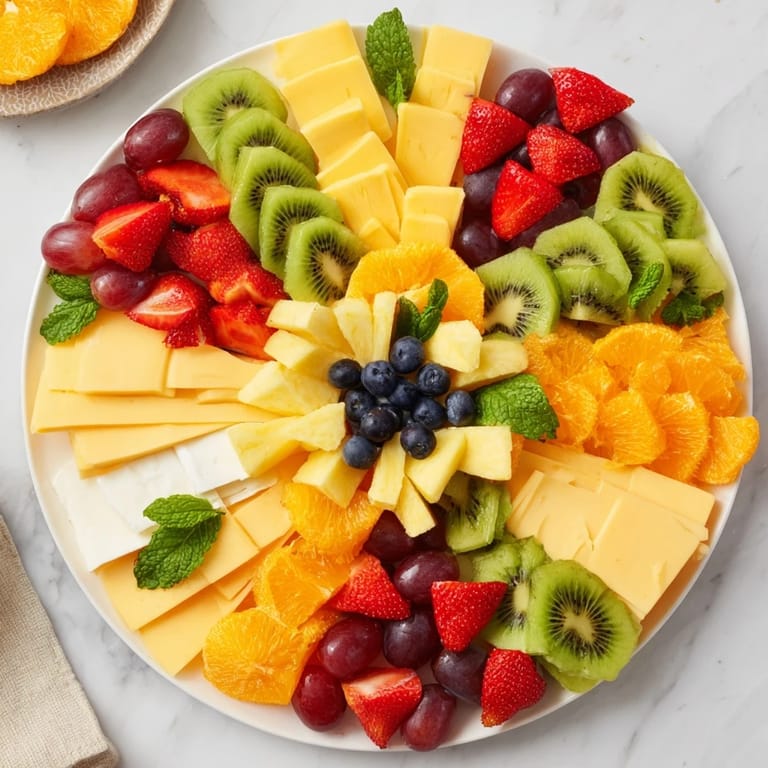
 I once made this platter for my daughter's birthday dinner, and her friends spent more time photographing it than eating. At first I thought it was silly, but then I realized that making something worth photographing is actually a form of care. Food that delights the eye reaches people in a different way.
The Kaleidoscope Effect
The magic of this platter lives in repetition and contrast. When you place the same fruit or cheese in the same position of each circle, your eye naturally follows the pattern outward, which feels almost hypnotic when you're standing over the table. Colors that shouldn't work together—like the pink of strawberries next to orange cheddar next to green kiwi—suddenly harmonize because the symmetry tells your brain they belong together. This is why the shape matters so much; a square platter would lose that gravitational pull toward the center.
Seasonal Flexibility
This design works because fruit is forgiving. In autumn, swap strawberries for blackberries and pineapple for sliced apple. In winter, pomegranate seeds replace some of the grapes, and pears become your pale wedge. Spring lets you play with fresh figs or berries your local market suddenly carries. The structure stays the same while the colors shift with what's at its peak, which keeps you engaged with the seasons without having to learn a whole new recipe.
Wine Pairings and Serving
This platter was designed to live alongside sparkling wine or a dry rosé, and that combination transforms both the food and the drink. The bubbles cut through the sweetness of the fruit and the richness of the cheese, while the tannins in a light red settle around the cheddar like a gentle hug. If alcohol isn't your thing, a crisp apple cider or even sparkling water with fresh herbs does the same job.
- Serve everything at room temperature except the brie and goat cheese, which benefit from a quick chill to keep them from getting too soft under warm lights.
- Arrange the platter no more than thirty minutes before guests arrive so the fruit stays perky and the colors stay vivid.
- Place small plates nearby so people understand this is meant for leisurely picking, not standing and eating over the carpet.
 Pin It
 This platter asks nothing of your oven and everything of your attention to detail, which somehow feels like the most generous thing you can offer when people are coming to your table. It's the kind of appetizer that makes people feel treasured.
Recipe FAQs
- → How do I achieve the symmetrical kaleidoscope effect?
Slice fruits and cheeses into uniform wedges or rounds and arrange them in alternating repeating segments on a round platter to create balanced, concentric circles.
- → Can I substitute other fruits or cheeses?
Yes, swapping seasonal fruits or cheeses with similar shapes and textures will maintain visual appeal and flavor balance.
- → How should I store the platter before serving?
Cover the assembled platter tightly and refrigerate. Serve shortly after removing from the fridge for best freshness and presentation.
- → What garnishes enhance this platter?
Fresh mint leaves add color and aroma; optional additions like olives or roasted nuts can provide savory contrasts in the gaps.
- → Is this suitable for vegetarian and gluten-free diets?
Yes, all ingredients are vegetarian-friendly and naturally gluten-free, but check cheese labels for suitability regarding animal rennet.