 Pin It
 One October evening, I stood in my kitchen surrounded by the smell of roasting pumpkin, and suddenly this risotto made complete sense. My partner had suggested something autumn-inspired but vegan, and I remembered how risotto always felt like the ultimate comfort food, but dairy-dependent. That's when I realized the creamy magic wasn't really about butter or cream at all—it was about patience, rice starches, and knowing exactly when to stop stirring. This version became a revelation, with sweet roasted pumpkin doing the heavy lifting and crispy sage leaves providing an almost nutty punctuation at the end.
I made this for a dinner party where one guest mentioned she'd given up dairy but missed risotto terribly, and watching her face when she tasted this was worth every minute of stirring. She asked for the recipe immediately, which almost never happens, and that moment reminded me why cooking for people matters—it's about removing barriers between them and the foods they love.
Ingredients
- Pumpkin (about 600 g, peeled and diced): Roasting it first concentrates the sweetness and prevents the risotto from becoming watery; smaller varieties have better flavor than large carving pumpkins.
- Arborio rice (300 g): This short-grain variety has a higher starch content that creates natural creaminess when stirred constantly—don't substitute with long-grain rice or the texture becomes mushy instead of silky.
- Vegetable broth (1.2 liters, kept warm): Room-temperature broth can shock the rice and interrupt cooking; keeping it simmering in another pot is the difference between creamy and stodgy.
- Yellow onion (1 medium, finely chopped): The sweetness balances the nutmeg and pairs beautifully with pumpkin; rough chunks won't dissolve into the rice the way fine pieces do.
- Garlic cloves (2, minced): Add depth without overpowering; mince them fresh rather than using jarred, which tastes tinny after cooking.
- Dry white wine (120 ml, optional but recommended): It adds acidity and complexity that vegetable broth alone can't provide; if you skip it, increase broth slightly and lose nothing but subtle flavor.
- Olive oil (3 tbsp, divided): Use good quality oil since it's not being drowned out by cream; the division ensures both the pumpkin and aromatics cook properly.
- Fresh sage leaves (15–20): Crispy sage is non-negotiable here; dried sage becomes dusty and bitter when fried.
- Nutmeg (½ tsp, freshly grated): Ground nutmeg from a tin tastes flat compared to freshly grated; the warm spice bridges pumpkin and sage beautifully.
- Nutritional yeast (2 tbsp, optional): It adds a subtle umami and cheese-like flavor without any funk; always taste before adding because brands vary in intensity.
- Lemon zest (½ lemon): A final brightness that prevents the dish from feeling heavy; zest it fresh just before serving so it doesn't oxidize.
- Salt and black pepper: Taste throughout cooking rather than seasoning at the end; the broth might already be salted, so adjust gently.
Tired of Takeout? 🥡
Get 10 meals you can make faster than delivery arrives. Seriously.
One email. No spam. Unsubscribe anytime.
Instructions
- Roast the pumpkin until it caramelizes:
- Preheat your oven to 200°C and spread diced pumpkin on a baking tray, drizzle with 1 tbsp olive oil, and season with salt and pepper. Roast for 20–25 minutes until the edges turn golden and the flesh is fork-tender; you'll smell the sweetness intensifying as it caramelizes.
- Build your aromatic base:
- Heat 1 tbsp olive oil in a large, deep skillet over medium heat, add the finely chopped onion, and cook for 3–4 minutes until translucent and fragrant. Stir in the minced garlic and cook for exactly 1 minute more—any longer and it becomes bitter.
- Toast the rice grains:
- Add the arborio rice to the pan and stir constantly for 2 minutes so each grain gets coated in oil; you'll hear them clicking slightly against the pan and smell a subtle nutty aroma.
- Deglaze with wine (if using):
- Pour in the white wine and stir until it's almost completely absorbed, about 2–3 minutes; this takes patience, but it builds flavor and prevents the rice from sticking later.
- Slowly add broth while stirring:
- Add warm vegetable broth one ladleful at a time, stirring frequently and letting the rice absorb each addition before adding more. This takes about 18–20 minutes total, and the rice should move slowly across the pan when you drag a spoon through it—that's your sign it's becoming creamy.
- Crisp the sage leaves:
- While the rice cooks, heat the remaining 1 tbsp olive oil in a small skillet over medium-high heat, then fry the sage leaves for 30–60 seconds until they're dark green and fragrant. Transfer them immediately to a paper towel to drain and crisp up further.
- Fold in the pumpkin and seasonings:
- Once the rice is creamy and nearly tender, gently fold in the roasted pumpkin, freshly grated nutmeg, and nutritional yeast if using. Taste and adjust salt and pepper carefully.
- Serve immediately with garnish:
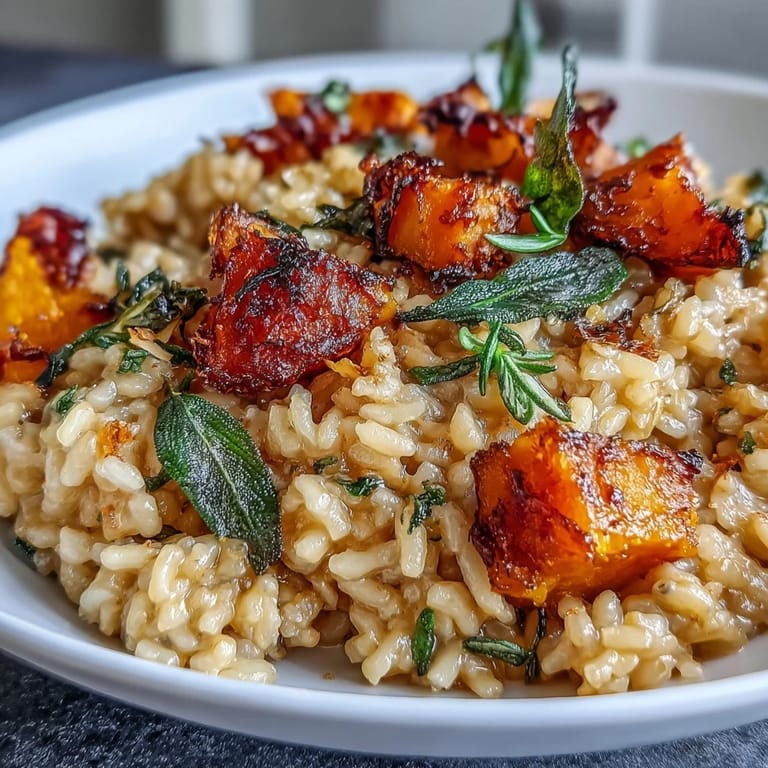
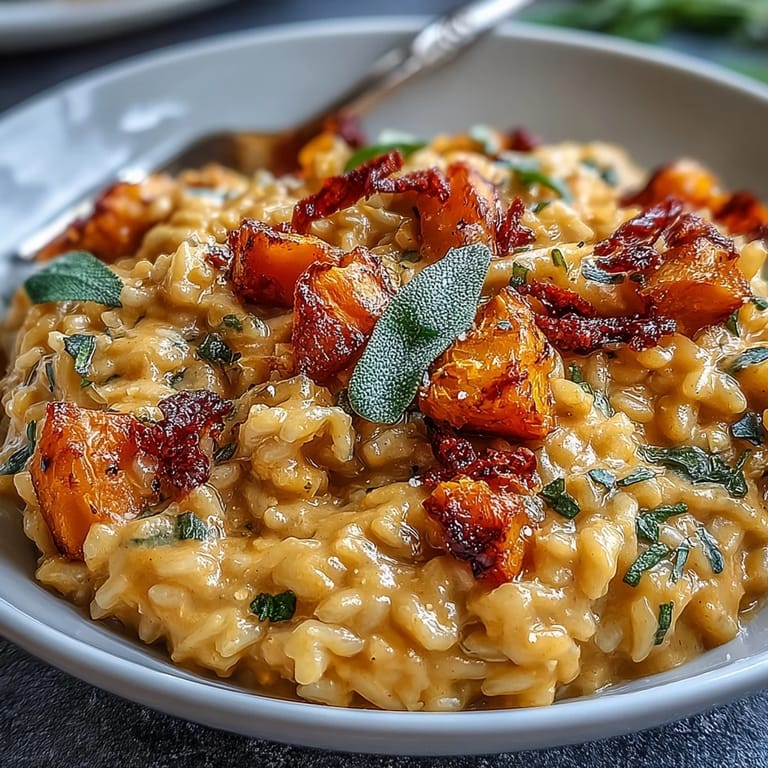
- Transfer the risotto to warm bowls, crown each with a few crispy sage leaves, and finish with lemon zest if desired. Risotto is best eaten right away when it still has that luxurious, flowing texture.
 Pin It
 There's something almost meditative about making risotto, the way your wrist moves in that constant figure-eight motion and you fall into a rhythm with the pan. I realized that evening that some of the best food comes from slowing down, not rushing, and this dish rewards that patience in the most delicious way.
The Secret to Creamy Risotto Without Cream
The first time I made traditional risotto, I assumed the cream was doing all the work, but when I went vegan, I discovered that high-starch arborio rice already contains everything needed for silkiness. The constant stirring releases these starches into the liquid, creating a natural sauce that's actually richer and more complex than cream could provide. I've since made this for people who eat dairy regularly, and they're always surprised when I tell them there's no butter—they taste richness and assume it must be there.
Why Roasting Pumpkin Changes Everything
Raw pumpkin would make the risotto taste watery and vaguely squash-like, but roasting concentrates its natural sugars and creates caramelized edges that add depth. The Maillard reaction that happens in the oven transforms simple diced pumpkin into something almost dessert-like, which balances the savory rice perfectly. I learned this through trial and error when I once tried adding raw pumpkin straight to the pan, and the result was disappointingly bland and soup-like.
The Crispy Sage Moment
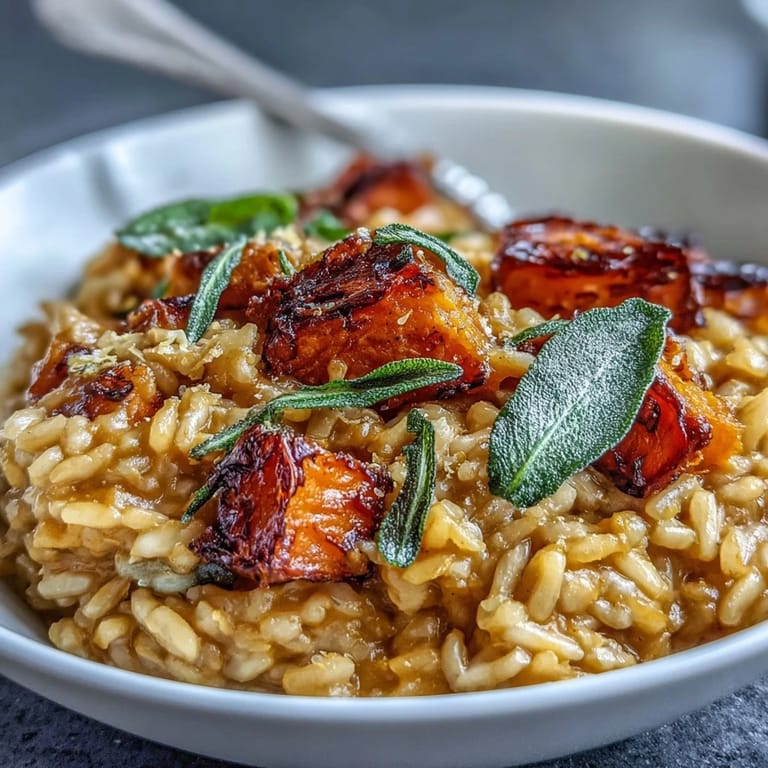
Those crispy sage leaves do more than look pretty on top—they add a textural surprise and an herbal complexity that ties the whole dish together. The moment they hit the hot oil, they transform from soft green leaves to almost lacy, fragrant crisps that shatter between your teeth. This is one of those finishing touches that separates homemade risotto from restaurant risotto, and it takes literally one minute to pull off.
- Fry the sage at the last possible moment so it stays crisp until serving; if made too early, it softens and loses its appeal.
- Don't overcrowd the skillet when frying sage or the leaves will steam instead of crisp.
- Keep a paper towel ready the second the leaves come out of the oil to absorb excess fat and help them crisp further.
 Pin It
 This risotto has become my go-to when I want to cook something that feels impressive but actually feels manageable, something that tastes like autumn in a bowl. I hope it becomes yours too, the dish you reach for when you want to slow down and cook something real.
Recipe FAQs
- → Can I use a different type of squash instead of pumpkin?
Yes, butternut squash works perfectly as a substitute. It has a similar sweet, creamy texture and will roast beautifully. You can also try kabocha squash for a slightly denser result.
- → How do I know when the risotto is done?
The risotto is ready when the rice grains are tender but still have a slight bite (al dente) and the overall texture is creamy and flowing, not stiff or dry. This typically takes 18-20 minutes of gradual broth addition.
- → Can I make this risotto ahead of time?
Risotto is best served immediately, but you can prepare the roasted pumpkin and crispy sage ahead. If you need to reheat leftover risotto, add a splash of warm broth and stir gently over low heat to restore creaminess.
- → What can I use instead of white wine?
Simply use extra vegetable broth instead of wine, or try a splash of white wine vinegar or lemon juice diluted with broth for acidity. The wine adds depth but isn't essential to the dish.
- → How can I make this risotto even creamier?
Blend half of the roasted pumpkin into a smooth puree before folding it into the risotto. You can also stir in a tablespoon of vegan butter at the end or add extra nutritional yeast for richness.
- → Why do I need to keep the broth warm?
Warm broth maintains the cooking temperature of the risotto, ensuring even cooking and proper starch release from the rice. Cold broth would lower the temperature and result in unevenly cooked grains.