 Pin It
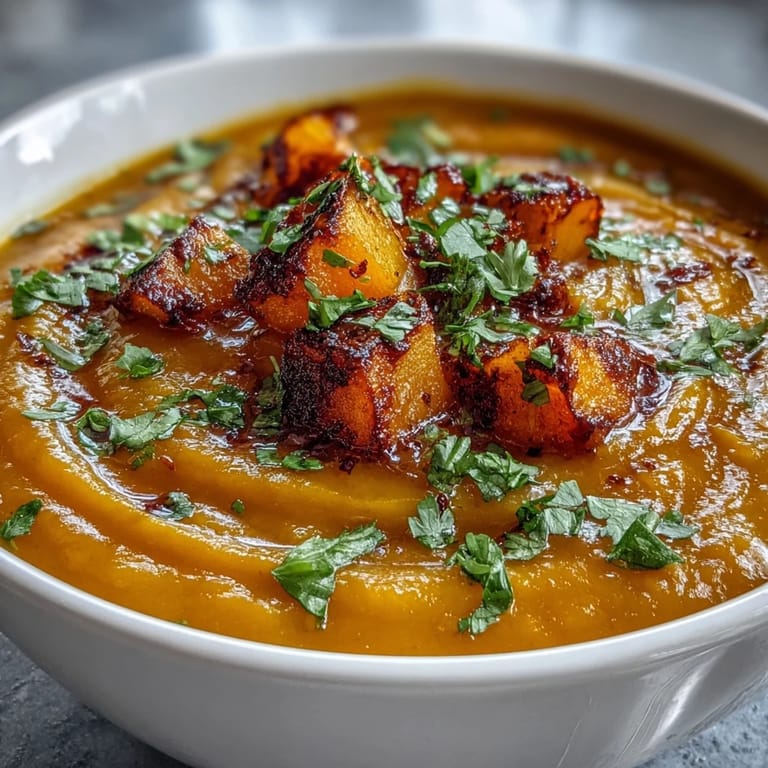
 There's something about October afternoons that makes you crave soup, and that's exactly when I discovered the magic of roasting butternut squash before throwing it into a pot. My roommate had left a halved squash on the counter with a note that simply said, try the oven first, and I'm still grateful for that tiny suggestion. The caramelized edges made all the difference—suddenly this wasn't just a weeknight dinner, it was something worth savoring.
I made this soup for my friend Maya on a gray November evening when she'd had a rough week, and watching her face soften at the first spoonful felt like the whole point of cooking. She kept asking what made it taste so warm and comforting, and the honest answer was just time and good spices. We sat in my tiny kitchen drinking it straight from mugs while the rain tapped against the window, and I realized this is the kind of meal that becomes a memory.
Ingredients
- Butternut squash: Choose one that feels heavy for its size; lighter ones can be watery and less sweet once roasted.
- Red lentils: They cook down faster than brown or green lentils, which is why they're perfect here—they'll break down and thicken the soup naturally.
- Carrots and onion: These form the flavor base, so don't skip the sautéing step; it wakes up their natural sweetness.
- Garlic: Mince it finely so it distributes evenly throughout the broth rather than sitting in chunks.
- Ground cumin, coriander, turmeric, and cinnamon: These spices are the soul of the soup, so use fresh ones if possible; old spices taste dusty and flat.
- Olive oil: The roasting oil should be generous enough to help the squash caramelize, not just coat it.
- Vegetable broth: Use homemade if you have it, or choose a brand you'd actually drink on its own; the broth flavor carries the whole dish.
- Lemon juice: This brightens everything at the end, cutting through the richness so the soup feels alive on your tongue.
Tired of Takeout? 🥡
Get 10 meals you can make faster than delivery arrives. Seriously.
One email. No spam. Unsubscribe anytime.
Instructions
- Start the oven and prep your squash:
- Heat your oven to 200°C (400°F) while you peel and cube the butternut squash. Toss the cubes with 1 tablespoon of olive oil, a generous pinch of salt, and black pepper, then spread them on a baking sheet in a single layer. This is the most important step—don't crowd the pan.
- Roast until golden:
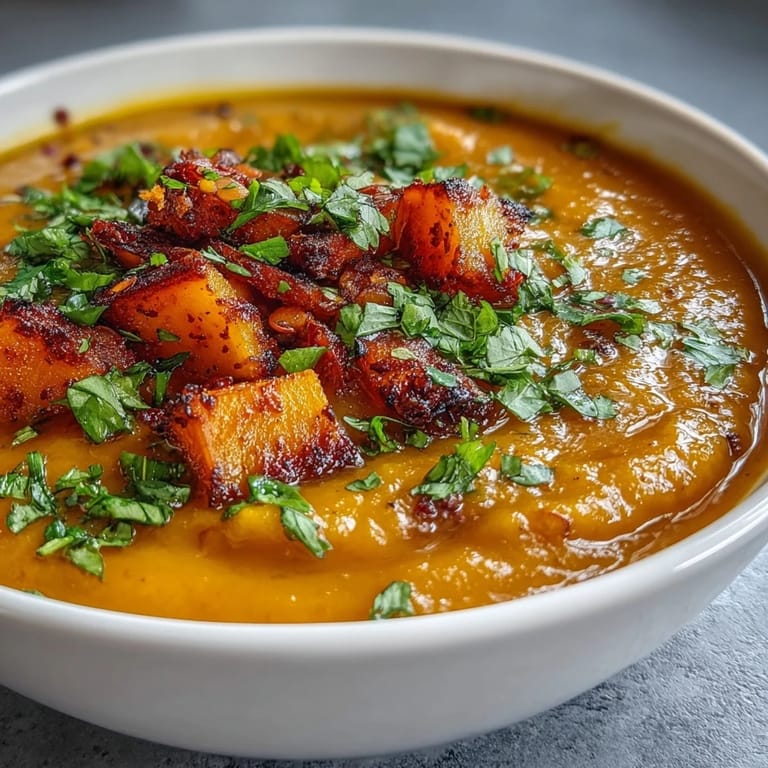
- Let the squash roast for 25 minutes, stirring halfway through if you remember. You're looking for caramelized edges and tender flesh; this is what makes the soup taste like autumn itself.
- Build the flavor base:
- While the squash roasts, heat the remaining 1 tablespoon of oil in a large pot over medium heat. Add your diced onion and sliced carrots, then let them soften for about 5 minutes, stirring occasionally so they don't stick.
- Bloom the spices:
- Add minced garlic, cumin, coriander, turmeric, cinnamon, and chili flakes if you're using them. Stir constantly for about 1 minute—you'll know it's right when the kitchen smells incredible and the spices look a bit darker and more fragrant.
- Add lentils and liquid:
- Pour in your rinsed red lentils and stir to coat them with the spiced oil, then add the vegetable broth. Bring everything to a boil, then lower the heat and let it simmer gently.
- Combine and simmer:
- Once the broth is simmering, add your roasted squash. Let everything cook together for about 15 minutes until the lentils have softened and started to break down, which is when they'll thicken the soup naturally.
- Blend to your preference:
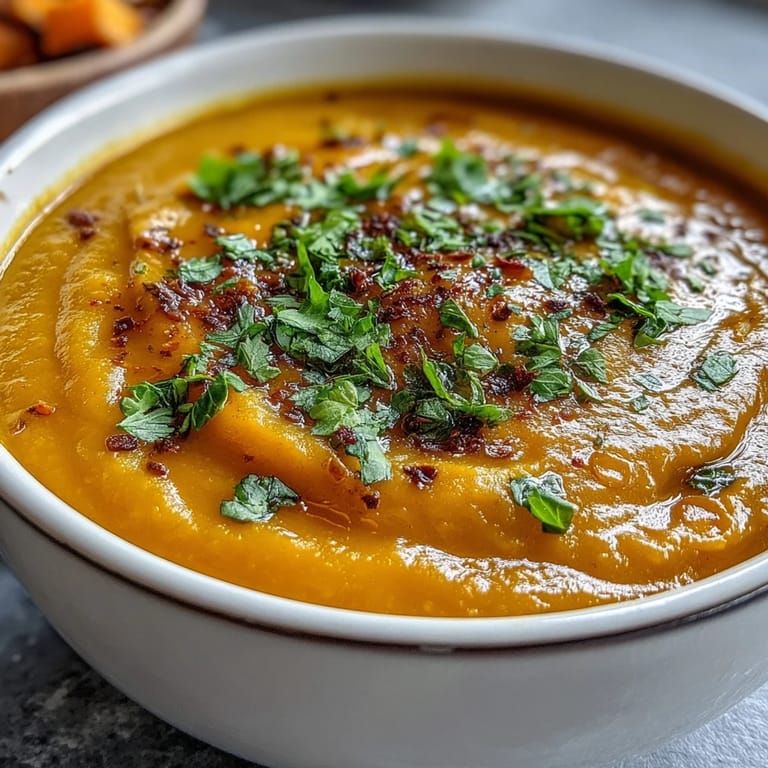
- Remove the pot from heat and use an immersion blender to puree the soup until smooth, or leave it slightly chunky if you like texture. If you're using a regular blender, work in batches and be careful with the heat.
- Finish with brightness:
- Stir in the juice of half a lemon, then taste and adjust the salt and pepper to your liking. Sometimes a soup needs just a little more seasoning to really sing.
- Serve with love:
- Ladle the soup into bowls and scatter fresh cilantro or parsley on top, which adds color and a fresh note that contrasts beautifully with all those warm spices.
 Pin It
 There was a moment, maybe three minutes into eating this soup at a dinner party, when someone said, this tastes like it took hours, and I loved that they couldn't quite believe how simple it actually was. Good cooking isn't always about complexity; sometimes it's just about choosing the right technique and letting the ingredients do what they're meant to do.
Why Roasting Changes Everything
When I first made butternut squash soup, I boiled the squash because that's what my recipe said, and it was fine but forgettable. Then I remembered my roommate's note and tried roasting it instead, and suddenly the whole soup tasted richer, sweeter, and more intentional. Roasting caramelizes the natural sugars in the squash and adds a subtle toasted flavor that just boiling can't achieve—it's the difference between a soup that fills you up and one that makes you close your eyes while you're eating it.
The Lentil Question
Red lentils are almost magical in soups because they don't hold their shape like green or brown lentils do; they soften and break down, which means they naturally thicken the broth without any cream or flour. I've experimented with yellow split peas too, which work beautifully if you have them on hand, though they need a few extra minutes to cook through. The key is choosing a legume that fits how you want the final soup to feel—do you want it creamy and smooth, or would you prefer some texture to chew on?
Making It Your Own
This soup is forgiving enough to adapt to whatever you have in your kitchen, which is part of why it's become such a favorite of mine. I've made it with less squash and more lentils when I was stretching the recipe, added coconut milk when I wanted richness, and even stirred in a splash of apple juice once when I was out of lemon. The foundation is solid, so you can build on it without worry.
- A swirl of coconut milk before blending makes it feel decadent and silky, almost like you've added cream.
- If you like heat, add more chili flakes or even a pinch of cayenne pepper once you've tasted the base.
- Serve it with warm naan bread or crusty sourdough to soak up every last spoonful.
 Pin It
 This soup has become my default answer when someone asks what to cook on a cold day, because it's the kind of dish that works equally well for a quiet lunch alone or for feeding people you care about. Make it once and it'll become yours too.
Recipe FAQs
- → Can I make this soup ahead of time?
Absolutely. This soup actually tastes better the next day as flavors meld. Store in an airtight container in the refrigerator for up to 4 days, or freeze for up to 3 months.
- → Do I have to roast the squash first?
Roasting enhances the natural sweetness and adds caramelized depth. However, you can cube and simmer raw squash directly in the pot—just add 10-15 minutes to the cooking time.
- → What can I use instead of red lentils?
Yellow split peas or brown lentils work well. Yellow split peas may need extra cooking time, while brown lentils hold their shape better for a chunkier texture.
- → How can I make this soup creamier?
Stir in coconut milk before blending, add a splash of heavy cream, or blend in a cooked potato. These options create luxurious texture without dairy if preferred.
- → Is this suitable for meal prep?
Perfect for meal prep. Portion into containers and refrigerate or freeze. The thick consistency reheats beautifully—just add a splash of water or broth when warming.