 Pin It
 I discovered this little appetizer during an unexpected autumn visit to a farmers market in Provence, where a vendor was selling the most gorgeous bundles of fresh phyllo alongside wheels of farmhouse cheese stacked like small hay bales. There was something about the rustic charm of it all—the way the golden, crispy phyllo looked like actual straw from a barn—that made me want to recreate it at home. The first time I assembled these, my kitchen smelled like toasted butter and autumn, and I realized I'd stumbled onto something people would actually want to eat at a dinner party.
My neighbor came over one evening when I was testing this recipe, and the moment she bit into one, her eyes lit up—she said it tasted like sophistication but felt like a cozy barn. That's when I knew I'd nailed something honest and approachable, not precious or fussy.
Ingredients
- Shredded phyllo dough (kataifi), 200 g: This is the magic—seek it out at Greek or Middle Eastern grocers because it creates the most enchanting crispy texture.
- Unsalted butter, 50 g melted: Use the good stuff; it's only a small amount and makes all the difference in flavor and browning.
- Olive oil, 1 tsp: A little drizzle prevents the phyllo from becoming too butter-heavy and adds a whisper of Mediterranean character.
- Sea salt, pinch: This tiny bit wakes up every flavor note.
- Farmhouse cheddar, 200 g in rustic hunks: Look for something aged at least a year; the sharper tang plays beautifully against the gentle crispness of the phyllo.
- Aged gouda, 150 g in rustic hunks: This brings a creamy, almost caramel-like sweetness that balances the earthiness.
- Tomme de Savoie or similar semi-soft farmhouse cheese, 150 g in rustic hunks: The creamy heart of the plate—it melts slightly under the warm phyllo and feels luxurious.
- Fresh thyme sprigs, for garnish: A tiny green whisper that ties everything to the countryside.
- Honey for drizzling: A touch of this creates a surprising sweet-savory moment that lingers.
- Cracked black pepper, finish: Don't skip this—it's the final note that keeps the dish from being one-dimensional.
Tired of Takeout? 🥡
Get 10 meals you can make faster than delivery arrives. Seriously.
One email. No spam. Unsubscribe anytime.
Instructions
- Get your oven warm and ready:
- Heat your oven to 180°C (350°F) and let it reach full temperature while you prepare everything else.
- Wake up the phyllo:
- Open your package of shredded phyllo and gently separate the strands with your fingers—you want them loose and airy, like actual hay. In a bowl, drizzle the melted butter, olive oil, and a pinch of sea salt over the phyllo, then toss with your hands until every strand is coated in a light, buttery shimmer.
- Shape the nests:
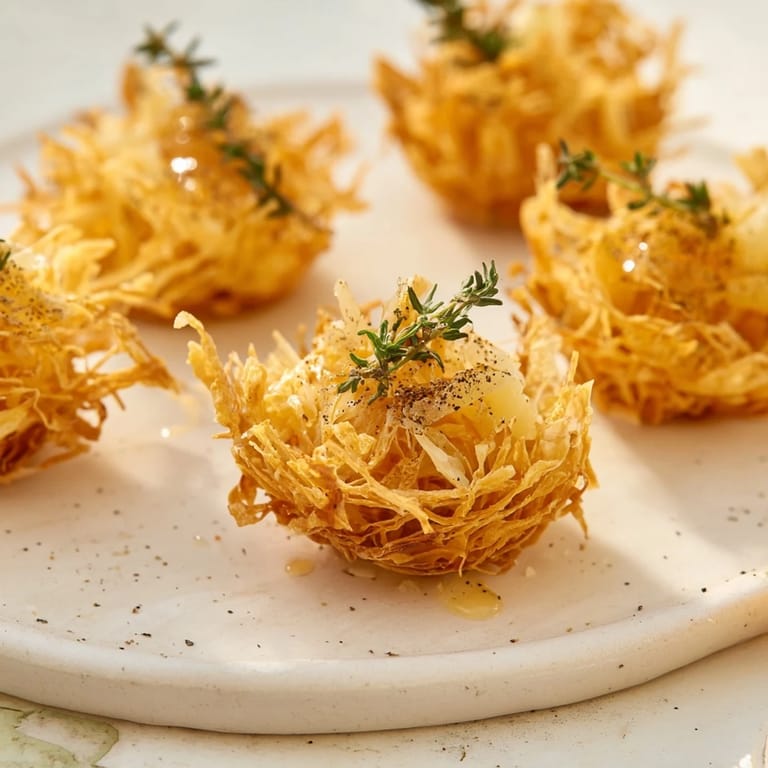
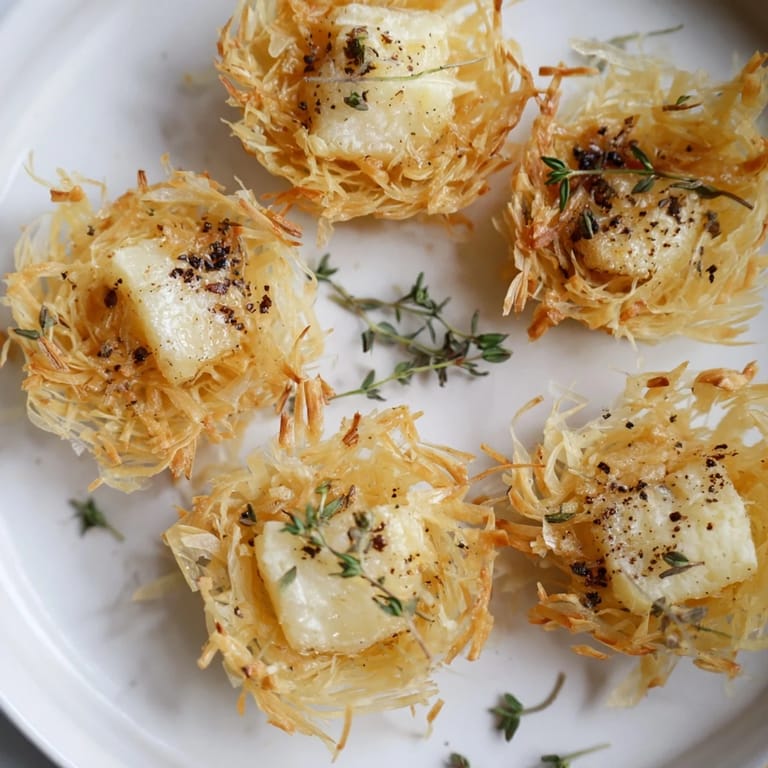
- On a parchment-lined baking sheet, form small piles of the phyllo mixture about 5–6 cm wide, pressing each one very lightly so it holds together without becoming dense. Think of them as rough, rustic sculptures.
- Toast until golden:
- Bake for 10–12 minutes, watching carefully after the ten-minute mark—you want deep golden color and a crisp texture, not brown or burnt.
- Cool and compose:
- Let the nests cool to room temperature on the baking sheet so they become fully crispy and structural.
- Assemble with intention:
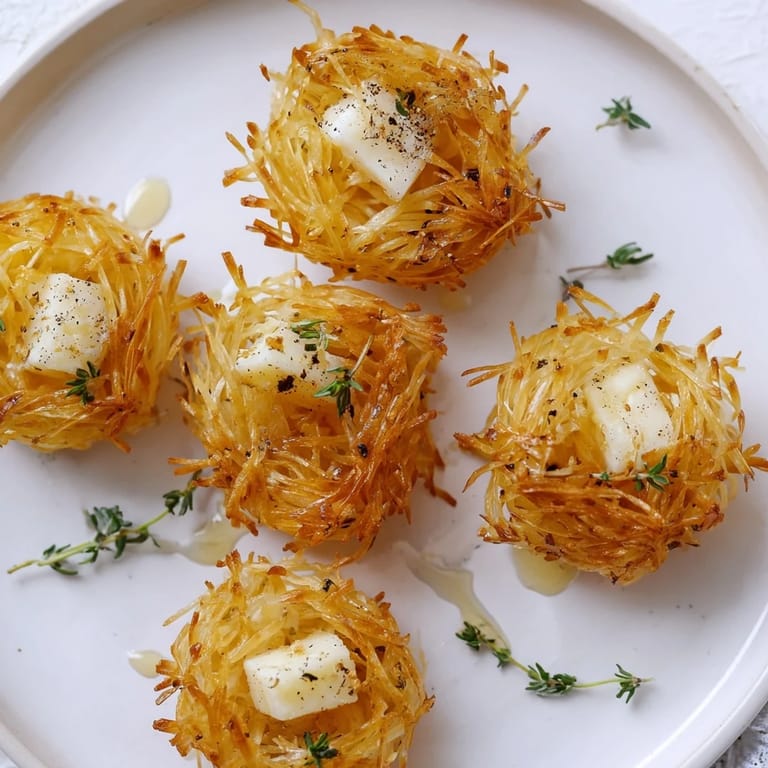
- Arrange the cooled phyllo nests on a serving board, then crown each one with a generous hunk of cheese, letting it sit naturally on top like treasure in a nest.
- Finish like an artist:
- Scatter fresh thyme sprigs around, drizzle with a whisper of honey if you're feeling it, and finish with a crack of black pepper that catches the light.
 Pin It
 The real magic happens when you watch someone bite into one of these for the first time and hear that delicate crunch, followed by the surprise of creamy farmhouse cheese meeting something so delightfully fragile. It becomes a conversation starter, a moment where food actually brings people together.
Why Farmhouse Cheeses Matter
I learned early on that buying whatever cheddar was closest wasn't going to cut it here—these cheeses are the whole point of the dish, so they deserve your attention. Farmhouse cheeses have character and complexity; they tell a story of grass and seasons and patience. When you bite into a real aged gouda alongside a creamy tomme de Savoie, you're tasting the difference between something ordinary and something memorable.
The Art of Serving
I've found that these are best presented on a wooden board or ceramic platter where they can nestle naturally, almost like they grew there. The setting matters—let the rustic beauty of the dish breathe, and people will want to linger over them. Serve them within an hour of finishing, when the phyllo is at its most dramatic and the cheese is still perfectly positioned on top like a crown.
Variations and Flavor Explorations
Once I mastered the basic version, I started playing with substitutions that kept the spirit of the dish alive. A smoked farmhouse cheese adds a campfire whisper, Manchego brings a nuttier note, and sprinkling herbes de Provence over the phyllo before baking transforms it into something subtly different. Apple slices or grapes on the side provide a refreshing counterpoint, cutting through the richness in the most elegant way.
- Try a pinch of herbes de Provence sprinkled onto the buttered phyllo before baking for an herbaceous twist.
- Serve with thin apple slices or a handful of grapes to add brightness and freshness to each bite.
- Experiment with smoked cheeses or regional varieties you find at the market—this dish adapts beautifully to what speaks to you.
 Pin It
 This appetizer taught me that sometimes the simplest approach—just phyllo, butter, and good cheese—speaks louder than anything complicated. It's become my go-to when I want to impress without breaking a sweat.
Recipe FAQs
- → What type of phyllo dough is used?
Shredded phyllo dough, also known as kataifi, is used for its delicate, crispy texture when baked.
- → Can I substitute the cheeses?
Yes, cheeses like Manchego, Comté, or smoked farmhouse varieties work well for a different flavor profile.
- → How should the phyllo nests be formed?
Gently shape small piles about 5–6 cm wide on a parchment-lined baking sheet to maintain a nest shape.
- → Is there a way to add herbal notes?
Sprinkling herbes de Provence on the phyllo before baking adds a fragrant, savory twist.
- → What garnishes complement this dish?
Fresh thyme, a drizzle of honey, and cracked black pepper enhance the flavors and presentation.