 Pin It
 I discovered protein snack boxes last summer when a friend showed up to our beach day with the most thoughtfully packed container—nothing soggy, everything fresh, and somehow it felt fancy without being fussy. That afternoon, watching her methodically pull out layers of cheese, crackers, and vegetables, I realized she'd unlocked something I'd been chasing: a snack that actually kept me full, didn't require reheating, and looked intentional enough to feel special. Now I make them every Sunday, and they've quietly become the reason I actually eat well during the week instead of defaulting to whatever's easiest.
Last month, I made four of these for my coworkers without telling them, just left them in the office fridge with their names on masking tape. The silence that followed—that moment when everyone realized they had an actual lunch—was worth more than any thank you. One person asked for the recipe immediately, and another said it was the first time in years she'd eaten something at work that made her feel taken care of. Small gesture, maybe, but that's when I knew this wasn't just about convenience.
Ingredients
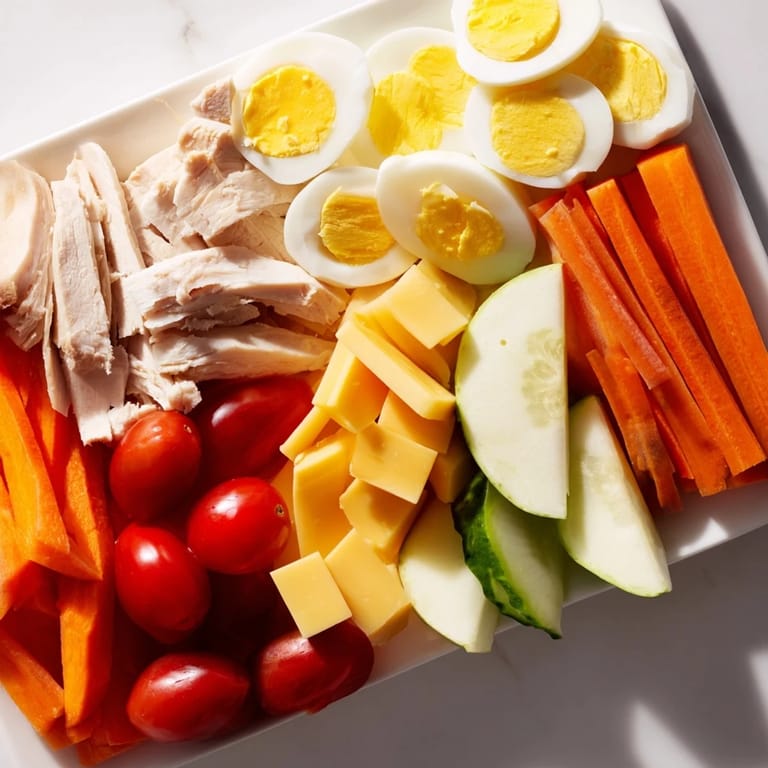
- Cooked chicken breast, 8 oz (225 g), sliced: This is your anchor protein—already cooked means zero barrier to assembly, and slicing it thin makes it pack neatly without wasting space.
- Hard-boiled eggs, 4, peeled and halved: They're the most reliable protein delivery system and stay fresh for days; I boil mine with a teaspoon of salt in the water to make peeling painless.
- Sliced turkey or ham, 4 oz (115 g): The deli counter version gives you instant protein without cooking, and it's forgiving if you're running short on time.
- Cheddar cheese, 4 oz (115 g), cubed: Cubes don't dry out the way slices do, and cheddar stays firm enough to not get mushy by day three.
- Cherry tomatoes, 1 cup: They're small enough to not take up real estate but bright enough to make the whole box look alive.
- Cucumber slices, 1 cup: Cool, hydrating, and they won't get weird sitting for a few days if you don't peel them first.
- Baby carrots, 1 cup: Their natural sweetness balances everything savory, and they stay crisp longer than you'd think.
- Apple, 1, sliced and tossed with lemon juice: The lemon is non-negotiable if you're prepping ahead—it stops browning and adds a subtle brightness you can't quite identify but makes you keep eating.
- Hummus, 1/2 cup, divided into 4 containers: This is your insurance policy against dry crackers; keep it separate until eating and everything changes.
- Whole-grain crackers, 16: Four per box, and honestly, keeping them separate is the secret that separates these from sad desk lunches.
- Mixed nuts, 1/4 cup: A tablespoon per box gives you that moment of textural surprise and keeps you from feeling deprived.
Tired of Takeout? 🥡
Get 10 meals you can make faster than delivery arrives. Seriously.
One email. No spam. Unsubscribe anytime.
Instructions
- Set up your assembly line:
- Arrange your four containers in front of you and take a breath—there's something meditative about knowing exactly what you're about to do. Have all your proteins and vegetables prepped and ready to go so you're not hunting for things mid-assembly.
- Build your protein foundation:
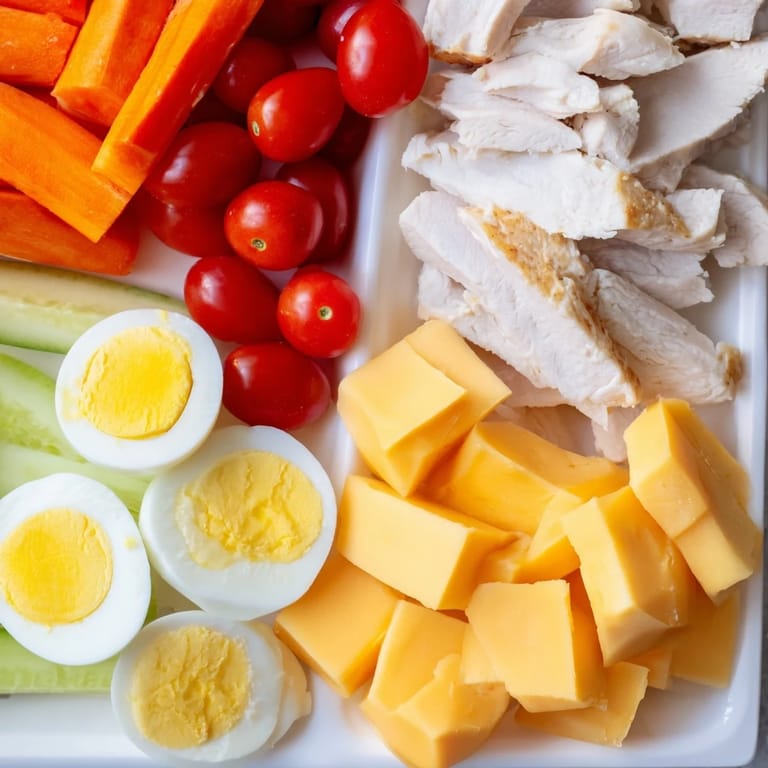
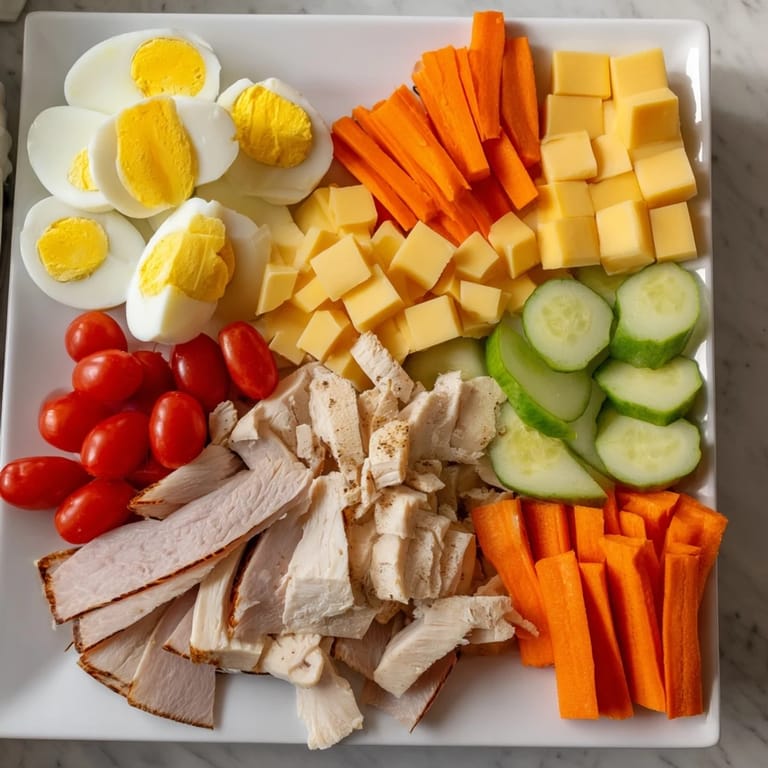
- Divide the chicken, eggs, turkey, and cheese evenly among the boxes, arranging them in different sections so nothing gets squished under anything else. Think of this as creating little pockets of flavor rather than just throwing things in.
- Add your vegetables and fruit:
- Distribute the tomatoes, cucumbers, carrots, and lemon-dressed apple slices into each box, filling in the gaps between proteins. The vegetables don't need to be precious—just make sure there's enough color that it looks intentional.
- Portion your hummus:
- Spoon hummus into four small lidded containers and nestle them into each box; keeping it separate is the difference between this tasting fresh on day one and day three. This step takes thirty seconds and changes everything.
- Add crackers and nuts carefully:
- Place four crackers and a tablespoon of nuts in each box, keeping them separate from the wet ingredients—this is the one rule that matters. If you pack them directly against hummus, they'll turn to cardboard by lunchtime.
- Seal and refrigerate:
- Close your containers and slide them into the fridge where you'll see them every time you open the door. They'll stay fresh for 3 to 4 days, which means you get multiple days of feeling ahead of your own life.
 Pin It
 There's a moment on Wednesday afternoons when I open the fridge and see these boxes lined up, and I don't feel the usual panic about feeding myself well. It's not dramatic, but it's real—that feeling of having made something kind for future you.
Customization That Actually Works
The truth about these boxes is that they're more template than recipe, which is exactly why they work. Swap the chicken for grilled shrimp if you're feeling seafood, or use tofu and miso-cashew dip if you're going plant-based—the structure stays the same, the satisfaction doesn't change. I've made Mediterranean versions with olives and artichoke hearts, added snap peas and radish slices when I wanted more crunch, and thrown in marinated mushrooms when I was feeling fancy. The beauty is that you're building a system, not following orders.
The Logistics of Staying Fresh
These boxes live in that perfect window between being healthy and being realistic. Because they're no-cook, they never have that sad reheated quality, and because everything is raw or already cooked, there's no weird texture changes after a few days. The only thing that genuinely matters for longevity is keeping wet and dry separate—hummus away from crackers, and if you're adding anything vinegar-based, keep it in a tiny container so it doesn't seep. Ice packs are your friend if you're taking these anywhere; they'll stay safely cold for a solid four hours without any fussing.
Why This Became My System
Meal prep usually feels like punishment, but these boxes feel like preparation for pleasure. There's something about having four perfect little lunches waiting that makes the whole week feel more manageable, like you've given future you a gift that doesn't require willpower. I find myself actually eating vegetables because they're right there, actually staying full because the protein is real, and actually enjoying lunchtime instead of scarfing something down while checking email. The real magic isn't in any single ingredient—it's in taking fifteen minutes to set yourself up for success without drama.
- Prep everything on Sunday so you're not scrambling Wednesday morning.
- Label your containers with dates if you're ambitious; your fridge becomes easier to navigate.
- Double-check any packaged items for allergens and cross-contamination warnings, especially the crackers and nuts.
 Pin It
 These boxes have quietly become my favorite kind of cooking: the kind that takes almost no time but makes everything after feel a little bit easier. They're not fancy, but they're thoughtful, and somehow that's everything.
Recipe FAQs
- → How long do the snack boxes stay fresh?
Keep the boxes refrigerated and consume within 3-4 days for optimal freshness and taste.
- → Can I substitute the proteins in the boxes?
Yes, try grilled shrimp, tofu, or plant-based deli slices for different flavors and dietary preferences.
- → What’s the best way to prevent apple slices from browning?
Toss apple slices with lemon juice to keep them fresh-looking and crisp in the boxes.
- → How can I keep crackers from becoming soggy?
Keep crackers separate from dips and moist ingredients until ready to eat to maintain their crunch.
- → Are these boxes suitable for gluten-free diets?
Use gluten-free crackers to make the snack boxes gluten-free without compromising on flavor and texture.
- → Can I add other vegetables for variety?
Absolutely! Snap peas, bell pepper strips, radishes, olives, or marinated artichoke hearts add extra crunch and flavor.