 Pin It
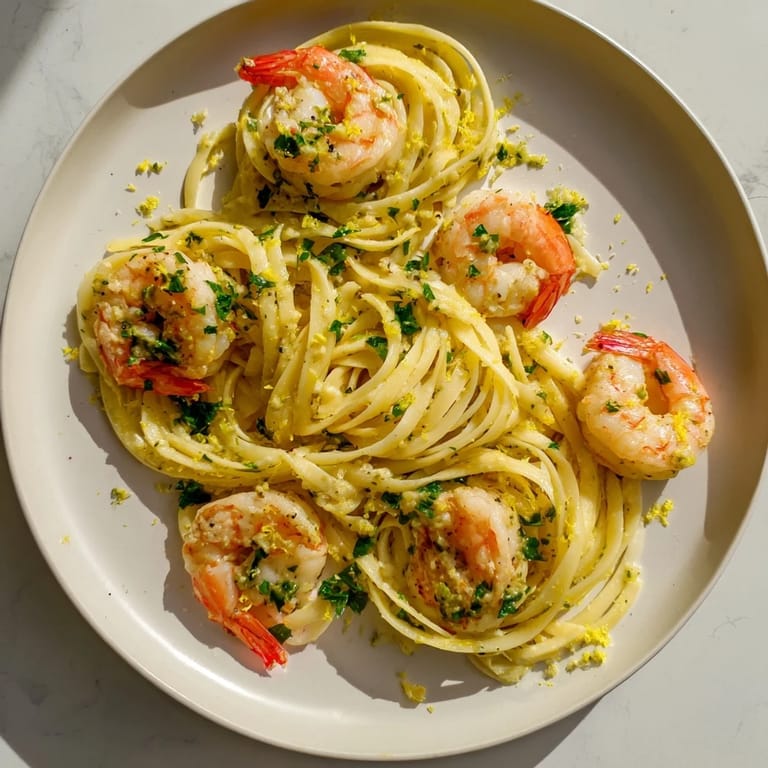
 The kitchen was quiet except for the sound of water starting to rumble in the pot. I had twenty minutes before my sister arrived, claiming she was starving and too tired to cook. I pulled shrimp from the fridge, linguine from the pantry, and decided to trust my instincts. What came together that night wasn't just dinner, it was proof that elegance doesn't require hours.
I've made this for friends who don't usually eat seafood and watched them go quiet after the first bite. There's something about the brightness of lemon cutting through butter that makes shrimp feel lighter, almost delicate. One friend asked if I'd trained in Italy. I laughed and told her I just listened to the garlic sizzle.
Ingredients
- Large shrimp, peeled and deveined (1 lb): Go for shrimp that still have a slight snap when you bend them, and always pat them dry before cooking so they sear instead of steam.
- Linguine pasta (12 oz): The flat shape grabs onto sauce better than round spaghetti, and cooking it just until al dente means it won't turn mushy when you toss it in the skillet.
- Unsalted butter (4 tbsp): Using unsalted lets you control the seasoning, and it melts into a silky base that coats everything without feeling greasy.
- Extra virgin olive oil (2 tbsp): This keeps the butter from burning and adds a fruity richness that deepens the flavor.
- Garlic, minced (6 cloves): Don't rush the garlic, let it bloom in the fat until it smells like comfort, but pull it before it browns or it'll taste bitter.
- Crushed red pepper flakes (1/4 tsp, optional): Just a pinch adds warmth without making it spicy, though I've doubled it when I wanted a little thrill.
- Lemon zest and juice (1 lemon): Zest goes in first for aroma, juice at the end for brightness, and together they make the whole dish feel alive.
- Fresh parsley, chopped (1/4 cup): Stir it in at the last second so it stays vibrant and adds a pop of color that makes the plate look intentional.
- Salt and black pepper: Season in layers, tasting as you go, because shrimp and pasta both need their own attention.
- Parmesan cheese (optional): Some people skip it with seafood, but a light dusting adds a nutty finish I can't resist.
Tired of Takeout? 🥡
Get 10 meals you can make faster than delivery arrives. Seriously.
One email. No spam. Unsubscribe anytime.
Instructions
- Boil the pasta:
- Fill a large pot with water, salt it until it tastes like the sea, and bring it to a rolling boil. Drop in the linguine and cook it until it still has a slight bite, then save half a cup of that starchy water before you drain it.
- Prep the shrimp:
- While the pasta bubbles away, lay the shrimp on a towel and pat them completely dry, then sprinkle them with a little salt and pepper. Dry shrimp will sear and caramelize instead of just sitting there sweating in the pan.
- Start the sauce:
- Set a large skillet over medium heat and add the butter and olive oil together, swirling until the butter melts into a golden pool. Toss in the garlic and red pepper flakes, stirring constantly for about a minute until the smell makes you lean closer to the stove.
- Cook the shrimp:
- Lay the shrimp in the skillet in a single layer without crowding them, and let them sit untouched for two minutes until the bottoms turn pink and golden. Flip each one and cook the other side for two more minutes, just until they curl and turn opaque.
- Add the brightness:
- Sprinkle in the lemon zest and squeeze in the juice, stirring it into the butter and shrimp. The whole pan will smell bright and sunny, cutting through the richness in the best way.
- Toss the pasta:
- Add the drained linguine directly to the skillet and use tongs to toss everything together, adding splashes of pasta water if it looks dry. The starch will help the sauce cling to every strand instead of pooling at the bottom.
- Finish and serve:
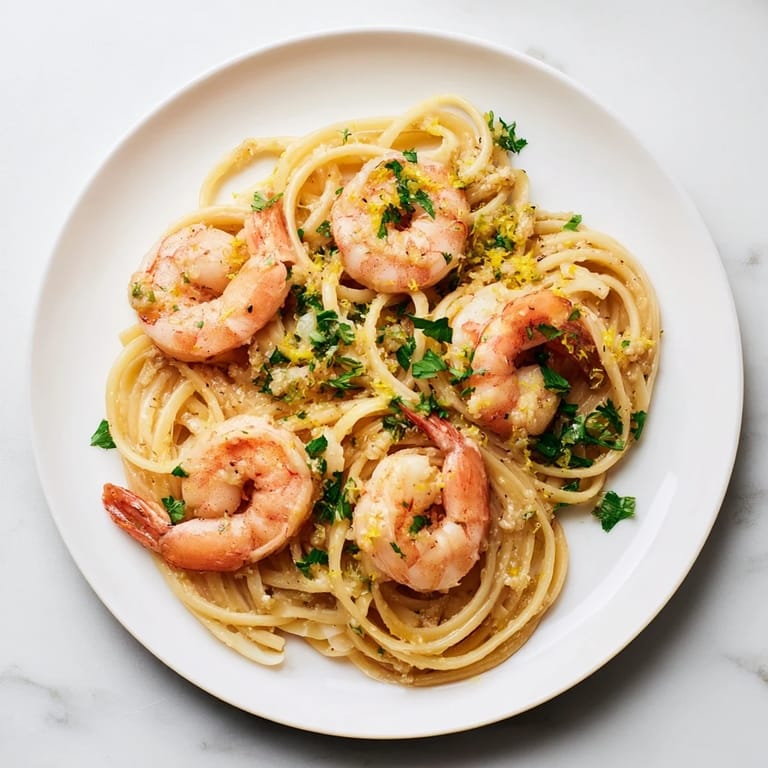
- Pull the skillet off the heat, scatter the parsley over the top, and toss one more time. Taste it, adjust the salt and pepper, and serve it hot with Parmesan on the side.
 Pin It
 I served this once on a night when everything else had gone wrong. The day had been long, the mood was low, and I didn't expect much. But as we twirled linguine onto forks and the lemon butter pooled in the bowls, the whole table softened. Sometimes a simple plate of pasta is exactly the reset you need.
Making It Your Own
If you want more depth, splash a bit of dry white wine into the skillet right before the shrimp go in and let it bubble down for a minute. I've also swapped the linguine for fettuccine when that's what I had, and it worked just as well. When I'm feeling bold, I add extra red pepper flakes and a handful of cherry tomatoes that burst and bleed into the sauce.
What to Serve Alongside
This dish is rich enough to stand on its own, but I like putting out a simple arugula salad with lemon vinaigrette to cut through the butter. A crusty baguette for mopping up every last bit of sauce is non-negotiable in my house. Pour a chilled Sauvignon Blanc or Pinot Grigio, and it'll feel like you're sitting at a little trattoria instead of your dining room.
Storing and Reheating
Leftovers keep in the fridge for up to two days, though the pasta will soak up some of the sauce as it sits. When you reheat it, add a splash of water or a pat of butter to a skillet over low heat and toss gently until warmed through. Microwaving works in a pinch, but the stovetop brings back that silky texture.
- Always store shrimp and pasta together in an airtight container to keep moisture from drying them out.
- If you're meal prepping, slightly undercook the pasta so it doesn't turn mushy when reheated.
- Garnish with fresh parsley and a squeeze of lemon right before serving to wake everything back up.
 Pin It
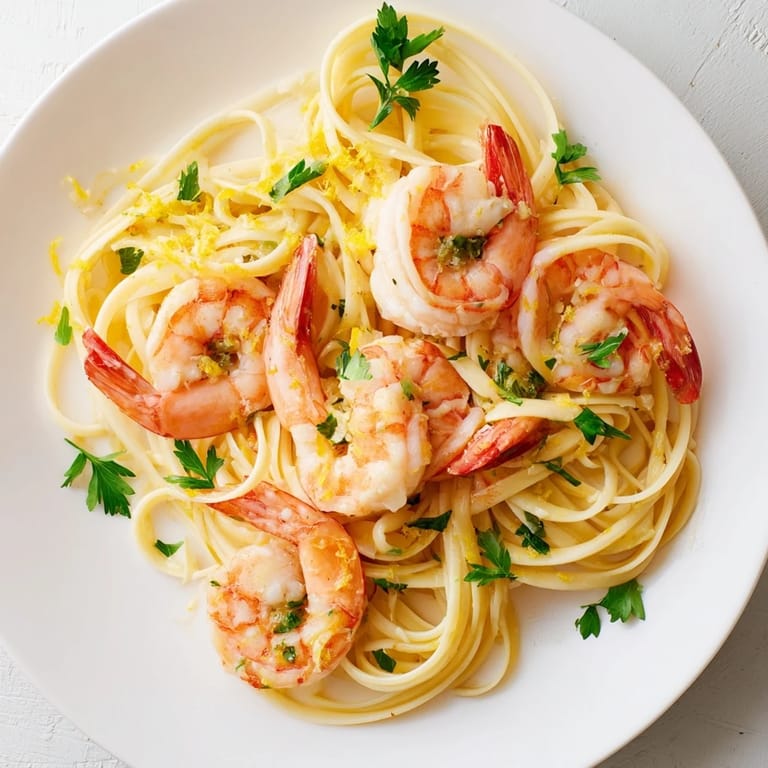
 This recipe taught me that elegance isn't about complexity, it's about knowing when to stop. Let the shrimp be tender, the lemon be bright, and the moment be simple.
Recipe FAQs
- → How do I prevent rubbery shrimp?
Cook shrimp for just 2 minutes per side until they turn pink and opaque. Shrimp continues cooking slightly after removing from heat, so avoid overcooking. Use large shrimp for easier timing and better texture control.
- → Can I prepare this ahead of time?
Peel and devein shrimp up to 8 hours ahead; store in the refrigerator. Cook the dish fresh to order, as linguine softens quickly and shrimp is best enjoyed immediately after cooking. You can prep garlic and measure ingredients in advance.
- → What's the purpose of reserved pasta water?
Pasta water contains starch that creates a silky emulsion with the butter and oil, helping the sauce coat the linguine evenly. Add it gradually while tossing until you achieve the desired consistency—too much creates a thin sauce.
- → How do I make this dairy-free?
Replace the 4 tablespoons butter with additional extra virgin olive oil, using 6 tablespoons total. Omit the Parmesan cheese or use a dairy-free alternative. The sauce remains flavorful with quality olive oil, garlic, and lemon.
- → What wine pairs best with this dish?
Crisp, light whites work beautifully—try Sauvignon Blanc, Pinot Grigio, or Vermentino. These wines' acidity complements the rich garlic butter and fresh lemon juice. You can also add a splash of dry white wine to the skillet before adding shrimp for extra depth.
- → Can I use frozen shrimp?
Yes, thaw frozen shrimp completely in the refrigerator overnight or under cold running water. Pat them dry thoroughly before cooking to ensure proper browning and prevent excess moisture in the sauce.