 Pin It
 There's a particular afternoon I can't quite shake from memory—I was standing in my kitchen after a farmers market run, holding a bundle of lemongrass so fragrant it made my eyes water a little, when I decided to throw together whatever greens and aromatics I'd just picked up. That spontaneous handful of coriander and fresh spinach transformed into something so unexpectedly comforting that I've made it dozens of times since. What started as culinary improvisation became the soup I reach for when I need something that feels both nourishing and bright.
I made this for my sister during one of those gray November evenings when we both needed something warm but not heavy. She took one sip and went quiet for a moment—not in a bad way, just that kind of quiet where you're tasting something and your brain is trying to figure out what's making it sing. She asked if there was magic in it, and honestly, I think the combination of those three green elements together really is close to magic.
Ingredients
- Fresh spinach (200 g): Use it just-washed and don't bother drying it completely—that little bit of water helps it wilt faster and keeps everything tender.
- Fresh coriander (1 large bunch): Don't skip the stems; they're packed with flavor and break down beautifully once blended.
- Lemongrass (1 stalk): The trick is removing those papery outer layers completely and slicing the tender inner part thinly so it infuses properly without leaving tough bits behind.
- Onion (1 medium): Choose one that's been sitting around a few days rather than super fresh—they caramelize more gently and add natural sweetness.
- Garlic and ginger (2 cloves and 2 cm piece): Mince the garlic fine and grate the ginger so it distributes evenly rather than settling into clumps.
- Coconut milk (400 ml): Shake the can before opening so the cream and liquid blend together; if you want extra richness, use part coconut cream instead.
- Vegetable stock (750 ml): A good-quality one makes a noticeable difference here since it's the foundation everything else builds on.
- Soy sauce or tamari (1 tbsp): Tamari is your gluten-free friend, and honestly it has a slightly rounder flavor that pairs beautifully with these herbs.
- White pepper (1/2 tsp): It's milder and more delicate than black pepper, which is exactly what this soup deserves.
Tired of Takeout? 🥡
Get 10 meals you can make faster than delivery arrives. Seriously.
One email. No spam. Unsubscribe anytime.
Instructions
- Build your aromatic base:
- Heat oil in your saucepan over medium heat and add the onion, letting it soften until it turns translucent and just barely sweetens. This takes about three minutes, and you'll notice the smell shift from sharp to mellow.
- Layer in the fragrance:
- Stir in your minced garlic, grated ginger, and finely sliced lemongrass—stay right there and keep stirring for two minutes so everything becomes golden and fragrant without burning. The kitchen should smell incredible at this point.
- Wilt the greens:
- Add your chopped spinach and coriander (saving some coriander leaves for finishing), and watch them transform from a full saucepan to something that fits in your palm within two minutes. This is when the green really deepens and the flavors begin melding together.
- Bring the broth together:
- Pour in the coconut milk and vegetable stock, letting it come to a gentle boil before turning the heat down to a simmer for ten minutes. You're not rushing this—you're letting everything get to know each other.
- Blend to silky smoothness:
- Once cooled slightly, use an immersion blender to puree everything until it reaches that luxurious creamy texture, or work in batches with a countertop blender if that's what you have. The soup should be completely smooth with no fibrous bits remaining.
- Season with intention:
- Stir in the soy sauce, white pepper, and salt, then let it simmer gently for two more minutes so the seasonings integrate fully. Taste as you go because salt and soy sauce vary by brand.
- Finish and serve:
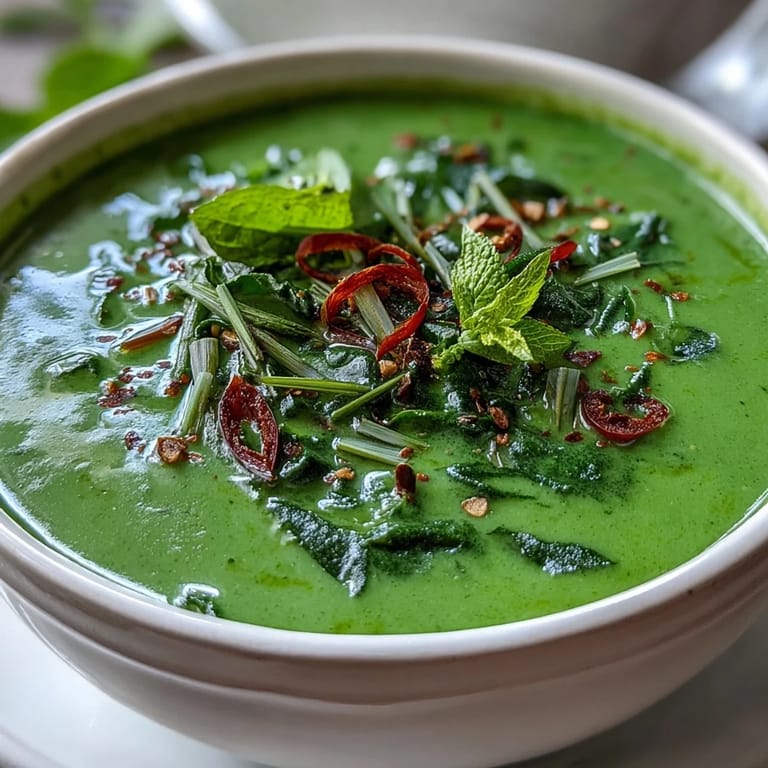
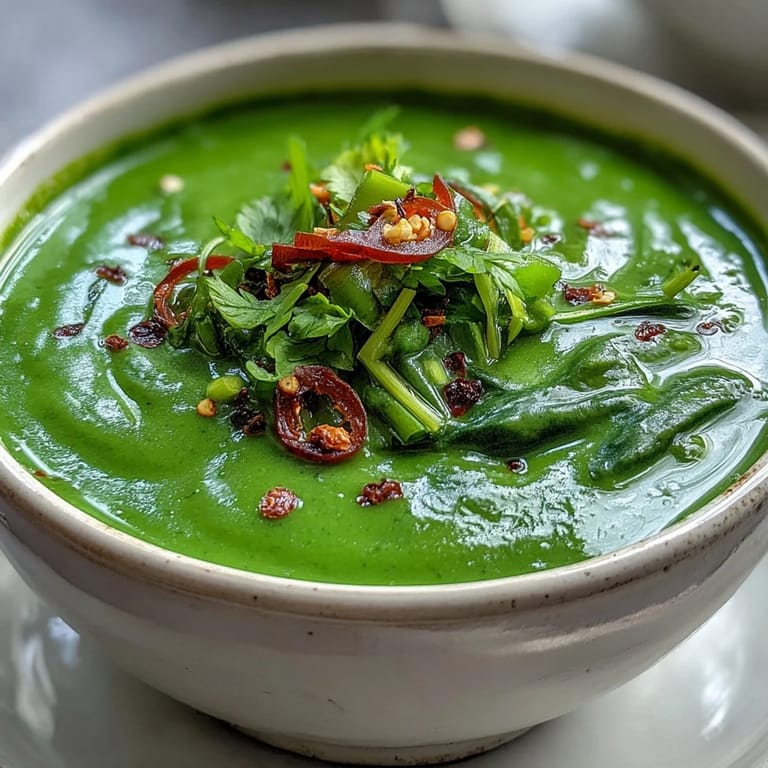
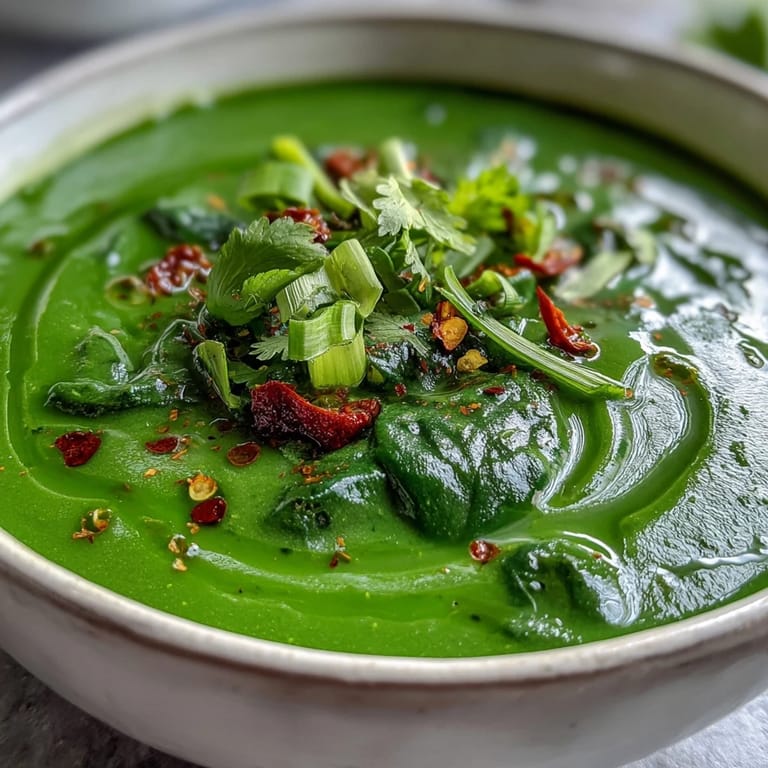
- Ladle into bowls and scatter those reserved coriander leaves on top, adding a thin slice of red chili if you like heat. Serve while it's still steaming.
 Pin It
 There's a moment in my kitchen when this soup finishes blending that always catches me off guard—the transformation from ingredients to something unified and silky feels almost alchemy-like. It's become the soup I make when someone needs comfort or when I need to remind myself that sometimes the best meals come from following your instincts and a good farmer's market haul.
The Magic of the Three Greens
Spinach, coriander, and lemongrass aren't just a random combination—they're a conversation happening in your bowl. The spinach gives body and earthiness, the coriander brings this bright citrusy quality that shouldn't work with lemongrass but absolutely does, and the lemongrass ties them together with something floral and aromatic that makes people pause. Together they create something greater than their individual parts, which is really what cooking is about.
Timing and Temperature Matter
I learned early on that rushing this soup by turning the heat up too high changes everything—the lemongrass becomes stringy, the coriander loses its brightness, and the whole thing tastes a bit aggressive. Keep your heat at a gentle simmer; the soup doesn't need to boil hard once you've combined everything. The thirty-minute timeline is real, but only if you respect that most of it is gentle simmering rather than fast cooking.
Making It Your Own
This soup is incredibly forgiving once you understand the base technique, which means you can adjust it based on what you have and what you're craving. I've made it with lime leaf instead of fresh lemongrass on days when the market was picked over, and I've added everything from coconut cream to a splash of fish sauce depending on my mood. The framework is solid enough to handle your creativity.
- If you want extra richness without drowning the herbaceous flavors, swap half the vegetable stock for coconut cream.
- A pinch of white miso stirred in at the end adds umami depth without overpowering the green herb notes.
- Serve it with jasmine rice or crispy bread to turn it from a soup course into something more substantial.
 Pin It
 This soup has become my answer to so many kitchen moments—when someone's sick, when it's cold outside, when I want to feel like I've cooked something sophisticated but didn't spend all day doing it. I hope it becomes that for you too.
Recipe FAQs
- → Can I make this soup ahead of time?
Yes, this soup keeps well for up to 3 days in the refrigerator. The flavors actually develop and improve overnight. Reheat gently over medium-low heat, stirring occasionally. Add a splash of vegetable stock if it thickens too much upon standing.
- → Is this soup freezer-friendly?
Absolutely. Cool completely before transferring to airtight containers. Freeze for up to 3 months. Thaw overnight in the refrigerator, then reheat on the stovetet. The coconut milk may separate slightly but will emulsify again when warmed.
- → Can I substitute the coconut milk?
While coconut milk provides the characteristic creamy texture and flavor, you can use heavy cream for a dairy version. For a lighter option, use half coconut milk and half vegetable broth. The texture will be less rich but still delicious.
- → What can I serve with this soup?
Crusty bread, naan, or garlic bread are perfect for dipping. Steamed jasmine rice adds substance and absorbs the flavorful broth. For a complete meal, pair with spring rolls or a fresh Asian salad with sesame dressing.
- → How can I add more protein to this dish?
Stir in cubed tofu during the last 5 minutes of simmering. Shredded chicken works beautifully for non-vegetarians. Edamame or cooked lentils also add plant-based protein while complementing the Asian flavors.
- → My soup tastes too grassy. What can I do?
The lemongrass and coriander can create strong herbaceous notes. Add more coconut milk to mellow the flavor. A squeeze of fresh lime juice brightens and balances. A touch more salt or a drizzle of sesame oil rounds out the taste.