 Pin It
 I'll never forget the moment I first created this salad on a spring afternoon when my garden was overflowing with fresh greens and herbs. I wanted to capture that vibrant emerald landscape in a single dish, something that would make people pause before eating just to admire it. The idea came to me while watching sunlight filter through basil leaves—what if I could create an entirely green salad that felt like edible art? That day, the Emerald Isle Greenscape was born, and it's been my favorite way to celebrate fresh, verdant ingredients ever since.
I made this salad for a dinner party during my friend's birthday celebration, and watching everyone's faces light up when they saw it was pure joy. One guest described it as 'a landscape you could eat,' and honestly, that's exactly what I was going for. People spent more time admiring it than eating it, which made me realize that food is as much about visual delight as it is about flavor.
Ingredients
- Baby spinach leaves (100 g): The foundation of your green canvas—so tender and mild, it lets other flavors shine. I learned to wash and dry them thoroughly so they stay crisp on the platter.
- Arugula (50 g): This brings a peppery kick that wakes up your palate. Its slightly bitter edge is what makes this salad feel sophisticated rather than one-note sweet.
- Cucumber, thinly sliced (1 small): The water content keeps everything refreshing, and those thin slices catch light beautifully on the platter. Use a mandoline if you have one for silky-thin layers.
- Green bell pepper, diced (1): Sweet and crunchy, it adds substance without heaviness. The key is dicing it small so the pieces nestle nicely between other ingredients.
- Kiwis, peeled and sliced (2): These bring color variation with their gorgeous green-and-white interior, plus a subtle tartness. I always use ripe ones—they should yield slightly to pressure.
- Green grapes, halved (100 g): A touch of natural sweetness and juicy bursts. Halving them makes them easier to eat and shows off their beautiful interior.
- Green olives, pitted and sliced (50 g): Briny and bold, they're the secret depth-giver. Their complexity prevents the salad from tasting one-dimensional.
- Fresh basil leaves (30 g): The aromatic soul of this dish. Tuck them in just before serving to keep them as green and fresh as possible—basil bruises easily, so handle gently.
- Basil pesto (3 tbsp): This dressing is what ties the entire composition together. If you make your own, you control the quality and can adjust the pine nuts for your preference.
- Extra-virgin olive oil (2 tbsp): This elevates the dressing from simple to luxurious. The quality matters—use one you'd drizzle on bread alone.
- Lemon juice (1 tbsp): Bright acidity that balances the richness of the olive oil and pesto. Fresh lemon always beats bottled.
- Salt and freshly ground black pepper: To taste. Season gradually—you can always add more, never less.
- Fresh mozzarella, torn into pieces (100 g): This is your white river flowing through the green landscape. Tear it gently so it stays creamy and tender. Cold mozzarella is less likely to break apart.
- Crème fraîche or Greek yogurt (1 tbsp, optional): This optional addition softens the mozzarella's appearance and adds richness. A tiny dollop beside the cheese creates a beautiful visual accent.
Tired of Takeout? 🥡
Get 10 meals you can make faster than delivery arrives. Seriously.
One email. No spam. Unsubscribe anytime.
Instructions
- Build your green base:
- Arrange your baby spinach and arugula directly on a large serving platter, creating a loose, organic landscape. Don't worry about perfection—nature isn't perfectly ordered, and neither should this be. Let the leaves overlap and create depth with lighter and darker shades of green.
- Layer in the fresh vegetables:
- Scatter your cucumber slices and diced bell pepper over the greens in an artful way. Think about how light hits different surfaces—thinner cucumber slices will be more translucent and catch the light differently than the pepper pieces. Distribute evenly so every forkful will have both.
- Add the jewel-toned fruits:
- Now comes the fun part. Scatter your kiwi slices, grape halves, and olive slices across the platter. You're not arranging a strict pattern—you're building a landscape with depth and visual interest. Let some ingredients cluster while others stand alone. The kiwis with their white interior are particularly striking against the darker greens.
- Tuck in the basil:
- Gently distribute fresh basil leaves throughout. Don't shred them—whole leaves look more alive and fresh. They'll add pops of lighter green and the aroma will be noticeable as soon as someone approaches the platter.
- Prepare your dressing:
- In a mixing bowl, whisk together your pesto, olive oil, and lemon juice until emulsified. You'll notice the dressing becoming lighter and more uniform in color. Taste and adjust the salt and pepper—this dressing should be assertive enough to dress a raw salad without overpowering the delicate greens.
- Dress the salad:
- Drizzle the dressing evenly over the entire arrangement. Work slowly and deliberately, like you're painting. The dressing will start to bring all those vibrant greens into harmony.
- Create the mozzarella river:
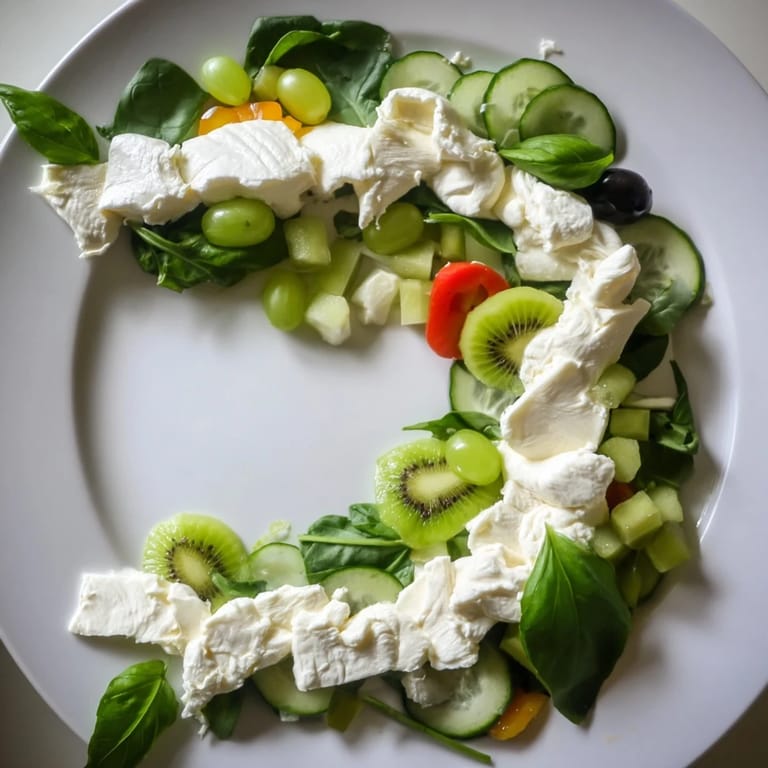
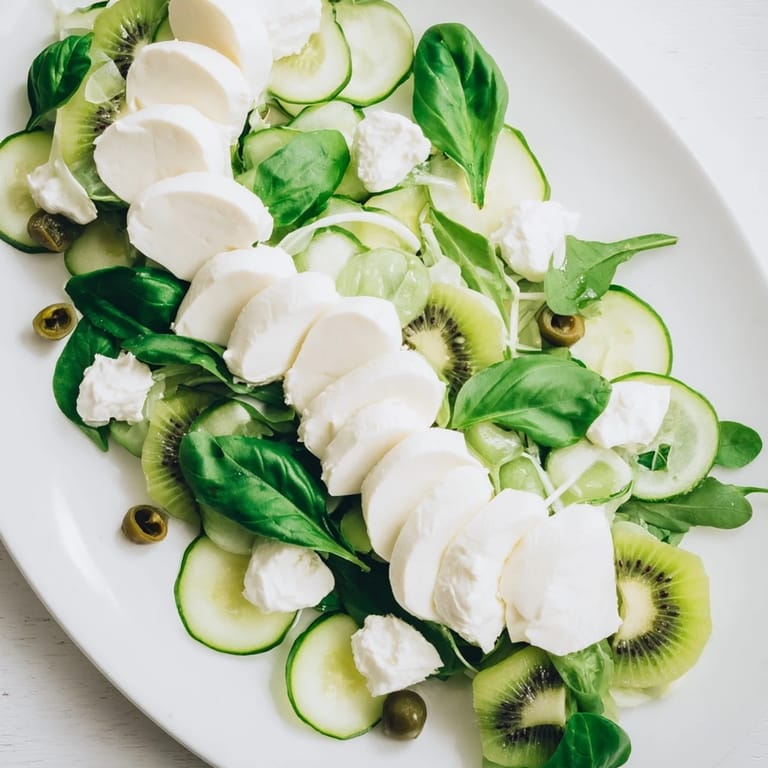
- This is the moment of truth. Take your torn mozzarella pieces and arrange them in a gentle, winding line across the salad—like a river flowing through a green valley. Step back and look at it. Adjust and reposition pieces until it feels balanced. If using crème fraîche or yogurt, place tiny dollops alongside the mozzarella for richness and visual contrast.
- Serve with ceremony:
- Present the salad immediately, encouraging guests to admire it before tossing. There's something special about appreciating food as art before it becomes sustenance.
 Pin It
 What I love most about this salad is how it transformed a simple dinner party into a moment of genuine connection. Everyone gathered around the platter, phones came out to photograph it, and then as we tossed and shared it, the conversation became richer, the laughter fuller. Food has this quiet power to do that, especially when it's beautiful.
The Art of Plating a Raw Salad
Creating this salad taught me that plating isn't just for fancy restaurants—it's a way of showing respect for your ingredients and your guests. When you take time to arrange a salad thoughtfully, you're saying 'I cared enough to make this beautiful for you.' The shades of green matter more than you'd think. Baby spinach is dark and lush, cucumber is pale and subtle, kiwi is bright and jeweled, and basil is fresh and lifted. Varying these shades prevents visual monotony. I learned to place darker elements slightly behind lighter ones so the lighter ones catch the eye first and draw the viewer's gaze across the platter.
Flavor Layering Secrets
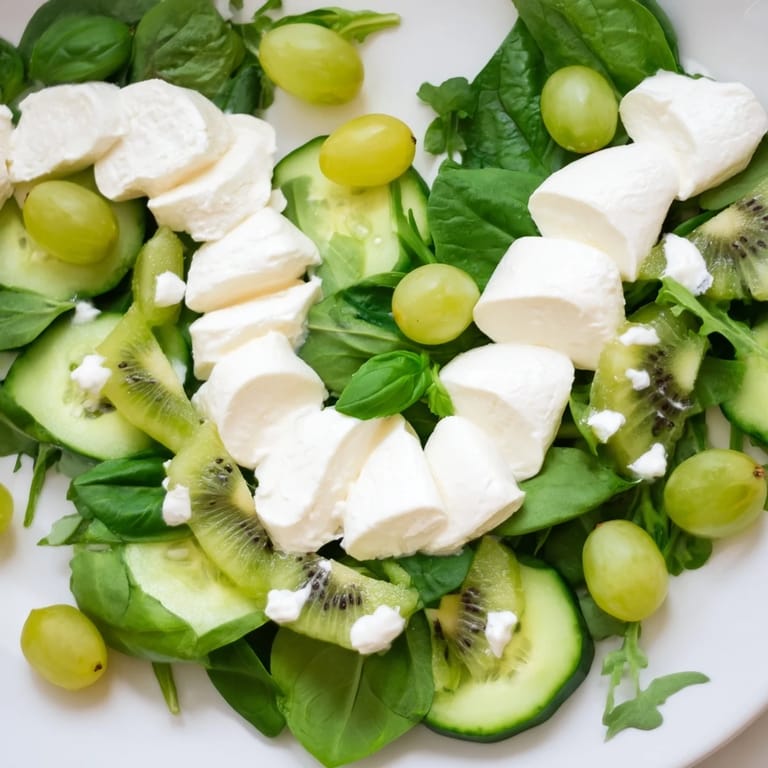
This salad works because it plays with contrast. The peppery arugula against sweet grapes, the briny olives against delicate mozzarella, the tartness of kiwi against the richness of pesto—it's all a conversation between flavors. When I first made it, I tasted as I assembled, adjusting the pesto amount and lemon juice until everything sang together. Every element has a purpose and a reason for being there. The basil is aromatic, the olives provide umami depth, the kiwis add brightness, and the mozzarella anchors everything with creamy richness.
Variations and Occasions
I've made this salad for everything from intimate dinners to garden parties, and it adapts beautifully. The formula stays the same—lush greens, fresh vegetables, vibrant fruits, creamy cheese, and pesto dressing—but the details can shift. I've added toasted pistachios for crunch on winter evenings, scattered pumpkin seeds for earthiness, and occasionally swapped the arugula for watercress when I wanted something even peppery. For vegan versions, dairy-free pesto and plant-based mozzarella work surprisingly well. The salad always transforms a table, no matter what occasion brings people together.
- Toasted pistachios add crunch and a subtle sweetness that complements the kiwis
- Pumpkin seeds bring an earthy note and make the salad heartier
- For a vegan version, use cashew-based pesto and store-bought vegan mozzarella—the visual impact remains stunning
 Pin It
 This salad has taught me that the most delicious moments often come from the simplest ingredients, arranged with intention and served with joy. Make it, admire it, and share it with people who matter to you.
Recipe FAQs
- → What greens are used in the salad?
Baby spinach and arugula form the base, providing fresh, tender textures and a peppery note.
- → How is the dressing prepared?
The dressing combines basil pesto, extra-virgin olive oil, lemon juice, salt, and pepper for a bright, herbaceous finish.
- → Can the mozzarella be substituted?
Yes, vegan cheese alternatives can be used for a dairy-free option while maintaining the creamy element.
- → What gives the salad its layered green appearance?
A mix of cucumber, green bell pepper, kiwi, green grapes, green olives, and fresh basil creates varied green tones and textures.
- → Are there suggestions for additional toppings?
Toasted pistachios or pumpkin seeds add crunch and complement the fresh flavors well.
- → What are good beverage pairings?
Try a crisp Sauvignon Blanc or citrusy sparkling water to enhance the salad’s freshness.