 Pin It
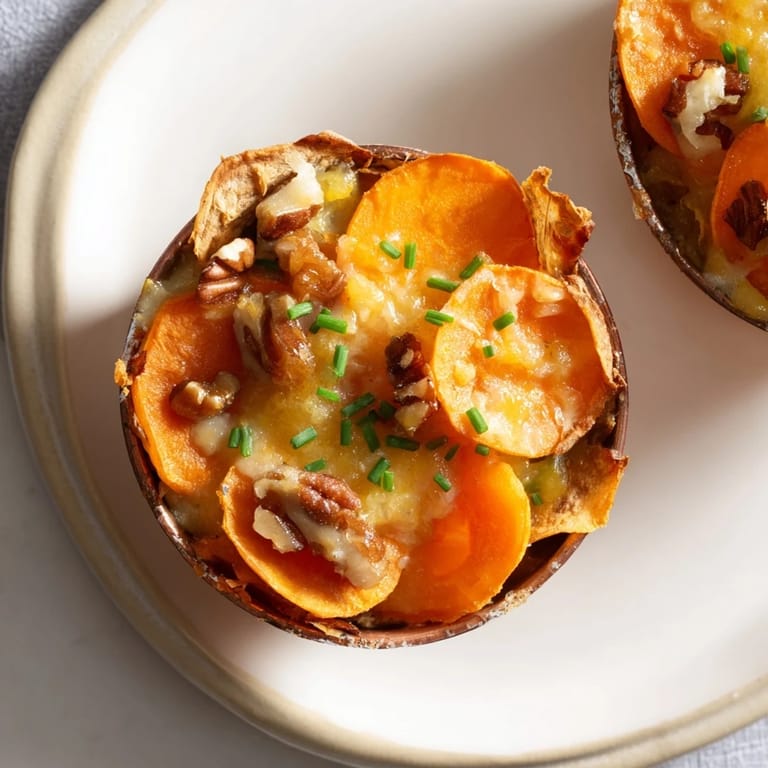
 I discovered this dish on a crisp October afternoon at a farmers market in Vermont, where a chef was serving individual copper ramekins filled with the most stunning layers of roasted vegetables. The moment I tasted it—the way the sweet potatoes' natural sweetness played against the aged cheddar's sharp bite, with those chewy apricots adding an unexpected brightness—I knew I had to recreate it at home. Now, whenever autumn arrives, this becomes my ritual, a way of celebrating the season's abundance in the most beautiful way possible.
I'll never forget when I made this for my friend Sarah on her birthday, serving it in those copper ramekins right out of the oven with the cheese still bubbling and golden. The way her face lit up—she said it felt too beautiful to eat, but she couldn't stop once she started. That's when I realized this dish has a magic to it that goes beyond just being delicious.
Ingredients
- Sweet potatoes, 2 medium, peeled and thinly sliced: These are your foundation, providing natural sweetness and a creamy texture when roasted. The key is slicing them uniformly so they cook evenly and layer beautifully
- Carrots, 2 large, peeled and thinly sliced: Carrots add earthiness and visual warmth with their golden hue. I've learned to slice them on a mandoline for those perfect, even rounds that stack like coins
- Olive oil, 2 tablespoons: Just enough to coat the vegetables and help them caramelize at the edges. Use a good quality oil—you'll taste the difference
- Smoked paprika, 1 teaspoon: This is where the magic happens. The smoky depth transforms simple roasted vegetables into something mysteriously sophisticated
- Sea salt, ½ teaspoon and black pepper, ¼ teaspoon: Season generously but thoughtfully. These humble seasonings wake up all the other flavors
- Dried apricots, ½ cup, sliced: The secret ingredient that elevates this from ordinary to memorable. The tartness and chew provide delightful contrast to the soft vegetables
- Pecan halves, ½ cup, lightly toasted: Toast them yourself if you can—the difference is remarkable. They add crunch and a buttery richness that ties everything together
- Aged cheddar cheese, 1 cup, coarsely grated: Use the sharpest aged cheddar you can find. This is not the time for mild cheese—you want something with backbone and character
- Fresh chives, 2 tablespoons, finely chopped (optional): The final garnish that adds a whisper of onion and a pop of green. Don't skip it if you have fresh herbs on hand
Tired of Takeout? 🥡
Get 10 meals you can make faster than delivery arrives. Seriously.
One email. No spam. Unsubscribe anytime.
Instructions
- Get your oven ready:
- Preheat to 400°F (200°C). This temperature is crucial—hot enough to caramelize the vegetables' edges and melt the cheese perfectly, but not so hot that they burn before cooking through
- Coat the vegetables:
- Toss your sweet potato and carrot slices in a large bowl with olive oil, smoked paprika, salt, and pepper. Use your hands if you need to—feel the oil coating every slice, see that beautiful orange dust of paprika distributed evenly. This is where flavor begins
- Build your layers:
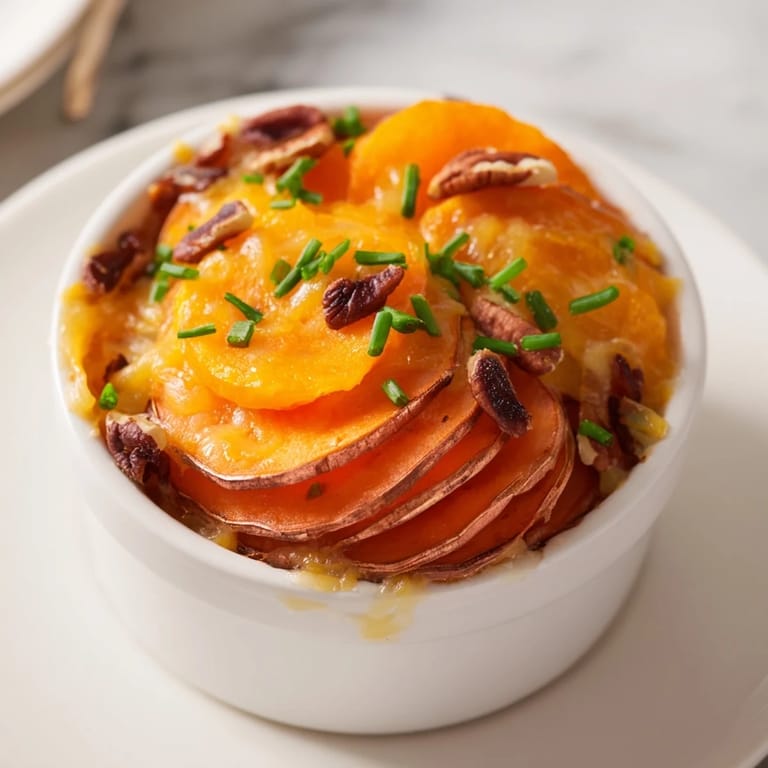
- Now for the most satisfying part. Take your four copper ramekins and start layering. A few sweet potato rounds, then carrot slices, then scatter some apricot slivers and pecans. Alternate and repeat, pressing gently so everything nestles together like a cozy blanket. The arrangement matters—aim for interlocking layers that look almost jewel-like
- First bake:
- Cover each ramekin loosely with foil and bake for 20 minutes. You're cooking the vegetables through until they're tender but still holding their shape. The foil keeps them from drying out while they steam slightly
- The golden finish:
- Remove the foil and top each ramekin with your grated aged cheddar. A generous handful on each one. Back into the oven for 5 more minutes, until the cheese is melted and just beginning to turn golden at the edges. Watch it carefully—you want cheese, not charcoal
- Rest and garnish:
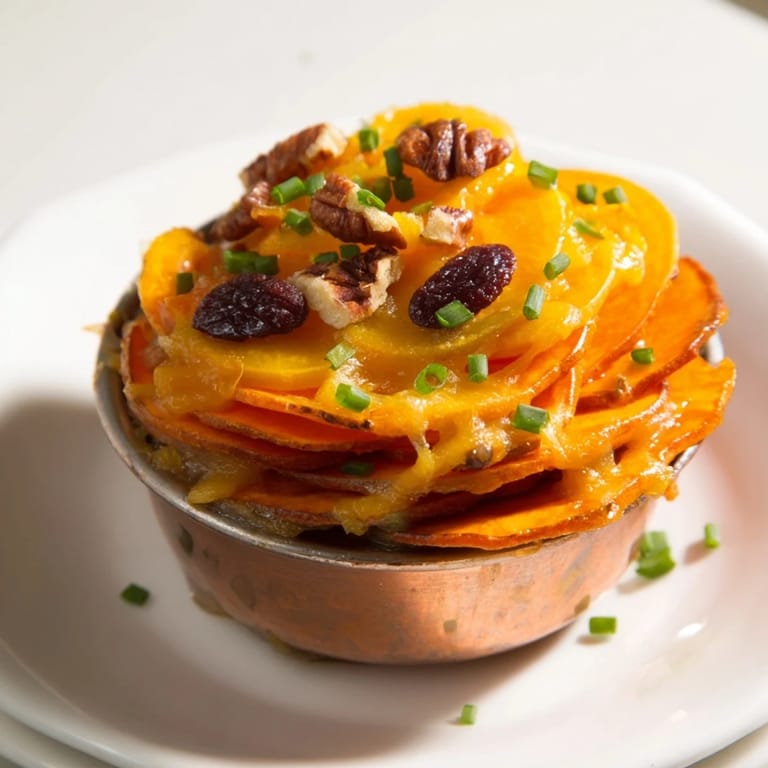
- Let each ramekin cool just for a moment so you don't burn your mouth on the molten cheese. Scatter fresh chives over the top if you have them, and serve warm, right in the ramekin. That copper vessel keeps the food warm and makes each serving feel special
 Pin It
 I made this once for a dinner party where someone had brought an expensive bottle of Chardonnay, and I was nervous my simple vegetable dish wouldn't measure up. But watching people close their eyes after that first bite, seeing how the wine and the smoked paprika and the sharp cheddar danced together—that's when I understood that restraint and quality ingredients matter more than complexity.
The Story Behind the Name
I call this 'Copper Penny Warmth' because of those copper ramekins and the way the roasted vegetables—sweet potato and carrot—look like polished pennies stacked together. But it's also about warmth: the warmth of the oven, the warmth of food that feels luxurious but approachable, the warmth of gathering around something beautiful and unpretentious. Every time I serve it, the kitchen fills with this amber glow and a sense of occasion that makes people slow down and actually savor their food.
Perfect Pairings and Occasions
This dish bridges the gap between starter and side, which is part of why I love it so much. Serve it as an opening course before a roasted chicken or herb-brined turkey. Or pair it with a simple green salad and crusty bread for a vegetarian main. The recipe calls for a medium-bodied Chardonnay or spiced cider, and honestly, that pairing is non-negotiable—the way those flavors harmonize feels almost intentional, like they were meant to find each other on the same plate.
Making It Your Own
Once you've made this once, you'll find yourself experimenting. I've swapped dried apricots for figs when I wanted something earthier, tried candied orange peel for brightness, even added a touch of maple syrup to the oil mixture one November. The structure stays the same, but the story changes. For a vegan version, plant-based cheddar melts beautifully, though I'd recommend tossing in some extra toasted pecans for that savory depth you lose without the dairy. The magic isn't in rigid rules—it's in understanding how sweet and savory, soft and crunchy, earthy and bright all come together.
- Try dried figs or dates if apricots aren't your favorite stone fruit
- A pinch of ground ginger or cinnamon adds unexpected warmth
- Walnuts work just as beautifully as pecans if that's what you have on hand
 Pin It
 This recipe reminds me that some of the most elegant food doesn't require skills you don't have or ingredients you can't find—it just requires paying attention to quality and layering flavors intentionally. Make this once, and it becomes part of your autumn tradition.
Recipe FAQs
- → What vegetables are used in Copper Penny Warmth?
Sweet potatoes and carrots are thinly sliced and roasted, providing a tender base with a smoky flavor.
- → Can I substitute the dried apricots?
Yes, dried figs or dates can be used to vary the sweetness and texture of the dish.
- → How is the cheddar added during cooking?
Grated aged cheddar is sprinkled on top after initial baking, then returned to the oven to melt and develop a golden finish.
- → Are there nut ingredients in this dish?
Yes, toasted pecans provide a crunchy, nutty contrast layered within the dish.
- → Is this dish suitable for gluten-free diets?
When using gluten-free cheese, the dish is suitable for gluten-free diets, but always check labels to be sure.