 Pin It
 I'll never forget the evening I first assembled a black and white platter for a gallery opening. Standing in my tiny kitchen at midnight, I was suddenly struck by how elegant simplicity could be—just two colors, arranged with intention, and suddenly everything felt sophisticated. That night taught me that sometimes the most memorable dishes aren't complicated; they're the ones that make people pause and really look. This black and white formal affair became my go-to when I wanted to create drama without stress.
I remember my friend Sarah's face when she walked into my apartment and saw this platter laid out for her engagement party. She literally gasped. Not because the ingredients were rare or expensive, but because someone had taken the time to create something that felt intentional and thoughtful. That's when I realized this isn't just food—it's a love language expressed through pattern and contrast.
Ingredients
- Pitted black olives (Kalamata or Niçoise): These are your anchor—use about 100 grams. Kalamata olives have this deep, slightly fruity richness that makes them feel less like a snack and more like a statement. I learned the hard way that pitting them yourself is worth the time; they taste fresher and you avoid the metallic tinge of pre-pitted versions.
- Dark rye bread: Eight slices, cut into geometric shapes. Rye has this subtle earthiness that whispers rather than shouts, letting your white elements sing.
- Fresh mozzarella balls (bocconcini or ciliegine): About 200 grams of the small ones, drained well. These are pure magic—creamy, delicate, and they catch light beautifully on the platter. Pat them dry with paper towels or they'll weep moisture and ruin your geometric dreams.
- Sliced mozzarella: One large ball, sliced thin. This becomes your canvas for sesame seeds and vanilla bean.
- Black sesame seeds: Just one tablespoon, but they're tiny flavor and texture bombs. They add nuttiness and visual pop.
- White sesame seeds: Another tablespoon. These catch light and create dimension on darker surfaces.
- Blanched almonds: Sixteen of them, peeled and ready to go. They're your minimalist white accent—simple, elegant, and they ground the arrangement.
- Black mission figs (optional): Eight figs, halved. I include these when I want sweetness to play a role. They're optional because not everyone wants their savory moment interrupted by fruit, and I respect that.
- Vanilla bean: One pod, seeds scraped out. This is the secret that makes people tilt their heads and say, 'what is that beautiful thing?' It's aromatic sophistication in tiny black specks.
- Extra virgin olive oil: Two tablespoons. Quality matters here because there's nowhere to hide—it's literally one of five components.
- Flaky sea salt and cracked black pepper: To taste. These are your seasoning whispers, not shouts.
Tired of Takeout? 🥡
Get 10 meals you can make faster than delivery arrives. Seriously.
One email. No spam. Unsubscribe anytime.
Instructions
- Cut your bread into geometric intention:
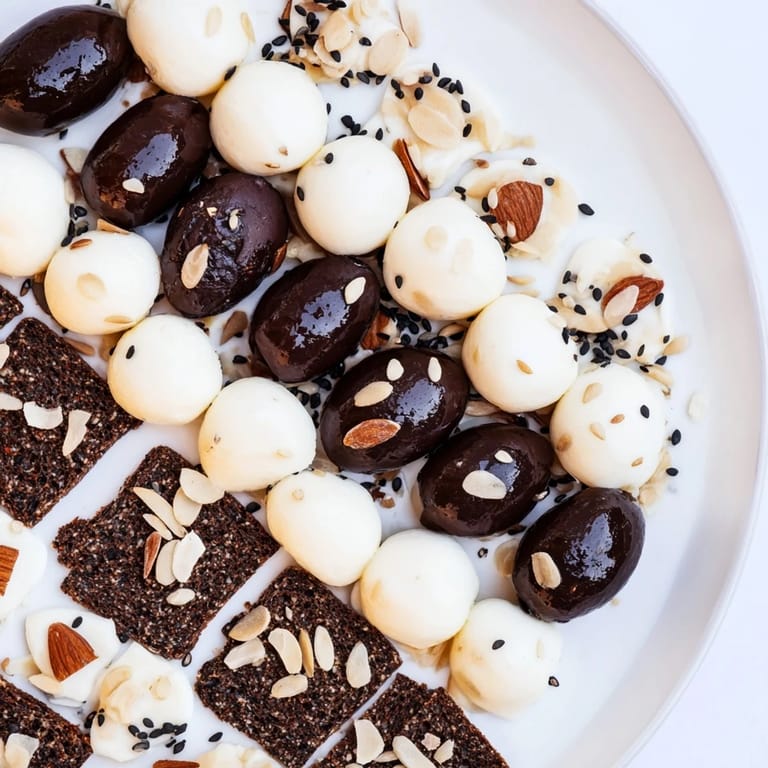
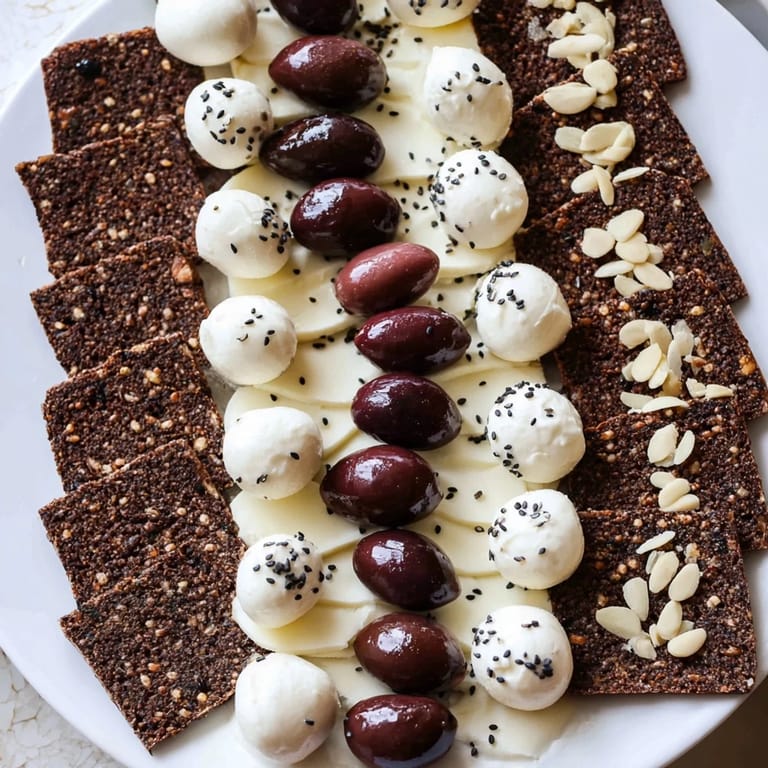
- Using a sharp knife, cut those dark rye slices into squares, triangles, or rectangles. I promise this step is where the magic begins. You're not just cutting bread; you're creating a foundation for intentional arrangement. Lay these pieces on your large platter in alternating rows or patterns—think checkerboard, think stripes, think 'I planned this.' The geometric precision is what makes people believe you know what you're doing.
- Create your black and white lines:
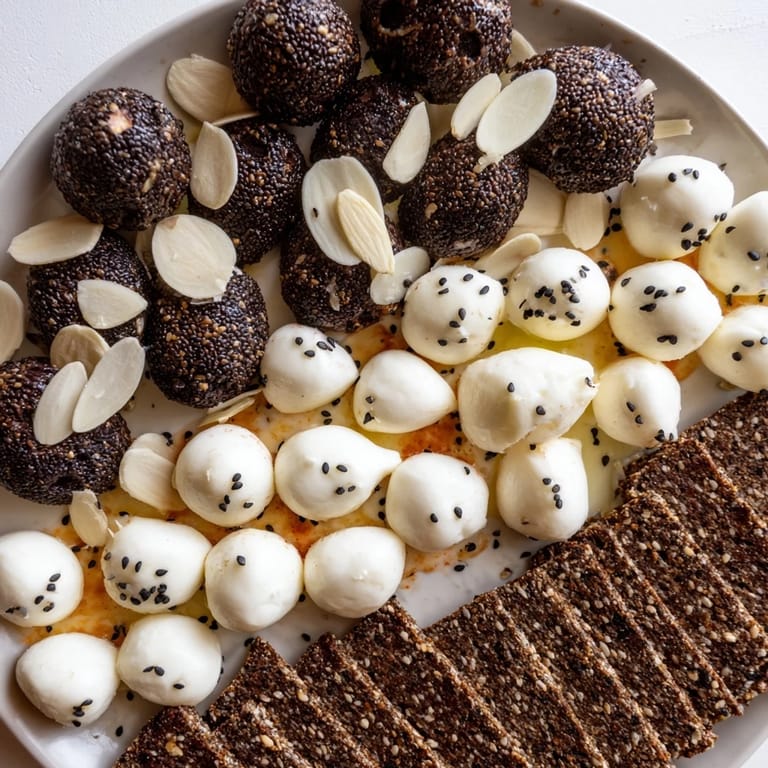
- Now place your black olives and fresh mozzarella balls in alternating lines or circles. This is where you're creating visual tension and balance. Step back and look at it. Does it feel balanced? Are the blacks and whites playing nicely together? If it doesn't feel right, move things around. There's no wrong way to do this, only ways that feel more intentional to you.
- Layer your sliced mozzarella:
- Take those thin slices of the large mozzarella ball and arrange them in geometric shapes—folds, overlaps, standing up slightly. This is where texture enters the conversation. The slices should cascade or stand like tiny edible sculptures.
- Add your sesame seeds:
- Sprinkle black sesame seeds generously over the white mozzarella and white sesame seeds over the rye bread. Watch how they settle into the crevices and catch light. This step adds both texture and that 'I really thought about this' element.
- Include sweetness if it calls to you:
- If you're using the black mission figs, halve them now and place them strategically. They should feel like punctuation marks in your composition, not scattered randomly.
- Place your almond accents:
- Arrange the blanched almonds in minimalist clusters or deliberate lines. These are your final white notes, the thing that makes someone lean in and notice.
- Dress with care:
- Drizzle extra virgin olive oil over the cheese and bread. Do this slowly, intentionally. Watch where it pools and shines. Season lightly with flaky sea salt. If using black pepper, crack it fresh and apply sparingly—you want it to be a suggestion, not a heavy hand.
- Add your vanilla magic:
- Using the tip of a sharp knife, gently scrape the seeds from your vanilla bean pod. They'll come away as tiny black specks. Dot them artistically across your mozzarella slices. Yes, this is unusual. Yes, it's exactly why people will ask what you did differently.
- Serve with confidence:
- Bring this to the table immediately if you want maximum crispness, or cover and refrigerate for up to an hour. Either way, you've created something that looks like it belongs in a design magazine.
 Pin It
 My grandmother once told me that presentation is the first taste, and this platter proved her right. When my mother's book club came over and everyone photographed the arrangement before eating anything, I understood that sometimes a dish's greatest gift is making people feel like they're part of something elegant and intentional.
The Art of Arrangement
There's a rhythm to building this platter that almost feels meditative. I start with the bread because it grounds everything—it's your dark anchor point. Then I build around it like I'm composing music, using the contrast of black olives and white cheese as my main melody. The sesame seeds are my crescendo, the almonds my final resolve. After making this a dozen times, I've realized that the arrangement matters as much as the ingredients. You're not just feeding people; you're showing them that you care enough to make something beautiful.
Flavor Pairing and Wine Companionship
This platter whispers rather than shouts, which means it pairs beautifully with crisp, bright beverages. A dry sparkling wine cuts through the richness of the mozzarella and makes the olives taste even more briny and sophisticated. If you prefer still wine, a crisp Sauvignon Blanc is your friend—it has enough acidity to refresh your palate between bites, and enough minerality to feel formal and intentional. I've learned that when food is this simple, the beverages become equal partners in the experience.
Variations and Personal Touches
Once you've mastered the classic version, you can play. For a gluten-free gathering, substitute dark gluten-free bread and no one will know the difference—the arrangement and visual impact remain just as striking. Add thinly sliced daikon radish to expand your white palette, or black garlic to deepen your dark notes and add umami richness. I once added thinly shaved black radish for earthiness, and it became my new favorite version. The framework is strong enough to handle your personal touch.
- Try adding paper-thin slices of white truffle (if your budget allows) for an element of luxury and aroma.
- Experiment with different bread types while maintaining the dark-light contrast—pumpernickel, dark sourdough, or black sesame seed bread all work beautifully.
- Consider microgreens as a final garnish if you want a whisper of green, though this technically breaks the black and white rule—sometimes rules are made to be bent thoughtfully.
 Pin It
 This platter is proof that elegance doesn't require complexity, and sophistication is just careful attention to detail. Serve it with confidence, knowing that you've created something that's as beautiful to look at as it is satisfying to eat.
Recipe FAQs
- → What ingredients create the black and white contrast?
Black olives, dark rye bread, black sesame seeds, and black mission figs form the black elements, while fresh mozzarella, white sesame seeds, and blanched almonds provide the white accents.
- → How is the geometric pattern achieved on the platter?
Dark rye bread is cut into squares, triangles, or rectangles and arranged in alternating rows, complemented by alternating lines or circles of black olives and mozzarella balls.
- → Can this dish accommodate dietary restrictions?
Yes, gluten-free dark bread can substitute rye bread for gluten sensitivity, maintaining the visual and textural contrast.
- → What flavors enhance the platter's aroma?
Vanilla bean seeds are delicately scraped over mozzarella slices to add a subtle, elegant aromatic note balancing savory flavors.
- → How should this platter be served for best freshness?
Serve immediately to preserve crispness, or cover and refrigerate briefly (up to one hour) before serving.
- → What beverage pairs well with this dish?
A dry sparkling wine or a crisp Sauvignon Blanc complements the fresh, contrasting flavors beautifully.