 Pin It
 I discovered this bowl on a Tuesday afternoon when I was craving something bright and a little spicy, but didn't want to spend hours in the kitchen. The combination of sticky gochujang and fresh orange juice hit me like a revelation—suddenly I understood why this flavor pairing had been living rent-free in my head. That first bite, with the warm salmon and cool avocado, made me realize I'd been overthinking dinner for way too long.
I made this for my friend who's usually skeptical about anything "fusion," and watching her eyes light up when she tasted the orange-gochujang combination was priceless. She asked for the recipe before she'd even finished eating, which is always the highest compliment in my kitchen.
Ingredients
- Salmon fillets: Use the freshest salmon you can find—look for bright color and a mild smell, and make sure your fishmonger removes the skin cleanly so it doesn't tear during cooking.
- Gochujang: This fermented chili paste is the soul of the glaze, and the orange juice mellows its heat perfectly while adding brightness that cuts through the richness of the fish.
- Fresh orange juice: Always squeeze it yourself if possible; bottled just doesn't have the same punch and can taste a bit flat against the other flavors.
- Soy sauce: I use regular soy sauce here, but if you're cooking gluten-free, tamari works beautifully and won't change the flavor profile.
- Honey: This balances the spice and helps the glaze stick to the salmon as it broils, creating that glossy, caramelized finish.
- Rice vinegar: The acidity is essential—it keeps the glaze from tasting one-dimensional and adds a gentle tang that makes your palate come alive.
- Sesame oil: Toast it yourself in a dry pan for 30 seconds if you have plain sesame oil, or use the toasted version for deeper flavor that lingers on your tongue.
- Fresh ginger and garlic: Don't skip these or use powder; they add texture and a fresh bite that canned or dried versions simply can't match.
- Short-grain rice: The stickiness holds the bowl together beautifully, and it soaks up the glaze naturally as you eat.
- Cucumber: The cool, watery crunch is non-negotiable—it's your palate cleanser between bites of rich salmon and creamy avocado.
- Avocado: Choose one that yields slightly to pressure but isn't soft yet, and slice it just before serving so it stays pale and beautiful.
- Nori sheets: The roasted ones add a briny umami note that ties everything together and gives your jaw something to work for.
- Sesame seeds and scallions: These finishing touches matter more than you'd think—they add aroma, texture, and visual appeal that makes you excited to eat.
Tired of Takeout? 🥡
Get 10 meals you can make faster than delivery arrives. Seriously.
One email. No spam. Unsubscribe anytime.
Instructions
- Get your oven ready:
- Preheat to 200°C and line your baking tray with parchment paper so the salmon slides off easily and cleanup is effortless. This small step prevents sticking frustration later.
- Season the salmon:
- Pat the fillets dry with a paper towel first—this helps the glaze stick better and prevents steaming. A light hand with salt and pepper is key; the glaze will add plenty of flavor.
- Make the glaze:
- Whisk everything together in a bowl until smooth and glossy, making sure the gochujang dissolves completely so there are no grainy bits. Take a tiny taste and adjust—if it's too spicy, add a touch more honey; if too sweet, a splash more vinegar.
- First glaze coat:
- Brush half the glaze onto the salmon with a pastry brush, covering both the top and sides. This initial coat cooks into the fish, creating a flavorful crust.
- Bake the salmon:
- Slide the tray into the oven and bake for 12-14 minutes, watching for the salmon to turn opaque and flake easily when you press it with a fork. The thickest part should be just cooked through but still tender inside.
- Optional broil step:
- If you want that extra sticky, caramelized finish, brush the remaining glaze on the cooked salmon and broil for 1-2 minutes until it bubbles and darkens slightly. Watch it closely—it goes from glossy to burnt in seconds.
- Assemble your bowl:
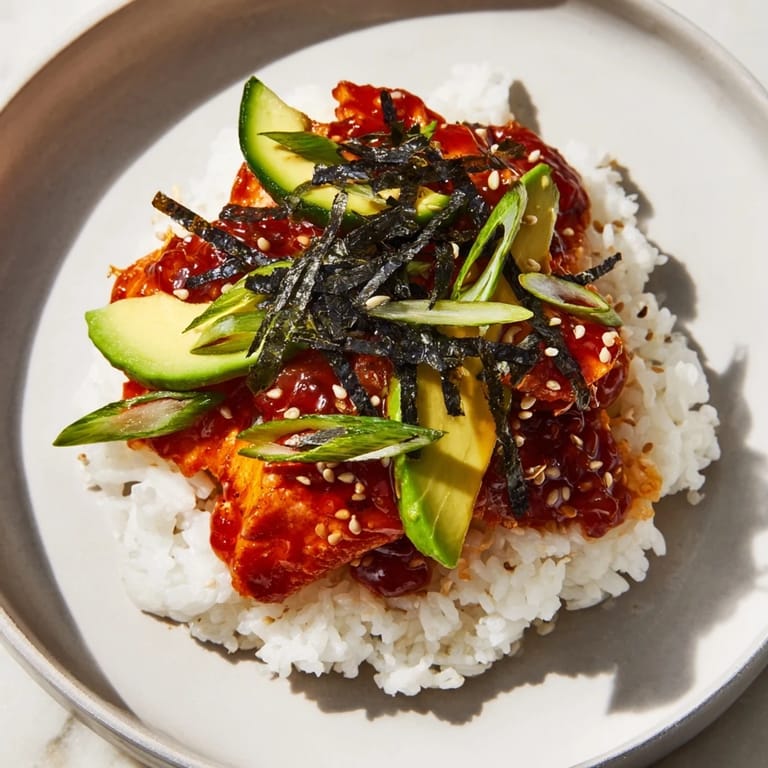
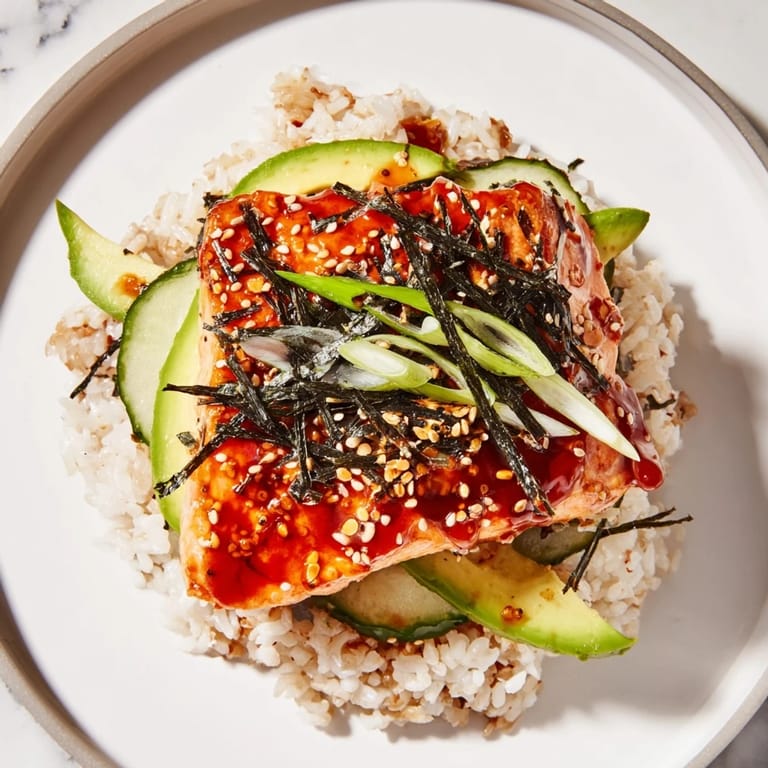
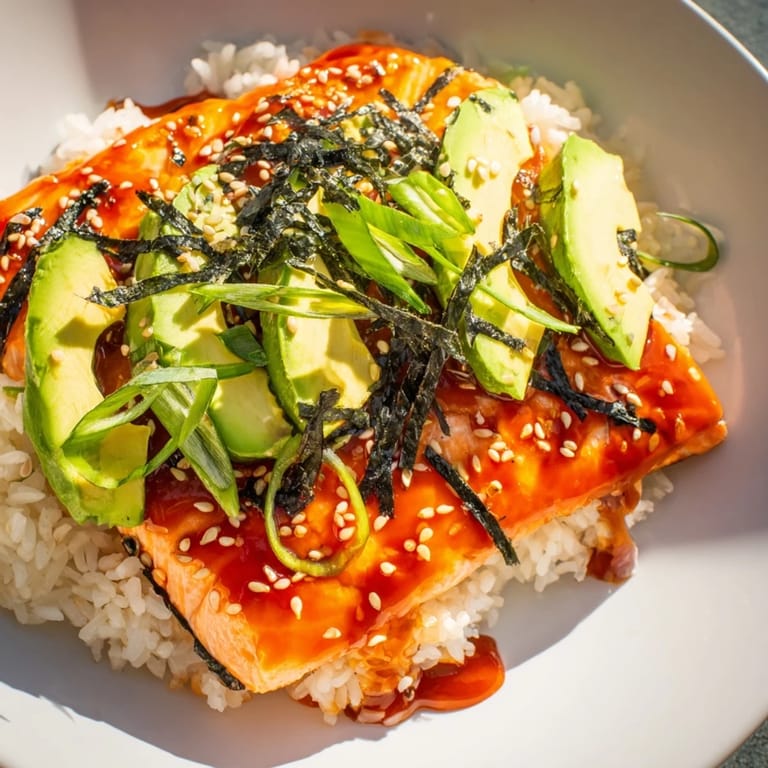
- Divide the warm rice between two bowls, top with the salmon fillet, then arrange the cucumber, avocado, and nori around it like you're creating a little landscape. Sprinkle sesame seeds and scallions over everything and serve immediately while the rice is still warm and steaming.
 Pin It
 There's something about eating from a bowl that makes food taste better—maybe it's the way everything mingles together, or maybe it's just that bowls feel more thoughtful than plates. This one became my go-to comfort meal during a busy work week, something I could make without thinking but that still felt special.
Why This Flavor Combination Works So Well
Gochujang and orange might sound unusual if you haven't experienced it before, but they're actually a classic pairing in Korean cuisine—the citrus brightens the deep, fermented heat of the chili paste, and they balance each other rather than competing. The soy sauce and sesame oil ground everything in umami, making the glaze taste complex and sophisticated even though you're whisking together just eight ingredients. When this glaze hits hot salmon, the honey caramelizes and the vinegar evaporates slightly, leaving behind a glossy coating that's sweet, spicy, tangy, and nutty all at once.
Making It Your Own
The beauty of a bowl is that it's endlessly customizable—I've made this with tofu for vegetarian friends, and honestly it's just as satisfying because the glaze is the real star. Some nights I swap the cucumber for pickled ginger if I want extra funk, or I'll toss in shredded carrots and edamame for more crunch and color. The core of the dish is so forgiving that you can play around and make it feel new every time you cook it.
Serving and Wine Pairing
Serve this immediately after assembly so the rice stays warm and the avocado doesn't oxidize too much. If you're entertaining, pour a crisp, citrusy white wine like Sauvignon Blanc—the acidity cuts through the richness of the salmon and echoes the orange in the glaze, making each bite taste even brighter. The cold wine against the warm salmon and rice is one of those simple kitchen moments that feels unexpectedly luxurious.
- You can prep all the toppings ahead of time and store them separately, then assemble the bowls in under five minutes.
- If avocado isn't available, a dollop of sour cream or even a soft-boiled egg works beautifully as a creamy counterpoint.
- Leftovers are shockingly good cold the next day, almost like a deconstructed poke bowl.
 Pin It
 This bowl has become my favorite way to prove that dinner doesn't have to be complicated to be memorable. Every time I make it, I remember why I fell in love with it that Tuesday afternoon—it just works.
Recipe FAQs
- → What is gochujang and how does it influence the flavor?
Gochujang is a Korean fermented chili paste that adds a complex sweet and spicy depth, enhancing the glaze's bold and tangy profile.
- → Can I prepare the salmon without an oven?
Yes, you can pan-sear the salmon and then glaze it, finishing with a brief broil or a high-heat sear for a sticky finish.
- → What rice works best for this dish?
Short-grain rice is ideal for its sticky texture, which complements the glaze and toppings, but medium-grain can also be used.
- → How can I add more texture to the bowl?
Incorporate crunchy elements like pickled ginger, shredded carrots, or edamame to enhance freshness and contrast.
- → Is there a vegetarian alternative to salmon here?
Yes, firm tofu can be substituted and glazed similarly for a satisfying plant-based option.
- → What wine pairs well with this dish?
A crisp, citrusy white wine such as Sauvignon Blanc complements the glaze and fresh toppings beautifully.