 Pin It
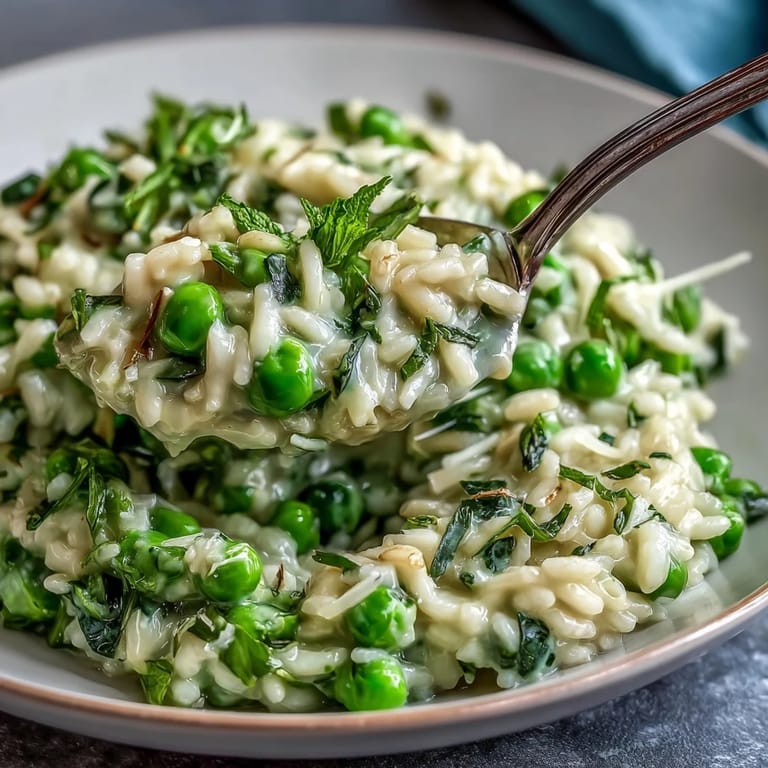
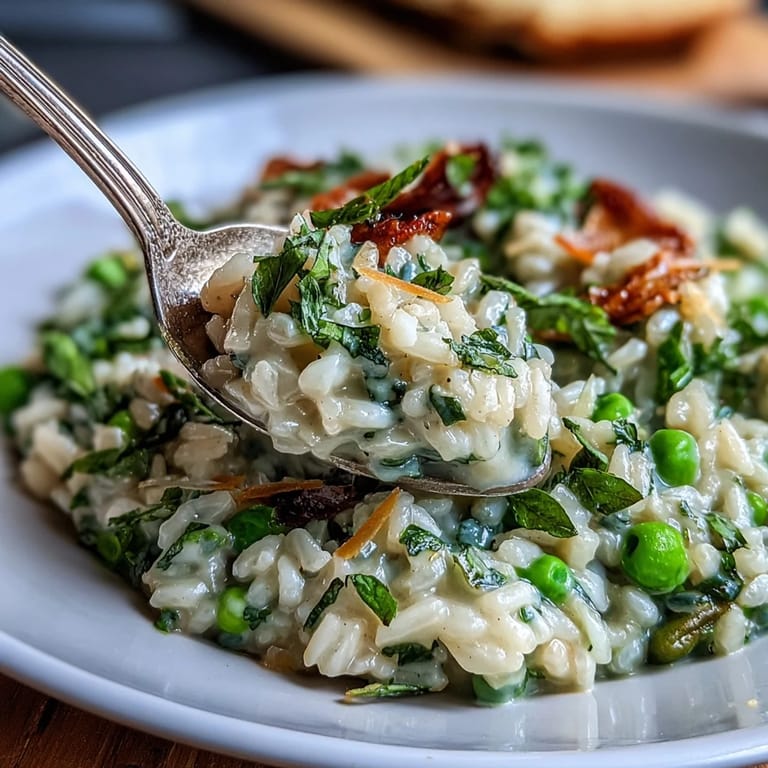
 Asparagus always signaled the start of spring in my kitchen, but the year I first made this Spring Pea Risotto is the one I associate most deeply with the season's arrival. The sound of peas popping from their pods and the sharp, green fragrance of torn mint gave the whole process a lively, almost mischievous energy. I can still recall the satisfying sizzle when shallots met olive oil, quickly followed by a rush of aromas that reminded me why I love to cook when the windows are open and the days get longer. This dish grew from a simple craving for something creamy yet bright, and it has since become my favorite way to harness the freshness of spring.
The first time I served this risotto was when a few friends dropped by unannounced after a rainy Saturday hike. I only had peas in the fridge, but improvising felt oddly exhilarating, and the laughter echoing over the clinking of wine glasses made even the most humble ingredients feel special. That afternoon, as the risotto came together and the sun peeked out, it turned an otherwise ordinary day into one I still think of whenever I zest a lemon.
Ingredients
- Spring peas: Their sweetness pops best when added after the risotto is halfway done, and I always taste a few raw for freshness before tossing them in.
- Shallot: Milder than onions, shallots lend refinement to the risotto without overpowering the fresh peas—make sure to chop them as finely as patience allows.
- Garlic: Just enough for a mellow foundation—let it sizzle until aromatic, but watch carefully so it doesn't burn.
- Fresh mint: Chop the mint just before adding so its fragrance really jumps out at the end; I learned it loses its brightness if it sits out too long.
- Lemon zest: It's my favorite way to liven up every bite—zest gently to avoid the bitter white pith.
- Arborio rice: Only Arborio gives the signature creamy texture, absorbing broth gradually; don't rinse it or you'll wash away the very starch that creates that creaminess.
- Low-sodium vegetable broth: Warm broth blends in more smoothly; I start the pot first so there's no rush when the risotto needs its next dose.
- Dry white wine: Sauvignon Blanc or Pinot Grigio lift the risotto without overpowering it; if you prefer, just use more broth.
- Olive oil: Use the good stuff here—its peppery notes set the flavor base for the entire dish.
- Unsalted butter: Stir in at the end for silkiness and balance; salted butter can be used, but taste before adding any more salt.
- Aged Parmesan cheese: I grate it by hand for the best flavor and melt; try to buy a chunk instead of pre-grated if you can.
- Kosher salt and black pepper: Simple seasonings, but go slow—taste as you go because the cheese adds saltiness, too.
Tired of Takeout? 🥡
Get 10 meals you can make faster than delivery arrives. Seriously.
One email. No spam. Unsubscribe anytime.
Instructions
- Warm your broth:
- Pour the vegetable broth into a saucepan and set it over low heat so it's ready for action, never cold when it joins the rice.
- Sauté the aromatics:
- In a broad skillet or Dutch oven, swirl in olive oil and let the shallots and garlic become soft and translucent; breathe in deeply as they build the foundation of your flavor.
- Toast the rice:
- Add the Arborio rice and stir until every grain shimmers with oil; let it sizzle and start to crackle, which hints at the creaminess to come.
- Deglaze with wine:
- Pour in the white wine, listening for that brief rush of steam—keep stirring until the liquid almost disappears and it smells beautifully complex.
- Coax in the broth:
- Add warm broth one ladle at a time, stirring with purpose and patience after each addition so the rice absorbs all the goodness slowly.
- Add peas midway:
- When about half the broth is gone, sprinkle in the peas; they'll brighten both color and sweet green flavor as the rice nears perfection.
- Finish and season:
- When the rice is creamy but al dente (about 20-25 minutes total), take it off the heat and gently fold in the butter, Parmesan, fresh mint, and lemon zest; adjust seasoning with care.
- Serve and garnish:
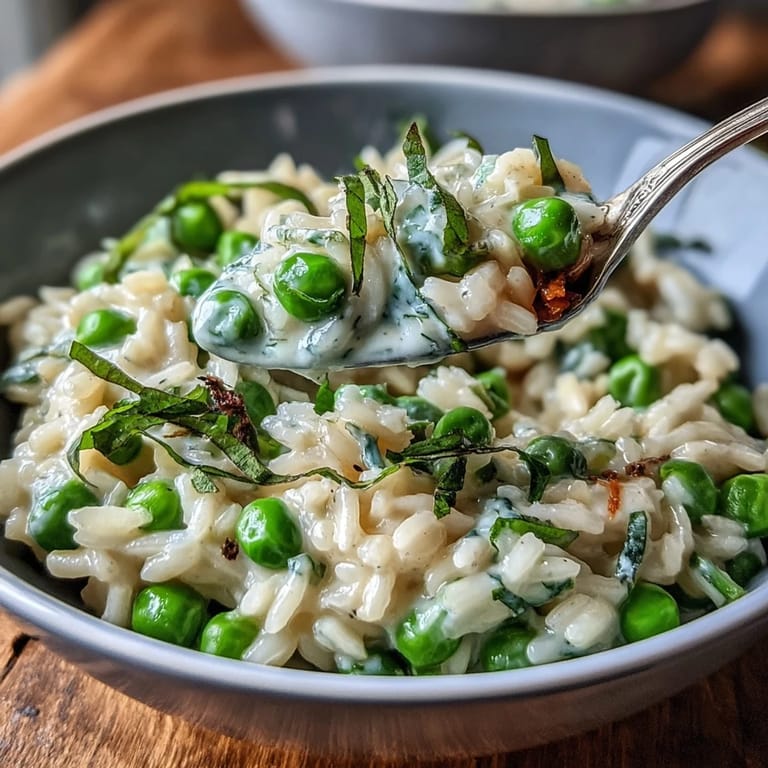
- Spoon into warm bowls, finish with an extra rain of Parmesan and mint, and serve immediately so it doesn't lose its luscious texture.
 Pin It
 One late April evening, after a long week, I cooked this risotto with my partner in a companionable silence, sharing quiet smiles as we stirred side by side. That night, the creamy, pea-studded bowls somehow made our tired apartment feel freshly awake and full of new hope.
How to Make Risotto Even More Special
I've found that using a homemade vegetable broth, rich with carrot and leek trimmings, gives every batch a depth that shop-bought can't match. Sometimes I stir in a handful of blanched asparagus tips or a scattering of pea shoots at the end for extra texture and a hint of garden crunch.
What to Serve With It
Pairing this risotto with a crisp salad of shaved fennel and radish adds a nice sharpness to balance the creamy rice. For a heartier meal, a slice of crusty bread and a glass of lively Sauvignon Blanc or Pinot Grigio is my go-to, especially when friends linger at the table for hours.
Risotto Success: What I Wish I Knew
The key to a risotto that stays lush (not stodgy) is to keep stirring—yes, even when your arm wants a break, that gentle movement creates the signature silkiness. Gently warming your serving bowls before ladling the risotto in helps every spoonful stay creamy longer and avoids a gluey texture.
- If you have leftover risotto, try rolling it into little balls for arancini the next day.
- Always have your Parmesan already grated and ready at the finish, so it melts smoothly without clumps.
- Taste often as you go—there's no better way to learn than with a spoon in hand.
 Pin It
 Every time I make this risotto, I'm reminded that even the simplest ingredients can turn into something memorable with a little patience and care. It's a fresh take on comfort that really does taste like spring on a spoon.
Recipe FAQs
- → Can I use frozen peas instead of fresh?
Yes. Add frozen peas directly during the final 3–5 minutes of cooking so they warm through without becoming mushy. Frozen peas retain sweetness and work well when stirred in near the end.
- → How do I achieve a creamy, not soupy, texture?
Keep the broth warm and add it a ladleful at a time, stirring constantly so the rice releases starch. Toasting the rice first and finishing with butter and aged Parmesan also helps create a silky, cohesive texture.
- → What can I use instead of white wine?
Replace the wine with an equal amount of warm broth and a splash of lemon juice for brightness. The wine mainly adds acidity and depth, so extra seasoning or a touch of vinegar can compensate.
- → Which cheeses work as substitutes for Parmesan?
Pecorino Romano gives a sharper, saltier finish. For a dairy-free option, use a splash of olive oil and a spoonful of nutritional yeast for savory depth, keeping in mind the final texture may differ.
- → Can I make this ahead or keep it warm?
Risotto is best served immediately. If holding, keep it over very low heat and stir in a little warm broth or water before serving to restore creaminess. For make-ahead, cook slightly underdone, cool, refrigerate, then gently rewarm with broth.
- → How do I know when the rice is al dente?
Taste the grains toward the end of cooking; they should be tender on the outside with a slight, firm bite at the center. Total cooking time will vary but usually falls around 18–25 minutes for Arborio.