 Pin It
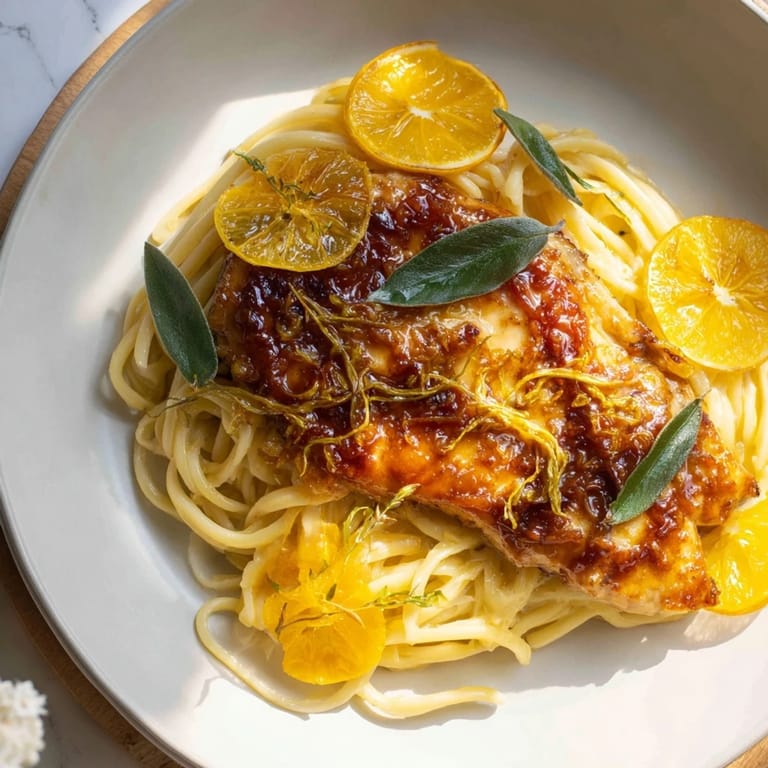
 My neighbor brought me a lemon posset once, and I couldn't stop thinking about that bright, silky sweetness. A few nights later, I had chicken breasts in the fridge and a craving I couldn't name. What if I borrowed that caramelized lemon idea and put it on dinner instead of dessert? The kitchen torch came out, sugar hit the pan, and suddenly pasta night turned into something I actually wanted to photograph.
I made this for a friend who said she didn't like lemon in savory food. She finished her plate before I sat down, then asked if I'd written the recipe anywhere. I hadn't, but I started that night. Now it's the dish I make when I want to feel a little fancy without actually trying that hard.
Ingredients
- Boneless, skinless chicken breasts: Pat them dry before seasoning or they won't sear properly, just learned that after too many pale, sad chicken dinners.
- Granulated sugar: This is what caramelizes under the torch and gives the dish its name, don't skip it even if it feels weird on chicken.
- Lemon zest and juice: Use fresh lemons, the bottled stuff tastes like furniture polish and ruins the whole vibe.
- Linguine or spaghetti: I prefer linguine because it holds the sauce better, but spaghetti works if that's what you have.
- Heavy cream: The richness balances the acid, you can swap in creme fraiche if you want it tangier.
- Parmigiano-Reggiano: Real Parm melts smoother and tastes sharper, the green can stuff clumps and tastes like cardboard.
- Garlic: Mince it fine so it melts into the sauce instead of burning in little chunks.
- Fresh parsley: It adds color and a grassy freshness that cuts through all that cream.
Tired of Takeout? 🥡
Get 10 meals you can make faster than delivery arrives. Seriously.
One email. No spam. Unsubscribe anytime.
Instructions
- Season and Sear the Chicken:
- Dry the chicken breasts completely, then rub them with salt, pepper, and lemon zest. Heat olive oil in a skillet until it shimmers, then sear the chicken for 4 to 5 minutes per side until golden and nearly cooked through.
- Brûlée the Sugar:
- Sprinkle a tablespoon of sugar over each chicken breast while it's still in the pan. Use a kitchen torch to melt and caramelize the sugar until it turns amber and crackles, or slide the skillet under a hot broiler for a minute or two if you don't have a torch.
- Rest and Slice:
- Move the chicken to a cutting board and let it rest for a few minutes so the juices settle. Slice it thinly on a diagonal so every piece has a little caramelized crust.
- Boil the Pasta:
- Cook the linguine in well-salted boiling water until it's al dente, then scoop out half a cup of the starchy pasta water before draining. That water is liquid gold for adjusting the sauce later.
- Build the Sauce:
- Melt butter and olive oil together in a large skillet, then add minced garlic and cook it gently until it smells sweet and nutty. Stir in lemon zest and juice, followed by heavy cream, and let it simmer until it thickens just a little.
- Finish with Cheese:
- Add the grated Parmigiano-Reggiano and stir until the sauce turns glossy and smooth. Taste it and add salt and pepper as needed, remembering the pasta will dilute it slightly.
- Toss and Plate:
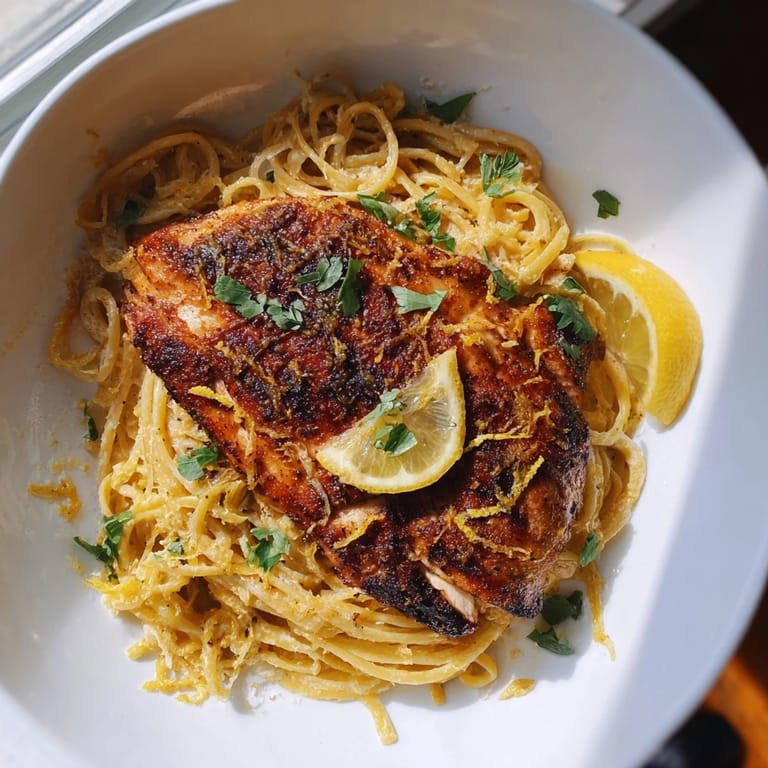
- Add the drained pasta to the sauce and toss until every strand is coated, loosening with reserved pasta water if it looks tight. Divide among plates, top with sliced chicken, and finish with extra lemon zest, cheese, and parsley.
 Pin It
 The first time I plated this, I stood there staring at it for a second before calling everyone to the table. It looked like something I'd order at a restaurant and overthink the tip on. My partner took one bite and said it tasted like a vacation, which is probably the best compliment I've ever gotten on a Tuesday night.
How to Get the Perfect Brûlée Crust
The trick is even sugar coverage and steady heat. Sprinkle the sugar in a thin, uniform layer so it melts at the same rate. Hold the torch a few inches away and move it in small circles until the sugar bubbles and darkens to amber, not black. If you're using a broiler, watch it like a hawk because it goes from perfect to burnt in seconds. I learned this after setting off the smoke alarm twice.
What to Do with Leftovers
Store the pasta and chicken separately if you can, the chicken stays crispier that way. Reheat the pasta gently in a skillet with a splash of cream or pasta water, and warm the chicken in a low oven so the crust doesn't steam off. I've also chopped leftover chicken and tossed it into a salad with arugula, shaved Parm, and a squeeze of lemon, and it was better than the original dinner.
Variations and Swaps
If you want more texture, toss in toasted pine nuts or panko breadcrumbs fried in butter. Swap the cream for creme fraiche if you like things tangy, or use half-and-half if you want it lighter. I've made this with chicken thighs instead of breasts, and they stay juicier but take a little longer to cook through.
- Use gluten-free pasta if needed, just cook it a minute less than the package says.
- Add a handful of baby spinach or peas to the sauce for color and vegetables.
- Try Meyer lemons if you can find them, they're sweeter and less sharp.
 Pin It
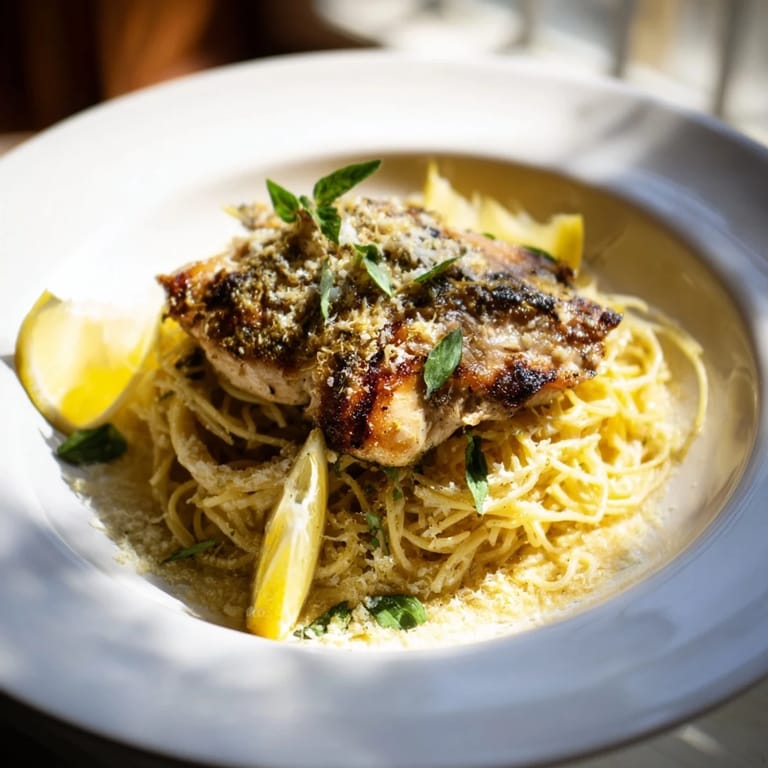
 This dish reminds me that dinner doesn't have to be predictable to be easy. Some nights you just want pasta, and some nights you want to torch sugar on chicken and pretend you're on a cooking show.
Recipe FAQs
- → How do I achieve the perfect caramelized lemon crust on the chicken?
After searing the chicken, sprinkle granulated sugar evenly on top and use a kitchen torch or broiler to melt and caramelize the sugar until golden brown, creating a crisp, sweet crust.
- → What type of pasta works best with the lemon brûlée chicken?
Linguine or spaghetti are ideal as they hold the creamy lemon sauce well, ensuring each bite is covered in vibrant flavors.
- → Can I substitute any ingredients to suit dietary needs?
Heavy cream can be swapped with crème fraîche for a tangier sauce, and gluten-free pasta can be used to accommodate gluten sensitivities.
- → How can I enhance the texture of this dish?
Adding toasted pine nuts or crunchy breadcrumbs on top provides a pleasant contrast to the creamy sauce and tender chicken.
- → What is the best way to balance the lemon flavor in the sauce?
Using both lemon zest and juice creates bright acidity, while blending it with butter, cream, and cheese tempers the sharpness for a smooth, well-rounded taste.