 Pin It
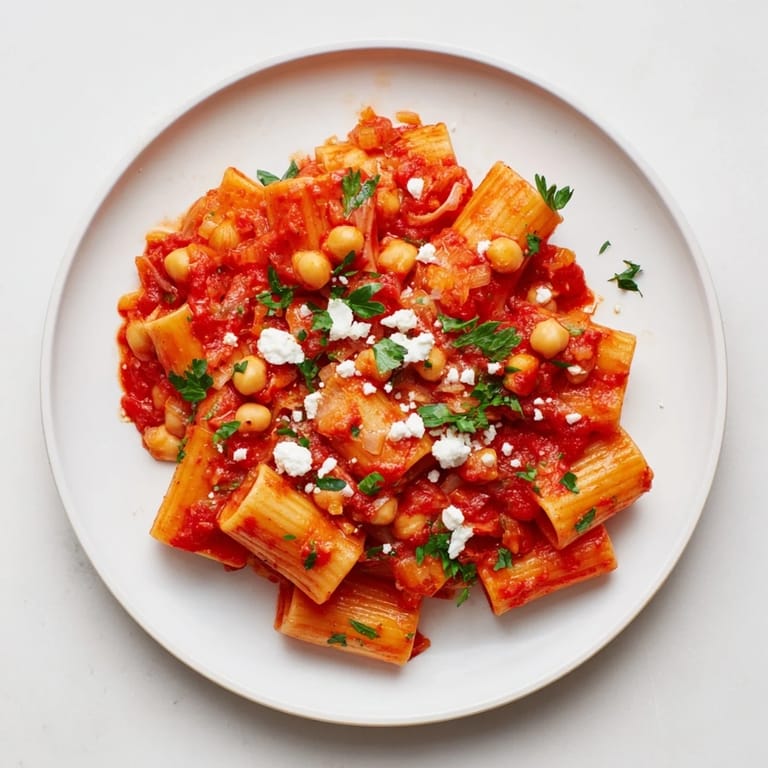
 I discovered harissa on a drizzly afternoon at a market stall, where a vendor was grinding red peppers and spices with such intensity that the whole booth smelled like pure heat and possibility. That jar of harissa paste sat in my cupboard for weeks before I finally threw it into a simple pasta dish on a night when I had chickpeas and tomatoes but nothing fancy. The transformation was instant—suddenly everything tasted alive, complex, and impossibly good for something I'd thrown together in thirty minutes.
The first time I made this for friends, I was nervous about the heat level—harissa has a reputation—but watching their faces light up when they tasted it made me realize spice doesn't mean harsh, it means alive. One friend asked for the recipe before even finishing the bowl, and that's when I knew this dish had staying power.
Ingredients
- Pasta (350 g): Penne, rigatoni, or fusilli work best because their shapes trap the sauce; I learned to always salt the water generously so the pasta carries flavor from the start.
- Olive oil (2 tbsp): Don't skimp here—good oil makes the difference between a sauce that coats and one that clings.
- Onion and garlic: Chopped fine so they melt into the sauce and build a flavor base that holds everything together.
- Harissa paste (2 tbsp): This is your star player; start with two tablespoons and taste before adding more, because heat levels vary wildly between brands.
- Ground cumin and smoked paprika: These warm spices round out the harissa's sharp edges and add earthiness.
- Canned tomatoes (400 g): Diced tomatoes release their juice faster than whole ones and create a silkier sauce.
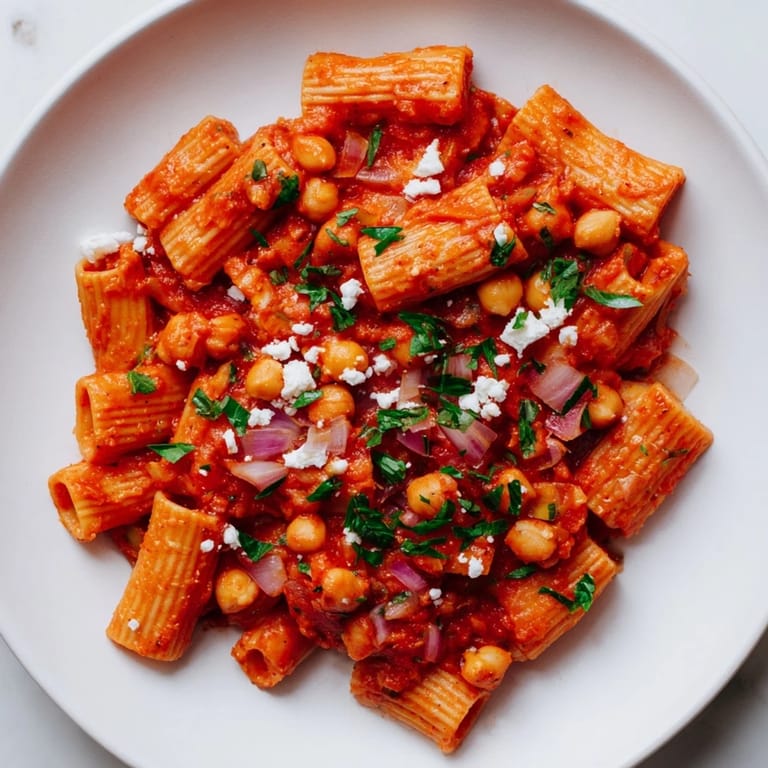
- Chickpeas (two 400 g cans): Drain and rinse them well to remove that starchy canning liquid, which keeps the sauce from becoming heavy.
- Vegetable broth or water (1/2 cup): This loosens the sauce and lets the harissa spread its heat evenly throughout.
- Lemon: Save the zest and juice for the very end; this bright acid is what prevents the dish from feeling one-note and spicy.
- Fresh parsley or cilantro: Either works; cilantro if you want sharper green notes, parsley if you prefer something gentler.
- Feta cheese (optional): A small sprinkle adds creaminess and a salty contrast that makes the heat feel less aggressive.
Tired of Takeout? 🥡
Get 10 meals you can make faster than delivery arrives. Seriously.
One email. No spam. Unsubscribe anytime.
Instructions
- Get your water boiling:
- Fill a large pot with water, salt it so it tastes like the sea, and let it roll at a hard boil before the pasta goes in. This is your only chance to season the pasta itself, so don't rush this step.
- Cook the pasta:
- Follow the package time but check a minute or two early; al dente means it still has a slight resistance when you bite it. Reserve half a cup of starchy water before draining—this is liquid gold for loosening the sauce later.
- Build the sauce base:
- While pasta cooks, heat oil in a large skillet over medium heat and let your onion soften and turn translucent for four to five minutes. You're not trying to brown it, just make it gentle and sweet.
- Toast the spices:
- Add minced garlic, harissa, cumin, and paprika and cook for exactly one minute until the kitchen fills with that warm, slightly sharp aroma. This brief cooking mellows the raw spice taste and blooms the flavors.
- Add the tomatoes and chickpeas:
- Pour in the tomatoes and their juice, then the rinsed chickpeas and broth. Stir everything together and let it simmer for ten to twelve minutes so the sauce thickens slightly and flavors get to know each other.
- Bring it all together:
- Add the drained pasta to the skillet and toss gently so every strand gets coated. If the sauce looks too thick, splash in some of that reserved pasta water until it moves smoothly.
- Finish with brightness:
- Remove from heat, stir in lemon zest, juice, and fresh herbs. Taste and season with more salt and pepper—this is your moment to make it taste like exactly what you want.
- Serve and enjoy:
- Dish into bowls, crack more black pepper on top, and scatter feta if you're using it. Eat while it's steaming, with good bread and a glass of cold wine.
 Pin It
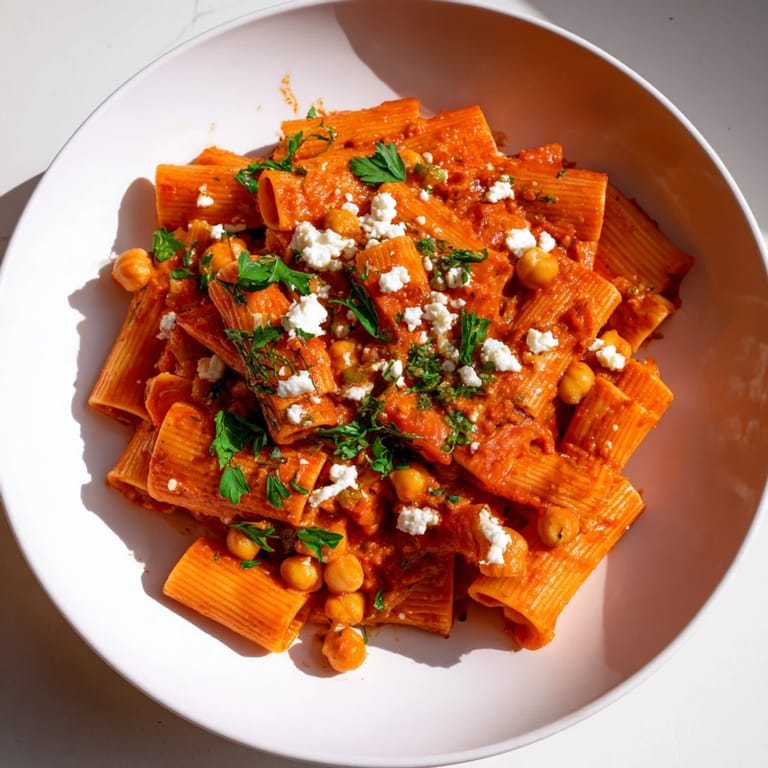
 There's something almost meditative about standing over a simmering pot and watching the sauce go from watery to glossy, the chickpeas beginning to soften and absorb all that harissa heat. By the time you're adding lemon, you can already smell what dinner is going to taste like, and that anticipation is half the pleasure of cooking.
Playing with Heat Levels
I've learned that harissa heat isn't always about suffering—it's about building layers. If you like fire, add more harissa or a pinch of chili flakes and let them sit in the sauce while it simmers. If you're cooking for people who prefer gentle warmth, use less harissa and lean on the smoked paprika for that smoky depth instead. The cumin is your friend here too; it masks harsh spice edges and makes everything feel rounder.
Variations That Work
White beans or cannellini beans swap in beautifully for chickpeas if that's what you have, though they're softer so watch that they don't break apart while simmering. Roasted vegetables—zucchini, bell peppers, eggplant—turn this into something entirely different but equally delicious; toss them in after you've drained the pasta. I've even added a handful of spinach at the very end, letting it wilt right into the warm sauce, and nobody complained.
Storage and Pairing
This dish keeps beautifully in the fridge for three days and actually tastes better the next day when the sauce has had time to settle. Reheat gently in a skillet with a splash of water so it doesn't dry out. It pairs perfectly with crisp white wine, a chilled rosé, or just cold water when the spice hits just right. If you're feeding a crowd, double the sauce and keep the pasta separate until you're ready to serve; this way everyone can heat their own portion to their preferred temperature.
- Serve alongside good bread to soak up every last drop of sauce.
- A simple green salad with sharp vinaigrette cuts through the richness beautifully.
- Make this on a weeknight and you'll have leftovers that taste like restaurant food.
 Pin It
 There's real magic in how quickly something this vibrant and satisfying comes together, and how generous it feels on the plate. This is the kind of dish you make when you want to eat well without any of the fuss.
Recipe FAQs
- → What type of pasta works best with this dish?
Short pasta shapes like penne, rigatoni, or fusilli hold the sauce well and complement the texture of the chickpeas.
- → Can I adjust the spice level?
Yes, increase or reduce the harissa paste to control the heat according to your preference.
- → How do I keep the sauce from drying out?
Reserve some pasta water while cooking and add it to the sauce if it becomes too thick, ensuring a smooth coating on the pasta.
- → What fresh herbs are recommended to finish the dish?
Chopped parsley or cilantro adds a fresh, vibrant flavor and balances the richness of the sauce.
- → Is there a dairy-free option?
Yes, simply omit the optional crumbled feta to keep the dish dairy-free.