 Pin It
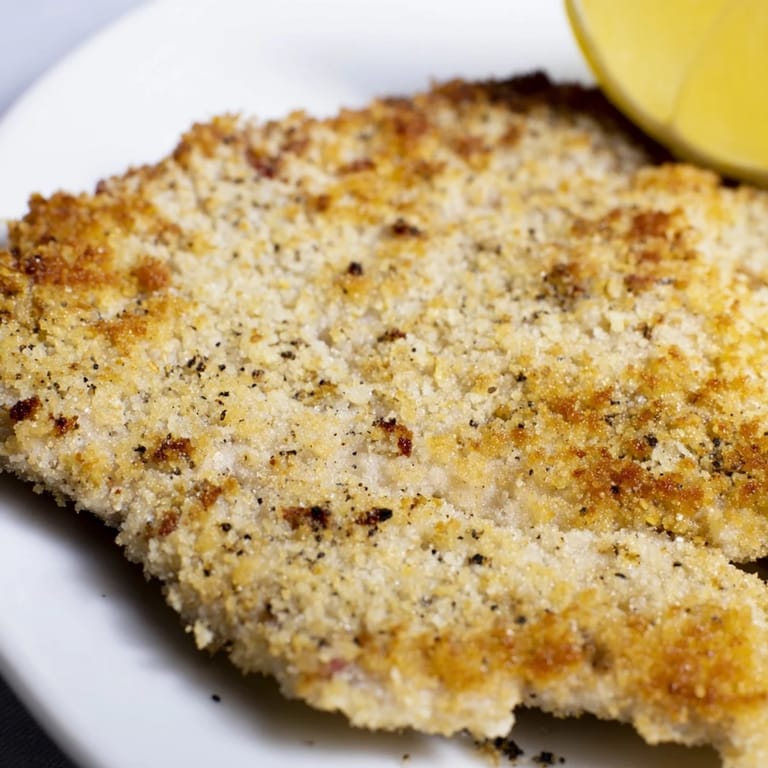
 The first time I truly understood schnitzel was at a small restaurant in Berlin, watching the cook pound the meat with such confident, rhythmic strikes that the whole kitchen seemed to hum with the sound. There was something mesmerizing about how thin and delicate the cutlet became, how vulnerable it looked before it hit the hot oil and transformed into something golden and impossibly crispy. That meal stayed with me for years until I finally convinced myself to try making it at home, and the moment that first schnitzel emerged from the pan with that perfect shattering crust, I realized this wasn't just a dish to cook—it was a small kitchen ritual worth mastering.
I made this for my brother on a random Tuesday when he mentioned missing real German food, and watching his face when he took that first bite—the pure, uncomplicated joy of it—reminded me that the best meals are the ones we make for people we actually want to impress. He asked for the recipe that night, and now whenever he visits, this is what he asks me to cook, which feels like its own kind of compliment.
Ingredients
- Boneless pork chops or chicken breasts (about 150 g each): The size matters here—uniform thickness means everything cooks at the same rate and no dry edges ruining the experience.
- All-purpose flour: This first coat helps the egg wash cling properly, so don't skip it even though it feels redundant.
- Large eggs: Mixed with milk, they create a more delicate binding than egg alone, which I learned after one crispy-outside-breadcrumb-on-the-inside disaster.
- Fine dry breadcrumbs: Not the store-bought variety in the regular baking aisle—get the finer ones that fry up into that shattering golden shell.
- Vegetable oil or clarified butter (Butterschmalz): Clarified butter tastes infinitely better and won't burn, but good vegetable oil works if that's what you have.
- Salt and freshly ground black pepper: Season generously; the meat needs bold seasoning to shine through all those layers.
- Lemon wedges and fresh parsley: These aren't decoration—they cut through the richness and make each bite feel bright and complete.
Tired of Takeout? 🥡
Get 10 meals you can make faster than delivery arrives. Seriously.
One email. No spam. Unsubscribe anytime.
Instructions
- Pound the meat paper-thin:
- Place each cutlet between two sheets of plastic wrap and pound with confident, even strokes using a meat mallet or the bottom of a heavy pan. You want roughly 1/4-inch thickness—thin enough that it cooks through in minutes but thick enough to stay tender.
- Season both sides:
- Use salt and pepper generously here since the breading mutes the flavor somewhat. Don't hold back.
- Set up your breading station:
- Three shallow plates or bowls in a row: flour, egg-milk mixture, and breadcrumbs. This assembly line approach keeps your hands from becoming a sticky mess.
- Bread each cutlet with care:
- Dredge in flour first, shake off the excess, then dip quickly into the egg mixture, letting any drips fall back into the bowl. Finally, place it on the breadcrumbs and gently press both sides so they stick, but don't go crazy or the coating becomes a hard shell that separates when it fries.
- Heat the oil to golden-frying temperature:
- Medium-high heat is key—too cool and the meat steams under a soggy coating, too hot and the outside burns before the inside cooks. You'll know it's ready when a small piece of bread sizzles immediately on contact.
- Fry until that perfect golden-brown crust forms:
- Place the cutlet gently in the pan and resist the urge to move it around. After 2-3 minutes, it should release naturally and flip with a satisfying sizzle; the second side takes another 2-3 minutes. Work in batches if your pan's crowded—overcrowding drops the oil temperature and ruins everything.
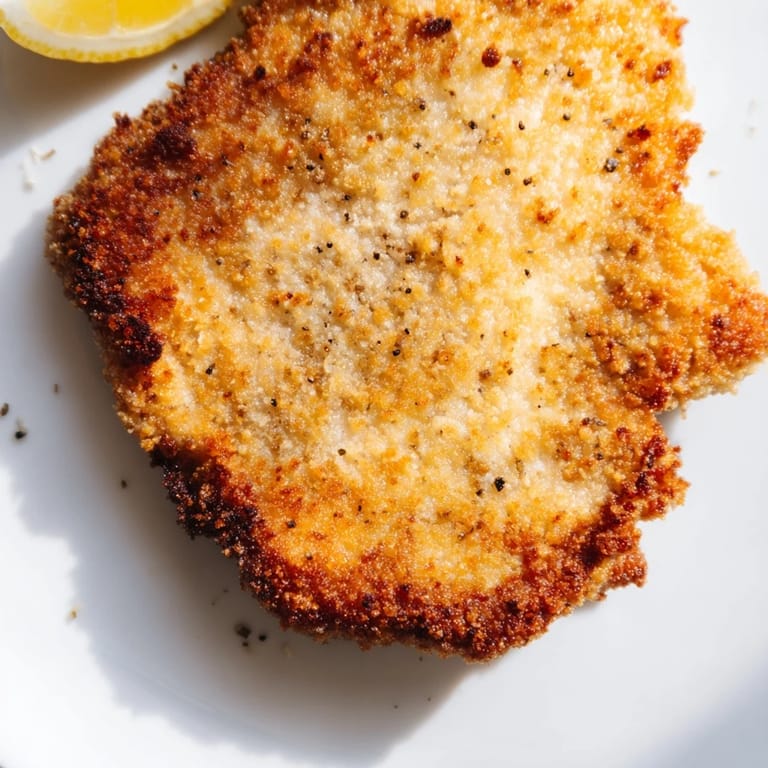
- Drain and serve immediately:
- Transfer to a paper towel-lined plate for just a minute to shed excess oil, then serve right away while the crust is still crackling and the meat still warm.
 Pin It
 Years ago I made this for my grandmother who spent her childhood in Munich, and she was quiet for a moment after tasting it, then smiled and said it tasted like home. That's when I realized schnitzel isn't really about technique or ingredients—it's about that moment when someone tastes something that makes them feel like they belong somewhere, even if they're just sitting at your kitchen table.
The Secret to Crispiness
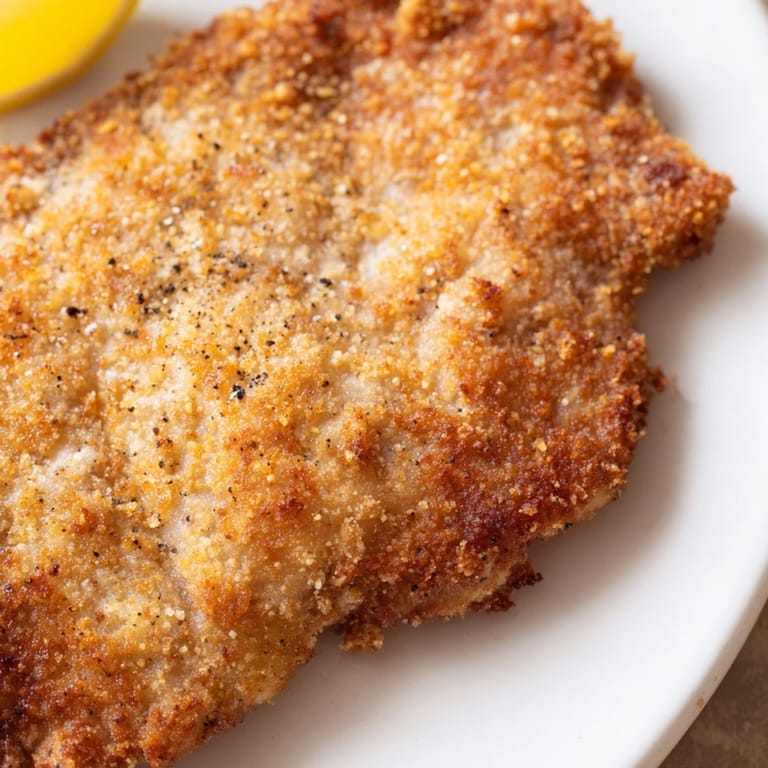
The difference between a crispy schnitzel and a soggy one comes down to oil temperature and patience. I used to flip the cutlet obsessively, thinking I was helping, when really I was just cooling the pan and preventing that golden crust from forming. Now I place it in the oil and literally step away for those first few minutes, letting the heat work without interference. The breadcrumbs should sizzle aggressively when the meat hits the pan—if it's quiet, the oil isn't hot enough and you'll end up with an oily, droopy result instead of something crispy and alive.
What to Serve Alongside
Schnitzel doesn't ask for much, but it does ask for balance. A cold potato salad cuts through the richness beautifully, or if you're in a lighter mood, a simple cucumber salad with vinegar and dill does the job just as well. Some people fry potatoes alongside the schnitzel, and that's delicious too, though it does mean managing two pans at once. I've also served it with nothing but lemon and parsley and a good German beer, and honestly, sometimes that simplicity is exactly what you need.
Variations and Substitutions
This basic technique is remarkably flexible once you understand the bones of it. Veal is the traditional choice if you can find good quality at a reasonable price, and it does have a more delicate flavor that some people prefer. Turkey cutlets work beautifully too and are leaner if that matters to you. Even thin fish fillets can be breaded and fried the same way, though they need less cooking time so watch them carefully. The beauty of schnitzel is that once you've done it once, you can apply the technique to almost anything, and it will taste good.
- Try pounding the meat even thinner for extra tenderness and faster cooking.
- Add a tablespoon of paprika or a pinch of cayenne to the breadcrumb mixture for subtle flavor depth.
- Some people finish with a squeeze of fresh lemon juice right at the table for brightness.
 Pin It
 There's something quietly satisfying about bringing a plate of golden schnitzel to the table, knowing you made something that tastes like skill and care in the simplest way possible. Make this once and you'll understand why German home cooks never stopped making it.
Recipe FAQs
- → What type of meat is best for this dish?
Boneless pork chops or chicken breasts, pounded thinly, provide the best texture and flavor for this cutlet.
- → How is the coating prepared?
The meat is dredged in flour, dipped in an egg and milk mixture, and then coated evenly with fine dry breadcrumbs.
- → What frying fat should I use?
Vegetable oil or clarified butter (Butterschmalz) works well to achieve a crispy and golden crust.
- → How do I keep the coating crispy?
Avoid pressing the breadcrumbs too firmly onto the meat and drain excess oil by placing cutlets on paper towels after frying.
- → What sides pair well with this dish?
Traditional accompaniments include potato salad, cucumber salad, or fries, enhancing the overall experience.
- → Can veal be used instead of pork or chicken?
Yes, veal offers a more authentic version, known as Wiener Schnitzel, enhancing tenderness and flavor.