 Pin It
 My grandmother's kitchen always smelled like butter and onion when she was making frikadeller, those golden Danish meatballs that seemed impossibly simple until you realized how much care went into each one. I watched her grate onion by hand, her fingers steady even as tears streamed down her face from the sharp fumes, and I understood then that this wasn't restaurant food—it was family food, the kind that teaches you something about patience. The first time I made them myself, I rushed through the mixing and skipped the resting step, wondering why mine felt dense while hers stayed tender. That mistake taught me to slow down and let the breadcrumbs do their quiet work, soaking up the milk like tiny sponges.
I made these for a dinner party once, panicked because I'd invited people I wanted to impress, and ended up discovering that frikadeller have a way of making everyone relax. My friend Jakob took one bite and closed his eyes like he'd just come home, and suddenly the whole table felt less formal—we were just people eating good food together, talking louder, reaching for seconds. That's when I realized these meatballs weren't trying to be fancy; they were honest, and honesty turned out to be exactly what we needed that night.
Ingredients
- Ground pork (500 g): The foundation—look for meat with some marbling so the meatballs stay juicy rather than lean and dense, and if you can find veal to mix in, do it, because that's the secret the Danes know about tender meatballs.
- Onion (1 small, finely grated): Don't skip this step; the grating releases moisture and flavor that binds everything together while keeping the texture loose and light.
- Egg (1): Your binder, the thing that holds everything together without being heavy about it.
- Whole milk (100 ml): This is the moisture that keeps them from drying out—don't use a lighter milk, because the fat matters here.
- Breadcrumbs (60 g): The unsung hero that absorbs the milk and creates that tender crumb, but only if you give them time to soak.
- Salt and pepper: Taste as you go; these seasonings are the difference between bland and balanced.
- Ground allspice (½ tsp, optional): If you can find it, use it—it whispers of Nordic kitchens and adds a warmth that makes people ask what that subtle spice is.
- Butter and oil (2 tbsp and 1 tbsp): The combination gives you the best of both worlds: butter's flavor and oil's higher smoke point so nothing burns.
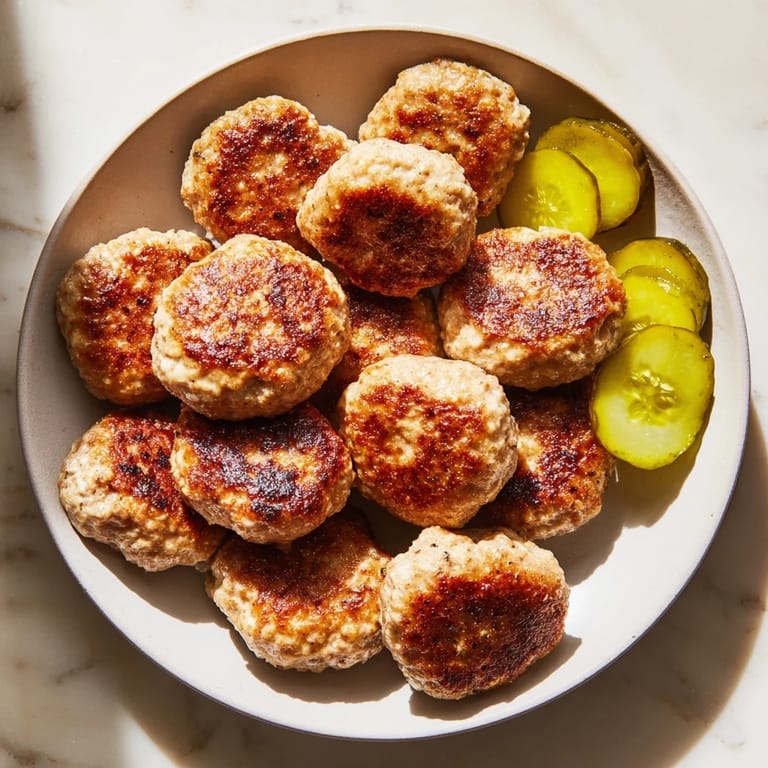
- Danish pickles to serve: The tang cuts through the richness and makes each bite sing—pickled cucumber or beetroot, whatever calls to you.
Tired of Takeout? 🥡
Get 10 meals you can make faster than delivery arrives. Seriously.
One email. No spam. Unsubscribe anytime.
Instructions
- Build the mixture:
- Combine the pork, grated onion, egg, milk, breadcrumbs, salt, pepper, and allspice in a large bowl, mixing with your hands until everything is cohesive but still has a slight stickiness to it. Don't overwork it; you want the ingredients to know each other, not to become a dense paste.
- Let it rest:
- This is the step people skip and regret—let the mixture sit for 10 minutes so the breadcrumbs drink up the milk and everything gets softer and more tender. While you wait, you can set up your workspace and feel patient about cooking.
- Shape your meatballs:
- Wet your hands with cold water so the mixture doesn't stick, then gently shape each portion into an oval or round the size of a golf ball, making about 12 to 14 pieces. Keep your hands wet and gentle; you're cradling them, not squeezing them.
- Heat your pan:
- Melt the butter and oil together over medium heat until it's foamy and smells golden and warm. The pan is ready when a breadcrumb sizzles immediately if you drop it in.
- Fry until golden:
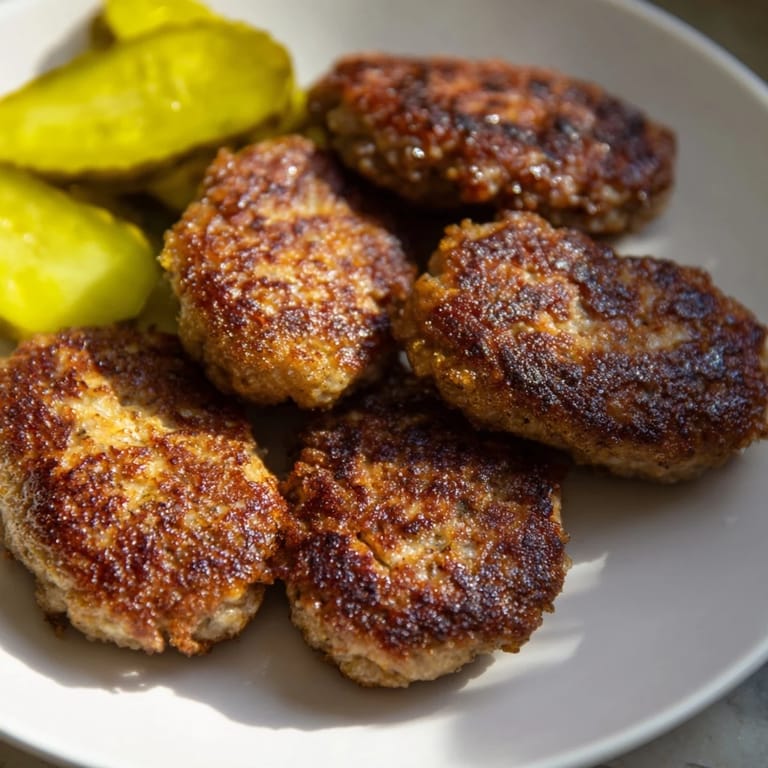
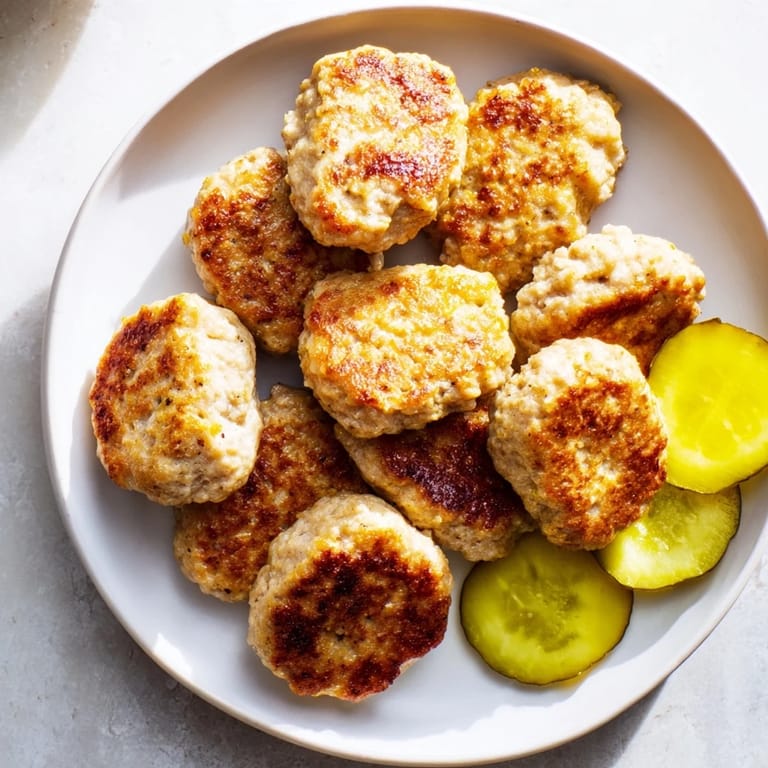
- Working in batches so you don't overcrowd the pan, place the meatballs in the butter mixture and gently flatten each one slightly with a spatula—this helps them brown evenly and cook all the way through. Fry for 4 to 5 minutes per side until deep golden and cooked through, listening for that satisfying sizzle that tells you things are happening right.
- Rest and serve:
- Transfer the finished meatballs to a plate lined with paper towels to drain any excess oil, then serve hot with pickles on the side and rye bread or potatoes if you're hungry.
 Pin It
 There's a moment when you hear that first sizzle and the smell of butter and pork fills your kitchen, and suddenly you're not just cooking—you're part of a tradition that goes back generations of Danish tables. My kitchen smells like my grandmother's that night, and that's when I know I'm doing something right.
The Danish Way: Tradition on a Plate
Frikadeller aren't fancy—they're humble, daily food that somehow became something people remember forever. In Denmark, they show up at school lunches, dinner tables, and picnics, and no one thinks twice about them being simple because simplicity is the point. The Danes understand that good food doesn't need tricks; it just needs care and the right ingredients given time to do their work.
Playing With Flavors and Textures
The beauty of this recipe is that it welcomes small changes without breaking—you can swap pork and veal, play with spices, serve them hot with creamy potato salad, or keep them in the fridge and eat them cold for lunch the next day. I've made versions with just a whisper of sage, others with a hint of nutmeg, and they've all tasted like home. The pickles are the non-negotiable part; their sharp tang is what prevents these from ever feeling heavy or too rich, and that balance is what makes people ask for more.
Making Them Your Own
The first time you make frikadeller, follow the recipe exactly so you understand what you're building, but after that, let your instincts guide you. Some people serve them with red cabbage, others with rye bread, and some just eat them straight from the pan with a cold beer and a pickle. The recipe works because it's flexible enough to fit your kitchen and your table, not the other way around.
- If your mixture feels too wet, add a tablespoon more breadcrumbs and let it rest again.
- Brown them in batches rather than crowding the pan, so they develop that golden crust we're all after.
- Taste one when it cools slightly to make sure the seasonings sing the way they should.
 Pin It
 These meatballs remind me that cooking doesn't need to be complicated to be meaningful—sometimes the most satisfying meals are the ones that taste like someone cared about getting the small things right. Make them, share them, watch people's faces when they taste that golden exterior and tender inside, and you'll understand why they've been on Danish tables for generations.
Recipe FAQs
- → What type of meat is used in these meatballs?
They primarily use ground pork, though a mix with veal can also be incorporated for a lighter texture.
- → How are the meatballs cooked to achieve a golden crust?
They are pan-fried in butter and neutral oil over medium heat, flattened slightly for even browning.
- → What spices enhance the flavor of the meatballs?
Salt, ground black pepper, and optionally ground allspice provide traditional Danish seasoning.
- → What accompaniments are suggested with these meatballs?
Tangy Danish pickles are classic, with optional sides like rye bread or boiled potatoes for a fuller meal.
- → How should the meat mixture be prepared before cooking?
Combine all ingredients until cohesive, let rest for 10 minutes to absorb moisture, then shape into balls.