 Pin It
 The first time I attempted a crookie, I was standing in a Parisian bakery watching the pastry chef pull a golden, chocolate-studded spiral from the oven. It looked impossibly decadent—a croissant and cookie had merged into something I didn't know I needed. I went home determined to recreate that magic, and after a few lamination mishaps and flour-dusted counters, I finally nailed it. Now my kitchen fills with that unmistakable buttery aroma every time I make them, and I can never seem to keep a batch around long enough to cool.
I made these for my sister's unexpected visit last winter, not knowing if they'd work. Watching her bite into one and actually pause mid-conversation—that's when I knew they were special. She asked for the recipe before she'd even finished, and now it's become our unofficial language, the thing I bake when words aren't quite enough.
Ingredients
- All-purpose flour (250 g for dough, 120 g for cookie layer): The backbone of both components; make sure it's fresh and not stored too warm or you'll fight the dough.
- Unsalted butter (150 g cold, 25 g melted, plus 70 g softened): Keep that lamination butter genuinely cold—it's the difference between flaky layers and a greasy mess.
- Granulated sugar (30 g for dough, 40 g for cookies) and brown sugar (60 g): The combination gives you sweetness without making these taste like pure candy.
- Whole milk (120 ml, lukewarm): Room temperature is your friend here; cold milk will seize up the yeast.
- Instant yeast (7 g): This is what creates those beautiful air pockets that make croissants sing.
- Large egg (1 whole) and egg yolk (1): They bind everything and give you that golden, shiny finish.
- Vanilla extract (1 tsp): A touch that rounds out the cookie layer without overpowering the butter.
- Baking soda (1/2 tsp) and salt (1/4 tsp plus 1 tsp): Salt enhances flavor; baking soda helps the cookie layer set properly alongside the yeasted dough.
- Dark chocolate chips (100 g): Use quality chocolate here—it's only 100 grams but it defines the whole experience.
Tired of Takeout? 🥡
Get 10 meals you can make faster than delivery arrives. Seriously.
One email. No spam. Unsubscribe anytime.
Instructions
- Mix and knead the dough:
- Combine flour, sugar, salt, and yeast in a bowl, then add your lukewarm milk, melted butter, and egg. Stir until shaggy, then knead for five minutes until it becomes smooth and slightly elastic—you'll feel the transformation under your hands. Don't rush this; proper kneading develops the gluten that helps your layers hold together later.
- Chill and prepare the butter block:
- Shape your dough into a rectangle, cover it, and let it rest in the fridge for 30 minutes while you prep the butter. Roll your cold butter between two sheets of parchment until it forms a 15x15 cm square—this precision matters because uneven butter means uneven layers.
- Laminate with your first fold:
- Remove your chilled dough and roll it to 30x15 cm. Place that butter square in the center, fold the dough over from both sides to seal it in, then gently roll the whole package out to 45x20 cm. Fold it into thirds like a letter, then chill for 30 minutes.
- Complete the lamination:
- Repeat that roll-and-fold process two more times, chilling 30 minutes between each—this creates those signature flaky layers that make people actually gasp when they bite through the crust. After your final fold, chill for the full hour; your patience here is literally making clouds in pastry form.
- Prepare the cookie dough:
- While lamination happens, beat softened butter with both sugars until it looks like wet sand, then add your egg yolk and vanilla. Fold in the flour, baking soda, and salt until just combined, then gently fold in chocolate chips—overmixing here makes dense cookies, and that's the opposite of what you want.
- Assemble the crookies:
- Roll your fully chilled laminated dough to about 6 mm thick on a 30x25 cm rectangle. Spread that cookie dough over it, leaving a 1 cm border so it doesn't squeeze out when you roll. Roll tightly from the long side, then slice into eight equal pieces with a sharp, clean knife—a sawing motion is better than pressing, which compresses those precious layers.
- Proof and bake:
- Arrange slices on parchment paper, cover loosely, and let them proof at room temperature for one hour until slightly puffy and a little jiggly when you nudge the pan. Bake at 190°C for 18 to 20 minutes until golden brown and set through, then let them cool on a wire rack—I know it's torture, but this prevents the insides from steaming into softness.
 Pin It
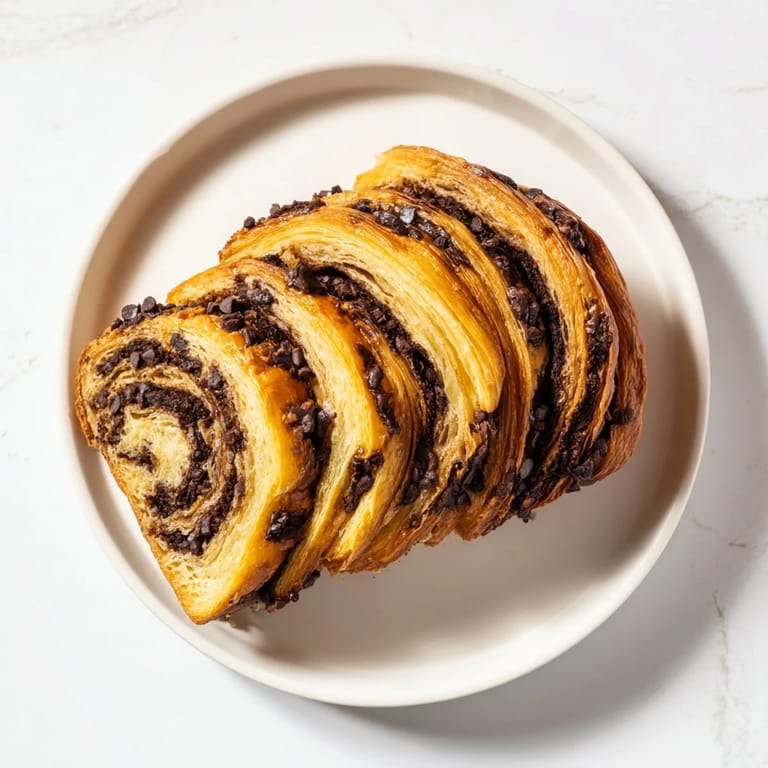
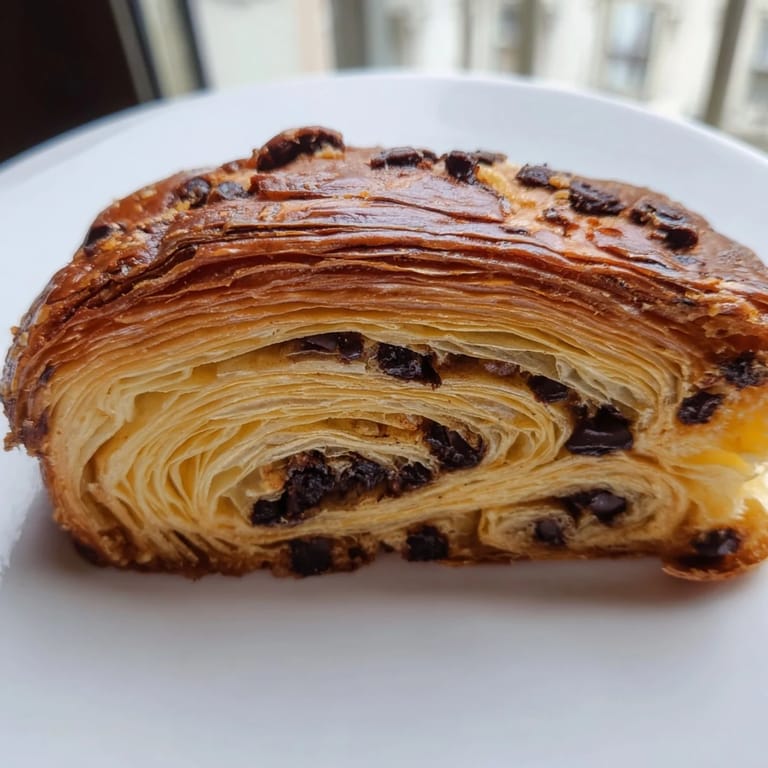
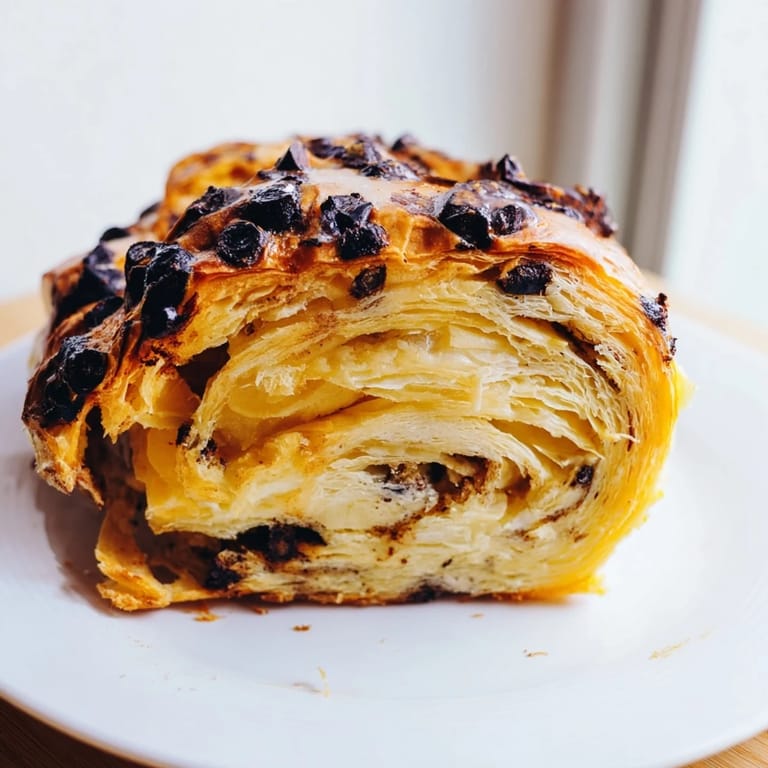
 There's a specific moment when you slice through a properly laminated crookie for the first time and see those thin, golden sheets spiraling inside with pockets of chocolate—it's quiet and small, but it feels like an actual accomplishment. That's when you realize it wasn't just about following steps; you created something beautiful.
The Art of Lamination
Lamination intimidates people, but it's really just butter between layers of dough, folded strategically. The cold butter doesn't mix into the dough during rolling—it stays separate, creating those thin sheets. When the pastry bakes, the butter melts and steam rises between the layers, pushing them apart. Think of it less as complicated technique and more as the dough doing the work while you guide it. The three folds and chill cycles might feel repetitive, but each one doubles your layers, so you go from two to four to eight to sixteen to thirty-two impossibly thin sheets.
Why Crookies Over Croissants Alone
A croissant is perfect for breakfast, but it's also a little lonely—some butter, some air, finished. A crookie brings the cookie dough along for the ride, so you get sweetness and chocolate built into the flaky structure instead of needing jam or hazelnut spread to finish the story. The cookie layer also prevents the laminated dough from being quite so delicate; it gives structure while keeping everything tender. Honestly, this hybrid format feels like the natural evolution of both pastries.
Storage and Variations
Fresh crookies are best within a few hours, but they'll keep in an airtight container for two days and reheat beautifully in a 160°C oven for five minutes. Some days I add chopped pistachios or hazelnuts to the cookie dough, or I swap in white chocolate chips when I'm feeling less serious. A light brush of egg wash before baking adds shine, though it's not strictly necessary—they're already pretty.
- Try mixing your chocolate chips with roughly chopped pretzels or crushed toffee bits for texture contrast.
- If your butter gets too warm during lamination, chill everything for 15 minutes and start again rather than pushing through and ruining the layers.
- These freeze beautifully after slicing but before proofing, so you can bake fresh crookies on demand.
 Pin It
 Making crookies from scratch teaches you something about patience and trust in process. You'll spend most of the time chilling and waiting, but that's when the magic happens. Serve them to someone you want to impress, or keep a batch for yourself when ordinary pastry just won't do.
Recipe FAQs
- → What is laminated dough?
Laminated dough involves folding cold butter into dough multiple times to create flaky, layered textures similar to croissants.
- → How do I prevent the cookie layer from melting into the dough?
Chilling both the laminated dough and cookie layer thoroughly before assembling helps maintain distinct layers during baking.
- → Can I use different types of chocolate chips?
Yes, dark, milk, or white chocolate chips can be used to adjust sweetness and flavor profiles.
- → Is proofing necessary before baking?
Proofing allows the rolled dough to rise slightly, ensuring a lighter, airier final texture.
- → How should this treat be stored?
Store at room temperature for up to two days, or refrigerate and reheat gently for freshness.