 Pin It
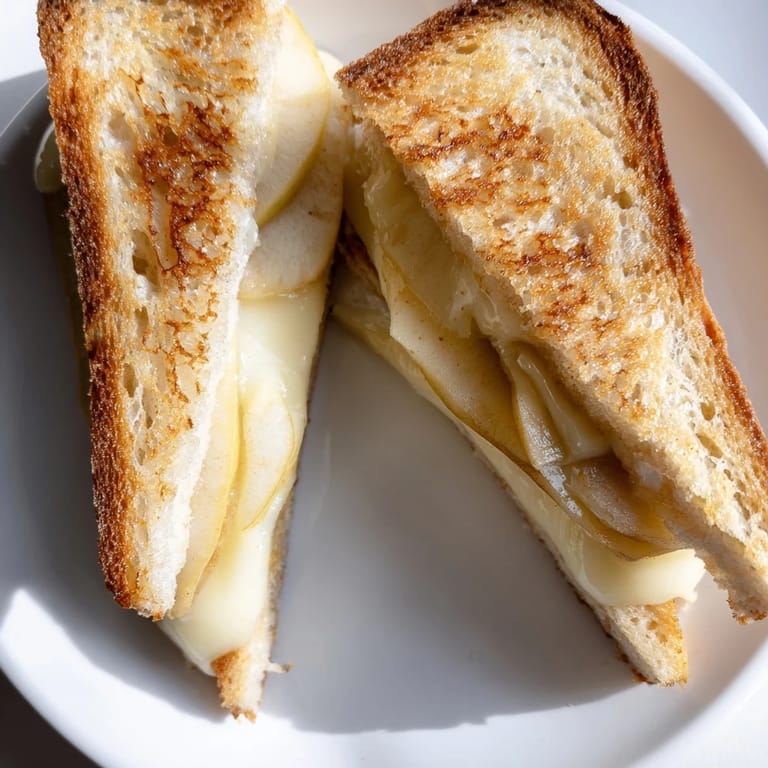
 There was this moment at a farmer's market in October when a vendor handed me a perfectly crisp Honeycrisp apple, and I bit into it while holding a wedge of creamy Brie I'd just bought. The sweetness and tanginess hit at the same time, and I thought: why isn't this in a grilled cheese? That afternoon, I raided my pantry for sourdough, softened some butter, and made the first one almost by accident. It became the thing I make when I want to feel like I'm eating something fancy without actually trying hard.
I made this for my neighbor once on a random Thursday evening, and she literally said it tasted like something from a fancy restaurant. The look on her face when she bit into it and the melted Brie and apple came together—that's when I knew I'd stumbled onto something worth keeping in regular rotation. Now whenever someone drops by, this is what I reach for.
Ingredients
- Sourdough bread (4 slices): The tang balances the sweetness of the apple, and the sturdy crumb holds up to the melting cheese without falling apart.
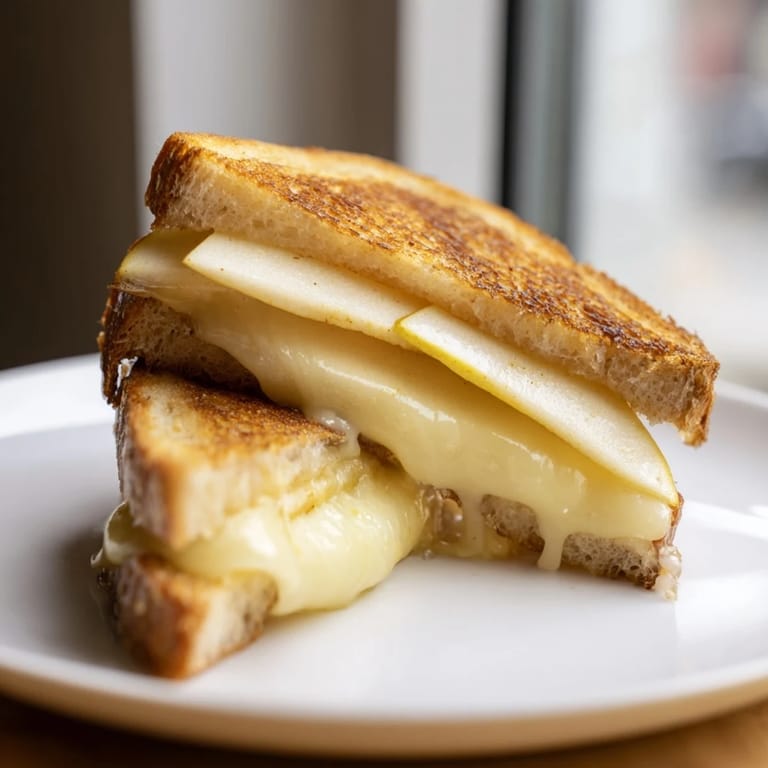
- Brie cheese (120 g, sliced): Make sure it's cold when you slice it, or chill it for a few minutes so the pieces hold their shape during cooking.
- Crisp apple (1 small, thinly sliced): Granny Smith or Honeycrisp work best because they stay firm as they heat and don't turn into mush between the bread.
- Unsalted butter (2 tbsp, softened): Softening it first means you can spread it evenly without tearing the bread, which is the difference between golden and burnt.
Tired of Takeout? 🥡
Get 10 meals you can make faster than delivery arrives. Seriously.
One email. No spam. Unsubscribe anytime.
Instructions
- Butter your canvas:
- Lay out all four bread slices and spread the softened butter on one side of each—use about half a tablespoon per slice. Take your time here so the butter covers all the corners, since this is what gives you that golden crust.
- Start the cheese base:
- Place two slices buttered side down on your work surface, then divide the Brie evenly between them, layering it right on the dry side of the bread. The cheese will anchor everything that comes next.
- Apple interlude:
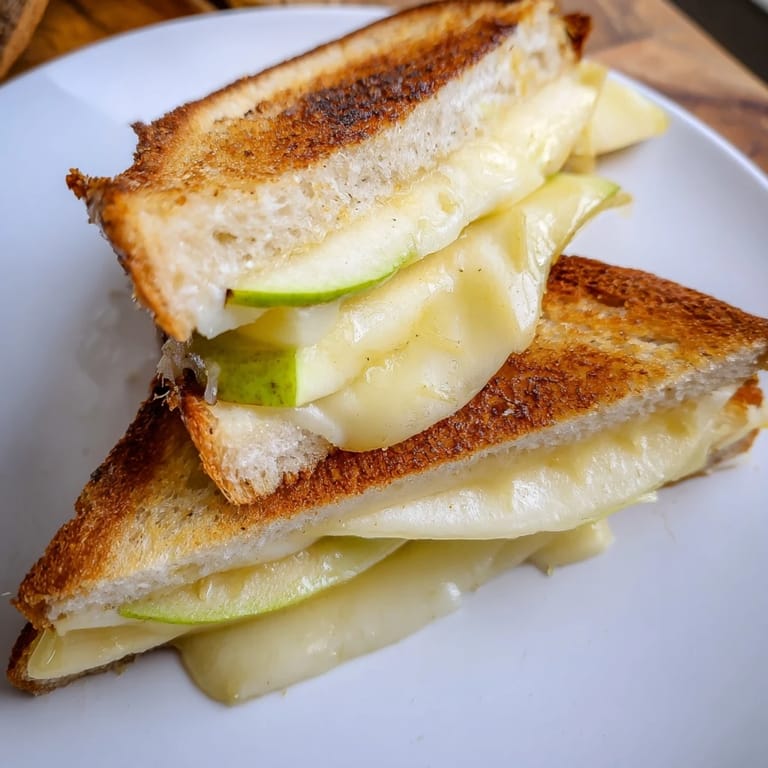
- Arrange your apple slices in a single layer over the Brie on each sandwich, then top with the remaining Brie to sandwich the apples in the middle. This keeps the apples from sliding around when you flip.
- Crown it:
- Place the remaining bread slices on top, buttered side up, so you've got butter on the outside of both sides of each sandwich. Press gently to make sure everything sticks together.
- Cook with patience:
- Heat your nonstick skillet over medium-low heat—don't crank it up or the outside will burn before the inside melts. Once it's warm, place the sandwiches in and cook for 3 to 4 minutes per side, pressing very gently with your spatula halfway through to encourage the cheese to melt evenly.
- The final rest:
- When both sides are golden, transfer to a plate and let them sit for one minute so the cheese sets up just enough to stay inside when you slice. This small pause makes all the difference.
 Pin It
 One rainy Sunday, my kid came home from school stressed about something, and I made these without being asked. There's something about a warm grilled cheese that just makes the world feel a little smaller and safer. We sat at the kitchen table, and by the end of it, the sandwich was gone and so was most of the worry. Food does that sometimes.
The Apple Choice Matters
Not all apples work the same way in a grilled cheese. A Granny Smith stays firm and tart, cutting straight through the richness of the cheese with almost a citrus-like brightness. A Honeycrisp is sweeter and juicier, making the whole thing feel more luxurious. I've tried softer apples like Gala before, and they turned into applesauce between the bread, which sounds good in theory but gets mushy and loses texture. The key is picking one that's firm enough to hold its shape but crisp enough to release just a little juice as it warms.
Variations That Still Feel Right
I've experimented with this more times than I care to admit. Adding a thin scrape of honey before closing the sandwich brings in a golden sweetness that plays off the apple in a way that feels almost intentional. Fresh thyme scattered over the Brie adds an herbaceous note that reminds me of eating cheese at a little bistro in the countryside. Some days I use whole-grain bread instead of sourdough, and it's heartier but just as good. The flexibility is part of why I keep making it.
Timing and Temperature Tips
This sandwich comes together so fast that having everything prepped before you start cooking is the difference between smooth and chaotic. Slice your apple, soften your butter, and arrange your Brie all before the pan hits the heat—that way you're just assembling and cooking, not fumbling around while the pan's getting hot. The gentle press with the spatula while cooking isn't about squashing it; it's about encouraging even contact between the bread and the skillet so you get consistent browning on both sides.
- Medium-low heat takes longer but guarantees golden bread and melted cheese in the same bite.
- Let the sandwich rest for one minute after cooking so the Brie sets up enough to stay inside when you cut.
- If you're cooking two at once, they might take slightly longer, so watch for color rather than just counting minutes.
 Pin It
 There's something deeply satisfying about transforming a few simple things into something that tastes like you actually know what you're doing in the kitchen. This sandwich does that every single time.
Recipe FAQs
- → What type of bread works best?
Sourdough bread is preferred for its sturdy texture and tangy flavor that complements the Brie and apple layers.
- → Can any apple variety be used?
Crisp apples like Granny Smith or Honeycrisp offer a nice balance of tartness and sweetness to contrast the cheese.
- → How do you prevent the bread from burning?
Grill over medium-low heat and press gently to ensure even browning and melted cheese without burning.
- → Are there any suggested flavor enhancements?
A drizzle of honey or a sprinkle of fresh thyme can add subtle sweetness and herbal notes.
- → What is an ideal beverage pairing?
A crisp white wine, such as Sauvignon Blanc, pairs well by balancing the richness of the cheese and sweetness of the apple.