 Pin It
 My neighbor knocked on the door holding a casserole dish, steam curling from under the foil. She'd just returned from visiting family in Tuscany and wanted to recreate something her cousin had made. We sat at my kitchen table tasting this spinach and ricotta stuffed chicken, and I scribbled notes on the back of an envelope while she described how the sauce should coat the chicken just so. That envelope is still tucked in my recipe binder, smudged with tomato and completely irreplaceable.
I made this for my brother's birthday dinner last spring, and he still brings it up every time we talk about food. He'd been trying to eat more vegetables, and I wanted to prove that healthy didn't have to mean boring. When he went back for seconds and then scraped the skillet for extra sauce, I knew I'd converted him. Now he asks for it every visit, and I've stopped pretending it's a hassle to make.
Ingredients
- Boneless, skinless chicken breasts: Look for breasts that are similar in size so they cook evenly, and if they're very thick, pound them gently to an even thickness before cutting the pocket.
- Ricotta cheese: Whole milk ricotta gives the creamiest filling, but part-skim works if you want to lighten it up without losing much texture.
- Fresh baby spinach: Chop it finely so it distributes throughout the filling without creating big clumps, and make sure it's dry or the mixture will be watery.
- Parmesan cheese: Freshly grated melts into the filling much better than the pre-shredded kind, which often has anti-caking agents that affect the texture.
- Lemon zest: Just half a lemon's worth brightens the richness of the cheese and keeps the filling from tasting too heavy.
- Crushed tomatoes: I prefer canned San Marzano tomatoes when I can find them because they're naturally sweeter and less acidic, but any good quality crushed tomatoes will work.
- Garlic: Three cloves total might sound like a lot, but it mellows as it cooks and adds depth to both the filling and the sauce.
- Olive oil: Use it for both searing the chicken and building the sauce, it ties the flavors together and adds a subtle fruity note.
Tired of Takeout? 🥡
Get 10 meals you can make faster than delivery arrives. Seriously.
One email. No spam. Unsubscribe anytime.
Instructions
- Preheat and Prep:
- Get your oven to 375°F so it's ready when you need it. This temperature cooks the chicken through without drying it out or making the sauce reduce too much.
- Make the Filling:
- Mix the ricotta, chopped spinach, Parmesan, minced garlic, Italian herbs, lemon zest, salt, and pepper in a bowl until everything is evenly combined and the spinach is well distributed. Taste it and adjust the seasoning, it should be flavorful on its own since it's going inside the chicken.
- Prepare the Chicken:
- Use a sharp knife to carefully cut a horizontal pocket into the thickest part of each chicken breast, like you're creating a little envelope but leaving three sides connected. Season both sides generously with salt and pepper.
- Stuff the Chicken:
- Spoon the ricotta mixture into each pocket, dividing it evenly among the four breasts, and use toothpicks to secure the opening if the filling wants to escape. Don't overstuff or it will ooze out during cooking.
- Sear the Chicken:
- Heat a tablespoon of olive oil in your oven-safe skillet over medium-high heat until it shimmers, then sear each stuffed breast for 2 to 3 minutes per side until golden brown. This step locks in flavor and gives the chicken a beautiful color, but it won't be cooked through yet.
- Build the Sauce:
- Remove the chicken and set it aside, then add another tablespoon of olive oil to the same skillet and sauté the chopped onion until it's soft and translucent, about 3 minutes. Add the garlic and cook for another minute until fragrant, then stir in the crushed tomatoes, oregano, sugar, salt, and pepper.
- Simmer:
- Let the sauce bubble gently for about 5 minutes to let the flavors come together and the tomatoes lose their raw edge. Taste and adjust the seasoning.
- Nestle and Bake:
- Place the seared chicken breasts back into the skillet, nestling them into the sauce, and spoon some sauce over the tops so they stay moist. Transfer the whole skillet to the oven and bake uncovered for 20 to 25 minutes, until the chicken reaches an internal temperature of 165°F.
- Finish and Serve:
- Carefully remove the toothpicks, sprinkle with extra Parmesan or torn fresh basil if you have it, and serve hot with the sauce spooned generously over each piece. Let it rest for a couple of minutes before slicing so the juices settle.
 Pin It
 One evening I served this with a simple arugula salad and garlic bread, and my husband looked up mid-bite and said it tasted like we were on vacation. I'm not sure if it was the lemon in the filling or the way the house smelled like an Italian kitchen, but that comment made me feel like I'd given us both a little escape. Food has that power sometimes, to transport you somewhere warm and unhurried even when you're just sitting at your regular table on a weeknight.
Make It Your Own
If you want a little heat, add a pinch of red pepper flakes to the tomato sauce while it simmers. I've also swapped the spinach for finely chopped kale when that's what I had on hand, and it worked beautifully with a slightly earthier flavor. You could even stir in some sun-dried tomatoes or artichoke hearts to the filling if you're feeling adventurous. This recipe is forgiving and welcomes your personal touches.
Serving Suggestions
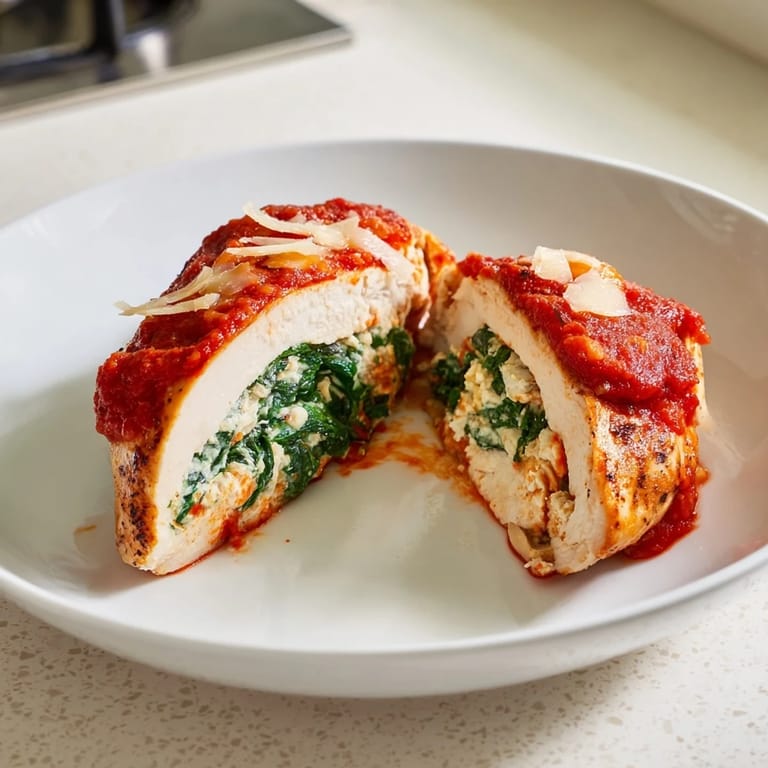
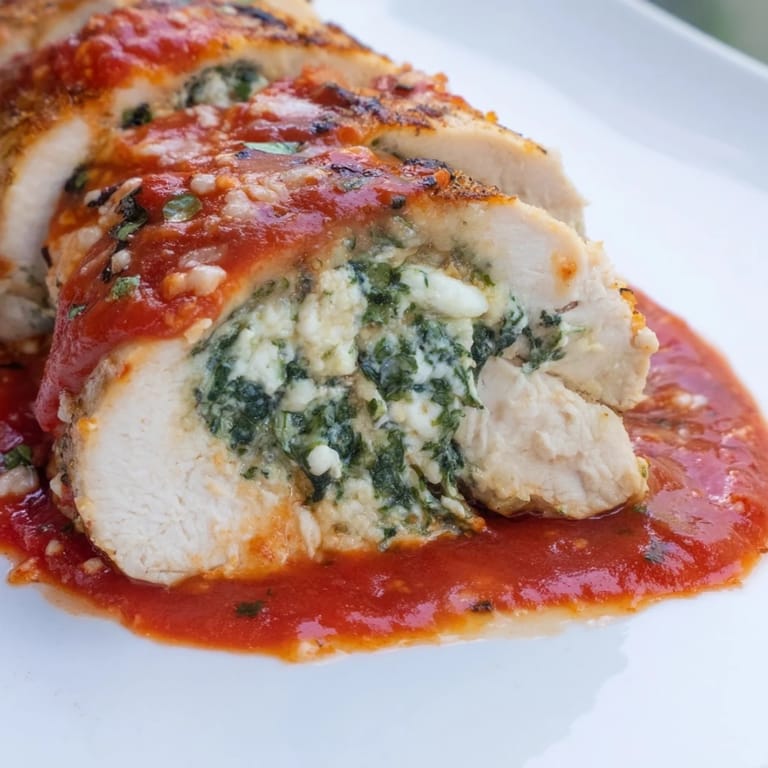
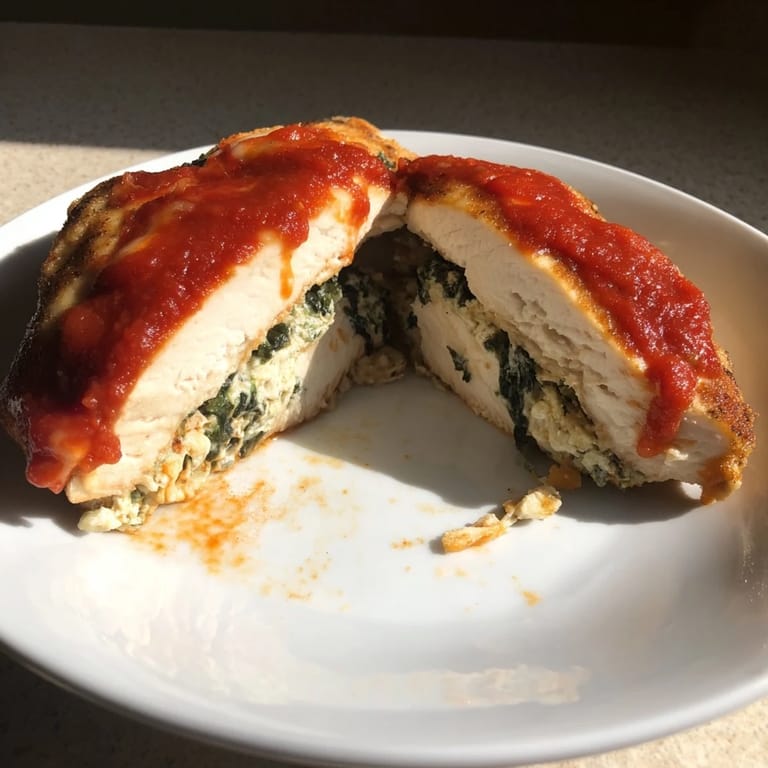
I like to serve this with a chunk of crusty bread for soaking up the sauce, but it's also wonderful spooned over pasta or alongside creamy polenta. A simple green salad with a lemony vinaigrette cuts through the richness nicely. If you're serving it for guests, plate each breast whole and let everyone cut into it at the table so they get that satisfying reveal of the filling.
Storage and Reheating
Leftovers keep well in an airtight container in the fridge for up to three days. I reheat individual portions in the microwave with a splash of water or broth to keep the chicken moist, or you can warm everything gently in a covered skillet on the stovetop. The flavors deepen overnight, so don't be surprised if day two tastes even better than day one.
- You can stuff the chicken breasts a few hours ahead and keep them covered in the fridge until you're ready to sear and bake.
- If you don't have an oven-safe skillet, sear the chicken in a regular pan and transfer everything to a baking dish before putting it in the oven.
- Always let the chicken rest for a few minutes after baking so the juices redistribute and each slice stays tender and moist.
 Pin It
 This dish has become one of those recipes I turn to when I want to feel capable and generous in the kitchen. I hope it brings you as much comfort and pride as it's brought me.
Recipe FAQs
- → How do I prevent the chicken from drying out during baking?
Ensure your chicken breasts are of even thickness by gently pounding them if needed. Don't overbake—use a meat thermometer to check for doneness at 165°F (74°C). The tomato sauce keeps the chicken moist, so spoon it over the breasts before baking.
- → Can I prepare this dish ahead of time?
Yes. Stuff the chicken breasts up to 4 hours ahead and refrigerate. When ready to cook, add 5-10 minutes to the baking time since they'll start cold. You can also prepare the tomato sauce a day in advance and reheat gently before serving.
- → What can I substitute for ricotta cheese?
Cottage cheese blended until smooth, mascarpone, or a combination of cream cheese and Greek yogurt work well. For a lighter option, use part-skim ricotta or a mixture of ricotta and low-fat cream cheese.
- → Is this dish freezer-friendly?
The assembled raw chicken can be frozen for up to 3 months. Thaw completely in the refrigerator before cooking, then follow the baking instructions as written, adding a few extra minutes if needed.
- → What are good side dishes to serve with this?
Crusty bread is perfect for soaking up the sauce. Pair with roasted vegetables like zucchini or bell peppers, a fresh green salad, or serve over cooked pasta for a heartier meal. A crisp Pinot Grigio complements the flavors beautifully.
- → Can I use frozen spinach instead of fresh?
Yes. Use 3/4 cup frozen spinach, thawed and squeezed dry to remove excess moisture. This prevents the filling from becoming watery and ensures proper texture in the finished dish.