 Pin It
 I discovered this dish on a Tuesday night when I had salmon that needed rescuing and a half-empty jar of miso in the back of my fridge. There was something so unexpectedly elegant about the way the umami paste dissolved into butter, turning something that sounded odd on paper into something genuinely craveable. My kitchen smelled like sesame oil and the ocean, and I knew I'd stumbled onto something worth repeating.
The first time I made this for a friend who swears she only eats simple foods, she went quiet for a moment after her first bite, which I've learned is the highest compliment. She asked what restaurant I'd ordered from, and I got to tell her it was just salmon, pasta, and some pantry staples that somehow became magic. That moment made me stop apologizing for fusion cooking and start trusting my instincts.
Ingredients
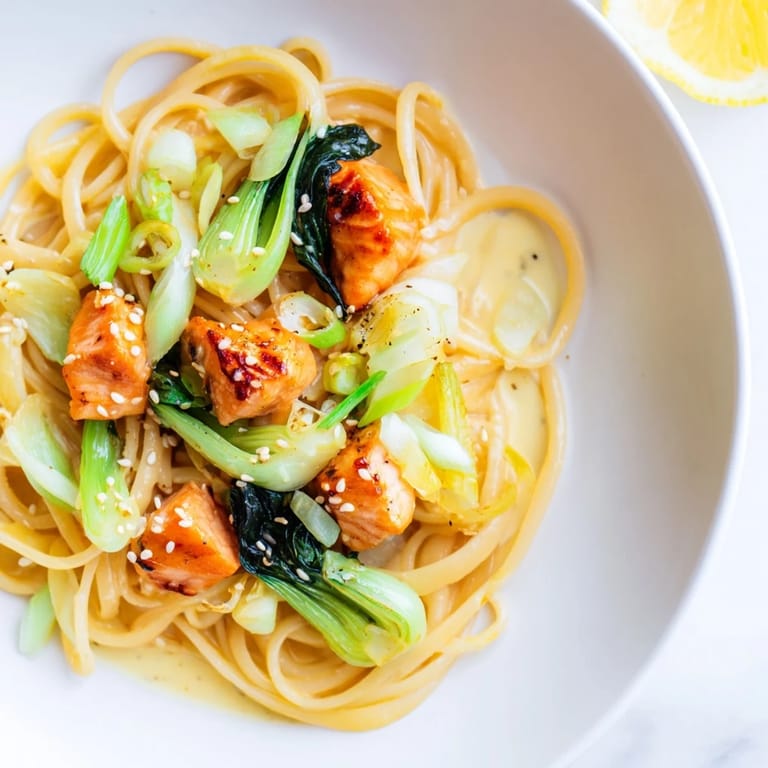
- Salmon fillets (400g): Cut into bite-sized pieces so they cook gently and absorb the sauce rather than getting tough. Fresh salmon has a brighter flavor, but honestly, quality frozen works beautifully here too.
- Linguine or spaghetti (300g): Al dente is non-negotiable because the pasta will soften slightly as it mingles with the hot sauce. I've learned to taste it a minute earlier than I think I should.
- Baby bok choy (2 heads): Chopped roughly so it wilts into the sauce but still has a little textural snap. The tender green leaves catch the creamy sauce in the best way.
- Garlic (2 cloves, minced): The foundation of everything, blooming in butter for just enough time to release its fragrant oils without burning.
- Scallions (2, sliced): Keep these for garnish where they add a fresh onion bite that cuts through the richness.
- Unsalted butter (60g): Use good butter here because it's a starring ingredient, not a supporting player. You'll taste the difference.
- White miso paste (2 tbsp): This is the secret that makes people wonder what you did to make it taste so good. It dissolves into the sauce and adds depths of umami without tasting explicitly fishy.
- Soy sauce (2 tbsp): Another layer of savory depth that brings everything into focus.
- Mirin (2 tbsp): A touch of sweetness that balances the salt and umami, rounding out the flavor profile beautifully.
- Heavy cream (100ml): This transforms the miso butter into a silky sauce that coats everything tenderly.
- Sesame oil (1 tsp): Just a whisper of this potent oil adds a toasty complexity that announces the dish as something special.
- Black pepper (½ tsp): Freshly ground, because pre-ground has already surrendered its pungency.
- Sesame seeds (1 tbsp, optional): Toasted before garnishing so they add crunch and a deeper nutty note to each bite.
- Lemon wedges (optional): A squeeze brightens everything and cuts through the richness at just the right moment.
Tired of Takeout? 🥡
Get 10 meals you can make faster than delivery arrives. Seriously.
One email. No spam. Unsubscribe anytime.
Instructions
- Start your pasta:
- Bring a large pot of salted water to a rolling boil, then add your pasta and cook to al dente. This should take about a minute before the package time suggests, so taste it early and often. Reserve a coffee cup of that starchy water before you drain it, because you'll need it later to make the sauce silky.
- Bloom your aromatics:
- While the pasta cooks, warm butter and sesame oil together in a large skillet over medium heat. Add your minced garlic and listen for it to sizzle and smell absolutely intoxicating, which should take about a minute. Don't walk away or you'll miss the moment.
- Cook the salmon gently:
- Add your salmon pieces to the warm oil and let them settle without moving them for 2 to 3 minutes, then flip each piece carefully. The salmon is done when it flakes easily with a fork but still looks slightly underdone in the very center, because it will continue cooking in the sauce. Transfer it to a clean plate and give yourself a small moment of pride.
- Build your sauce:
- In that same skillet, melt the remaining butter and whisk in the white miso paste until it dissolves smoothly into the fat. This takes a little patience and a firm hand with your whisk, but the transformation is worth it. Add soy sauce and mirin and stir until everything becomes a cohesive, glossy mixture.
- Add richness and vegetables:
- Pour in the heavy cream slowly while stirring, watching the sauce turn from amber to pale gold. Add black pepper, then scatter in your chopped bok choy and let it wilt into the sauce for 2 to 3 minutes until the leaves soften but the stems still have a whisper of resistance.
- Bring it all together:
- Return the salmon to the skillet and gently fold it into the creamy sauce, letting the pieces warm through without breaking apart. Add your drained pasta and toss everything together using a wooden spoon or spatula, adding reserved pasta water a splash at a time until the sauce coats every strand beautifully.
- Serve with intention:
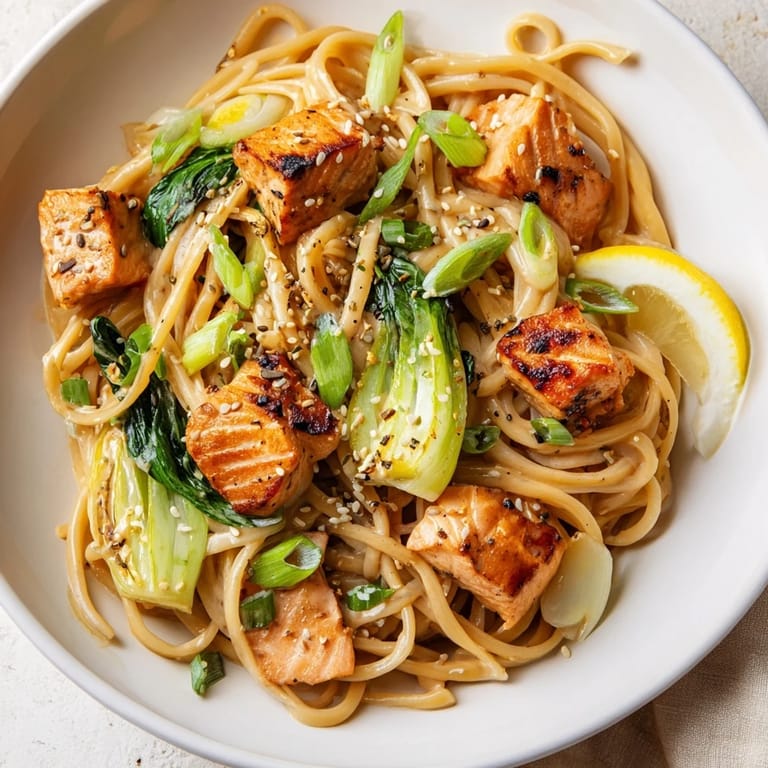
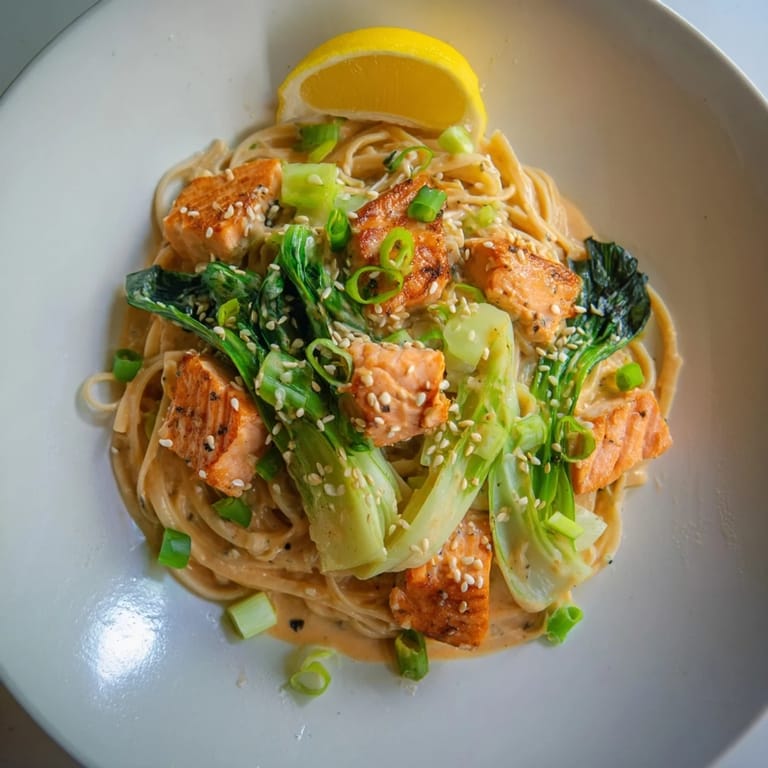
- Divide among bowls and garnish with sliced scallions, toasted sesame seeds, and a lemon wedge if you're using one. The heat of the pasta will keep everything warm, so there's no rush. Serve immediately so the pasta is still tender and the sauce is still glossy.
 Pin It
 I made this for my partner on a quiet evening when we were both exhausted from work, and somehow eating something this elegant made everything feel less heavy. We sat at the table without scrolling, just tasting and talking, and I remembered why feeding people matters. That's when cooking stopped being about technique and became about care.
Why Miso Transforms Everything
Miso paste is one of those ingredients that seems intimidating until you taste what it does. It adds a savory depth that you can't replicate with salt alone, drawing out flavors in other ingredients like they've suddenly turned up their volume. In this sauce, it dissolves into the butter and cream, becoming something seamless that makes people taste each ingredient without being able to name them all. I used to shy away from umami-rich ingredients, thinking they were too strong, but this sauce taught me that umami is just another way of saying delicious.
The Texture Game
What makes this dish satisfying instead of just heavy is the contrast between crispy scallion slivers, soft pasta, tender salmon, and the slight snap of bok choy stems. Each element plays a role, and when you get the timing right, every spoonful has something different to offer your mouth. This is why I chop the bok choy into varied sizes instead of making everything uniform, because a little chaos in size means more varied textures.
Variations and Extensions
This sauce is flexible enough to build on without losing its soul. I've swapped the salmon for mushrooms and miso-soaked tofu for vegetarian versions, or added a pinch of chili flakes for heat when I'm in that mood. The miso-butter base is the skeleton, and you can hang different things on it depending on what's in your fridge and what your body is asking for. Trust yourself to play with this recipe once you've made it once.
- For heat, add a pinch of chili flakes or red pepper flakes to the garlic as it blooms in the oil.
- Spinach works beautifully if bok choy isn't available, though it wilts faster so add it closer to the end.
- A squeeze of fresh lemon juice at the very end brightens everything and cuts through the richness without overshadowing the miso's depth.
 Pin It
 This pasta has become one of those dishes I make when I want to feel like I'm cooking something special without needing to fuss. It reminds me that restaurant-quality meals live in your home kitchen, not just fancy dining rooms, and that's a small revolution I'm happy to keep repeating.
Recipe FAQs
- → How do I keep the salmon tender during cooking?
Cook salmon gently over medium heat for 2–3 minutes per side to avoid overcooking and maintain tenderness.
- → Can I substitute bok choy with another vegetable?
Yes, spinach works well as a substitute and wilts nicely in the creamy sauce.
- → What pasta types work best with this sauce?
Long pastas like linguine or spaghetti hold the creamy miso sauce effectively and complement the dish's texture.
- → How can I thicken the sauce if needed?
Reserve some pasta water and gradually add it while tossing to achieve a silky, cohesive sauce consistency.
- → Are there any suggested garnishes to enhance flavor?
Toasted sesame seeds, sliced scallions, and lemon wedges brighten and add texture to the dish.
- → Is this dish suitable for gluten-free diets?
Yes, by using gluten-free pasta and tamari instead of soy sauce, you can adapt this dish accordingly.