 Pin It
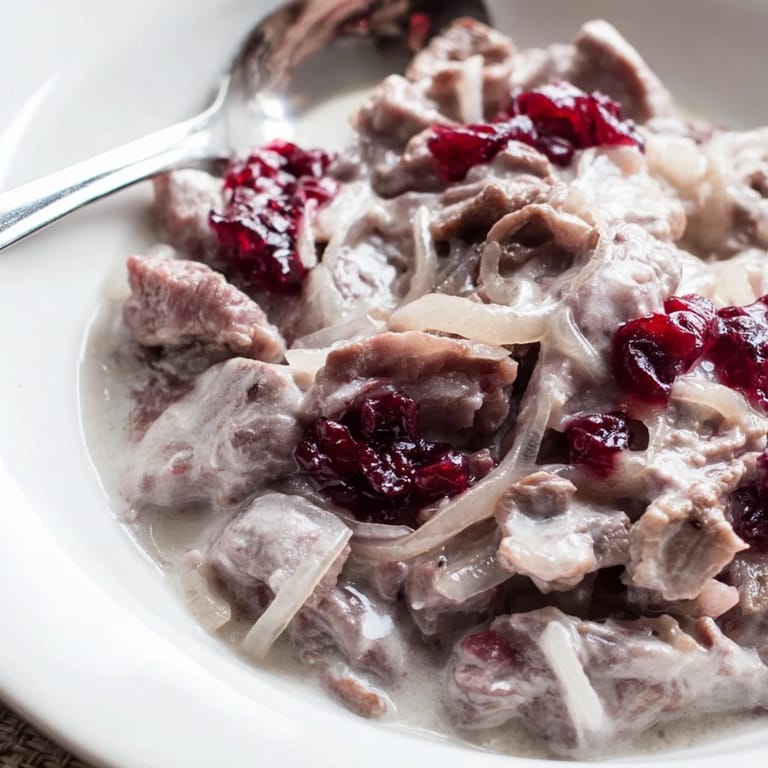
 Years ago, a Finnish friend invited me to her family's kitchen on a freezing November evening, and her mother was already stirring a pot that filled the entire house with the most intoxicating aroma—gamey, warming, unmistakably Nordic. She called it poronkäristys, though this version was her slower, more luxurious take: reindeer stew that simmered for nearly two hours until the meat fell apart at the gentlest nudge of a spoon. I watched her add a swirl of sour cream at the end, turning everything creamy and elegant, then top each bowl with a sharp little spoonful of lingonberry preserves that cut through the richness like a bell. That night taught me that the best winter meals aren't rushed—they're built on patience and contrast.
I made this for friends during a late-winter dinner party, and what struck me most was the silence that fell when everyone took their first bite—not an awkward quiet, but that reverent kind where people are too busy tasting to make conversation. One friend kept asking if the meat was actually tender or just seemed that way because of how it melted, and another went back for thirds despite claiming to be too full. That's when I realized this stew had crossed from being just dinner into becoming the kind of meal people remember.
Ingredients
- Reindeer meat, thinly sliced (800 g): The star here—reach for venison or beef if reindeer isn't available, but if you can find it, the subtle gaminess is what makes this distinctly Nordic and worth the hunt.
- Butter and vegetable oil: The combination gives you the high heat of oil and the flavor depth of butter, perfect for getting a proper golden crust on the meat without burning anything.
- Onions, finely sliced (2 medium): These become silky and almost sweet after slow cooking, creating the backbone of your sauce—don't skip this step or rush it.
- Garlic cloves, minced (2): Just a minute of cooking keeps the garlic subtle and integrated rather than sharp and shouty.
- Beef or game stock (300 ml): Game stock is ideal for echoing the meat's flavor, but good beef stock works beautifully too.
- Water (100 ml): This dilutes the stock slightly so the flavors stay balanced rather than becoming overly concentrated.
- Salt and freshly ground black pepper: Season thoughtfully throughout cooking, not just at the end—it helps the meat absorb flavor as it cooks.
- Bay leaves and juniper berries: These are your secret Nordic fingerprint; juniper especially adds a subtle pine-forest note that makes people wonder what you did differently.
- Sour cream (150 ml): Add this at the very end to keep it silky rather than broken or curdled.
- Lingonberry preserves or fresh lingonberries (100 g): Non-negotiable—this tart finish is what elevates the entire dish from good to memorable.
Tired of Takeout? 🥡
Get 10 meals you can make faster than delivery arrives. Seriously.
One email. No spam. Unsubscribe anytime.
Instructions
- Heat your pot and prepare the stage:
- Combine butter and oil in a large heavy-bottomed pot over medium-high heat until the mixture is shimmering and almost smoking. You want enough heat to sear the meat properly, creating that caramelized crust that locks in flavor.
- Brown the meat in batches:
- Don't crowd the pot—this is crucial. Add the reindeer in a single layer and let it sit undisturbed for a couple of minutes before stirring, so it develops a proper golden-brown surface. Remove each batch to a plate as it finishes, and keep going until all the meat is seared.
- Soften the aromatics:
- In the same pot with all those lovely browned bits stuck to the bottom, add your sliced onions and let them cook gently until they're soft and translucent, about 5 minutes. You'll see the onions start to release their own moisture and create a golden base.
- Wake up the garlic:
- Add minced garlic and stir constantly for just 1 minute—any longer and it turns bitter, so stay right there with the pot and breathe in that moment.
- Build your braise:
- Return all the browned meat to the pot along with salt, pepper, bay leaves, and those crushed juniper berries. The juniper will release its piney, almost gin-like aroma, which is exactly what you want.
- Add liquid and let time do the work:
- Pour in your stock and water, then bring everything to a gentle simmer. Cover the pot and reduce heat to low—you're aiming for a soft bubble here and there, not a rolling boil that will toughen the meat.
- Simmer and stir occasionally:
- Cook for 1 hour and 30 minutes, stirring every 20 minutes or so. The meat will gradually become more tender with each stir, and the braise liquid will deepen in color and flavor.
- Reduce and concentrate:
- Remove the lid and cook for another 10 minutes, letting some of the liquid evaporate so the sauce becomes richer and more concentrated—you're after a glossy coating rather than a thin broth.
- Finish with cream:
- Stir in the sour cream carefully, then cook for just 2-3 minutes until everything is heated through and silky. Taste and adjust seasoning—you might need a little more salt or pepper depending on your stock.
- Serve with ritual:
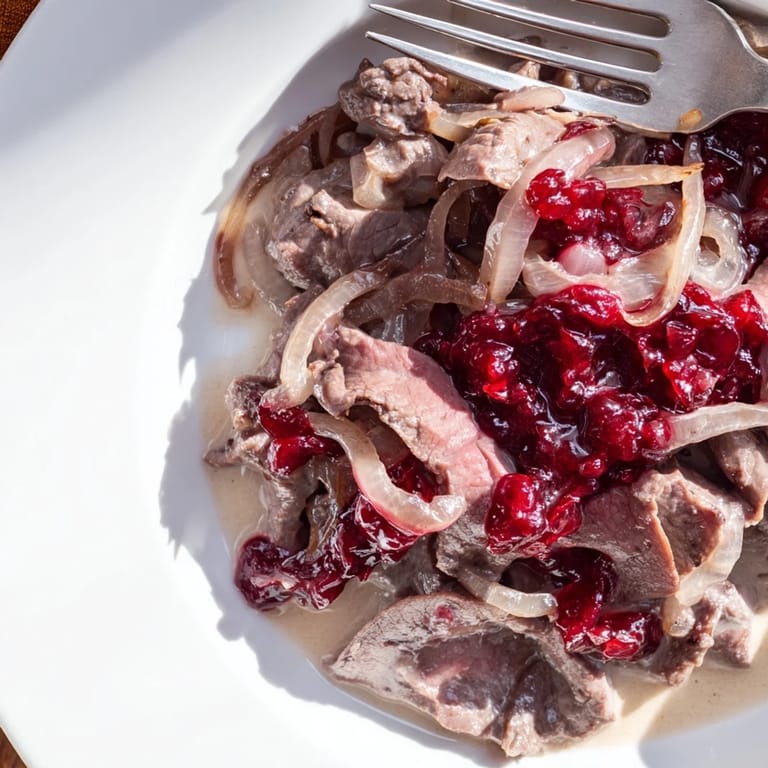
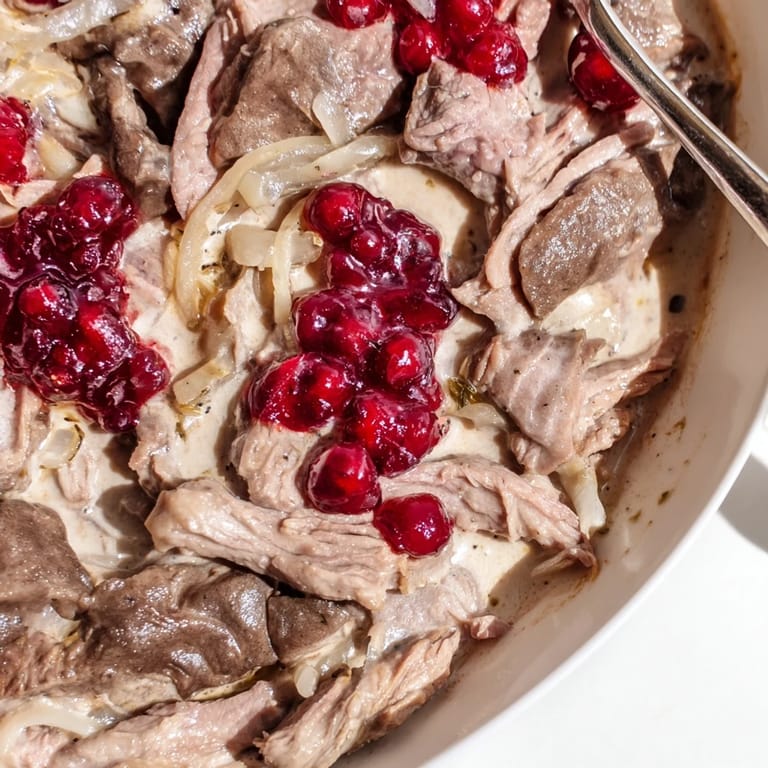
- Spoon the stew into bowls over creamy mashed potatoes, then add a generous dollop of lingonberry preserves to each portion. Let each person stir in the berries so they control the tartness level.
 Pin It
 I think what makes this stew so special is that moment when the tart lingonberries hit the rich, creamy meat—it's the whole Nordic winter distilled into a single spoonful, the way good food should work. Every element feels like it was chosen with intention, and once you've experienced that balance, you understand why this dish has been warming Finnish tables for generations.
Why Reindeer Matters
Reindeer meat has been part of Nordic cuisine for centuries, especially in Finland where it's traditionally hunted in the north. It's leaner than beef but more forgiving than venison, with a subtle game flavor that isn't aggressive or overpowering. If you can't find reindeer, venison is your next best choice for authenticity, though a good quality beef will still deliver a delicious stew—you just lose that whisper of Nordic wildness. The slow cooking method works beautifully with any of these proteins because the long braise breaks down the connective tissue and renders everything incredibly tender.
The Lingonberry Counterpoint
Lingonberries are the secret to understanding Nordic food—they're tart and slightly floral, with none of the jammy sweetness of strawberries. They exist in tension with rich, fatty dishes, which is why they appear alongside so many traditional Nordic meals. If lingonberries are truly impossible to find in your area, cranberry sauce works as a substitute, though it's usually sweeter, so you might want to thin it with a splash of vinegar or lemon juice to recapture that bright acidity. The berries aren't just a garnish; they're the punctuation mark that makes the entire sentence of the stew make sense.
Building Depth and Flexibility
This recipe is forgiving enough to adapt based on what you have and what you're in the mood for. Some cooks add a splash of dark beer or red wine along with the stock for extra depth—do this if you have an open bottle, but don't feel like you have to. Others include a tablespoon of tomato paste or a tiny pinch of sugar if the stew tastes too savory, though I'd taste before adjusting. The real joy of this dish is that it improves with time, so make it a day ahead if you can—the flavors meld and deepen overnight, and reheating gently brings everything back to life.
- A splash of dark beer swirled in with the stock adds an earthy, almost chocolate-like undertone.
- Serve with pickled cucumbers on the side for an extra layer of bright acidity.
- This stew freezes beautifully for up to three months, making it perfect for meal planning or sharing.
 Pin It
 There's something deeply satisfying about a stew that transforms simple ingredients into something that tastes like home, even if it's not your home. Make this, share it, and watch people fall silent over their bowls.
Recipe FAQs
- → Can I substitute reindeer meat with other meats?
Yes, venison or beef can be used as alternatives while maintaining similar flavor and texture.
- → What is the role of juniper berries in this dish?
Juniper berries add a subtle piney and slightly citrusy aroma, enhancing the traditional Nordic flavor profile.
- → How should I serve this dish traditionally?
It is typically served with creamy mashed potatoes and lingonberry preserves or fresh lingonberries for a tart contrast.
- → Can I prepare the stew in advance?
Yes, the stew tastes even better after resting overnight as the flavors continue to meld.
- → Is there a way to make the dish richer?
Adding a splash of dark beer or red wine to the broth can deepen the richness and complexity.